
Key Takeaway
Roof coatings 101 starts with one rule: a coating protects a sound roof but cannot rebuild a failing one. Applied to a compatible low-slope, metal, modified bitumen, or foam roof that has been inspected and repaired, a quality coating adds UV resistance, improves reflectivity, and can extend roof life by up to 10 years or more. Asphalt shingle roofs are generally not good candidates, and active leaks or wet insulation must be fixed before any coating is applied.
A roof coating is a fluid-applied, adhered protective membrane that can extend roof life on a structurally sound roof, add UV and weather resistance, and, when reflective, cut down on heat gain. It works best on sound low-slope, metal, modified bitumen, single-ply, or foam roof surfaces after they’ve been inspected and repaired. It’s usually not the right answer for a failing roof, and it’s usually not the right answer for most installed asphalt shingle roofs either. If you’re weighing whether to coat, repair, or replace, start here: a roof coating can protect a sound roof. It cannot rebuild a failing one.
What Is a Roof Coating? (And How It Differs From Paint)
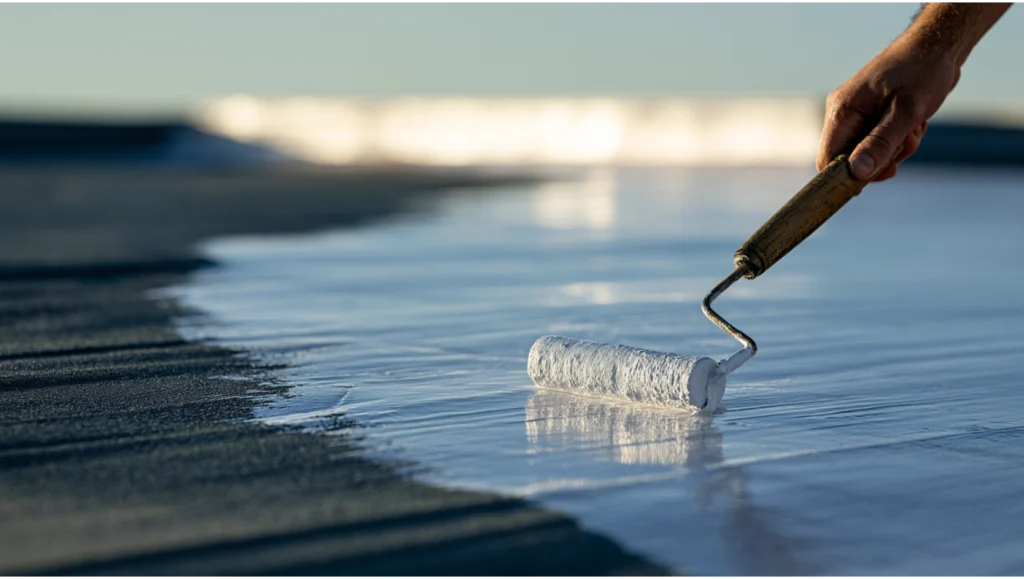
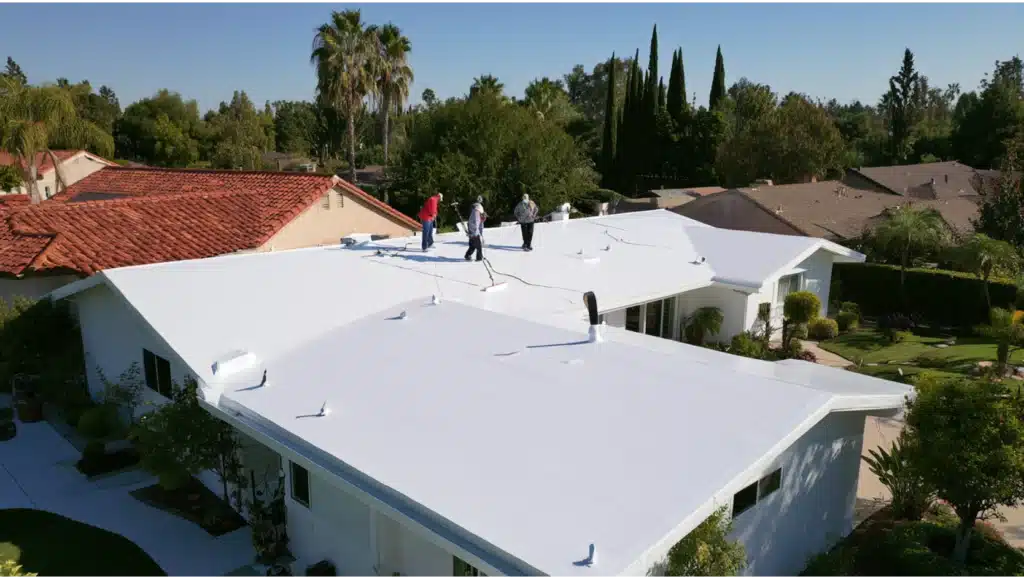
A roof coating is a liquid product applied directly to an existing roof surface, where it cures into an elastomeric and durable film. That film adheres to the roof and can bridge small cracks and seams while adding a layer of protection against sun and weather. It’s applied by spray, roller, or brush, in gallons per 100 square feet, not in the thin coverage you’d expect from paint.
That’s the key distinction. Paint colors a surface. A coating system is closer to roof restoration: it protects and extends what’s already there. A quality coating system forms a seamless membrane over an existing roof, so there are no fasteners or laps for water to find. It is not a replacement, and it is not a repair. When the roof underneath is sound, a coating can add years of protection. When it isn’t, no amount of roof coating changes the condition of the deck, insulation, or flashings below.
What Roof Coatings Can and Cannot Do
Honest expectations matter more here than anywhere else, because coatings are often oversold. Here’s the plain version.
What a roof coating can do:
- Add UV protection and weather resistance to a compatible roof surface
- Improve reflectivity and lower roof temperatures on hot days
- Add a waterproofing layer within an appropriate roof coating system
- Help extend roof life when the roof is sound and the coating is applied correctly
- Reduce tear off disruption when it responsibly delays replacement
What a roof coating cannot do:
- Fix rotten or soft decking
- Dry out wet insulation
- Correct chronic drainage problems or ponding water caused by design
- Reliably stop leaks that haven’t been diagnosed and repaired first
If there are active leaks, wet insulation, or failed flashing, coating comes after those repairs, or not at all. The Roof Coatings Manufacturers Association is clear that problem areas need to be repaired before any coating goes on. Certain roof coatings are marketed as cure-alls, but not all coatings can do what a full roof replacement does.
The Main Types of Roof Coatings
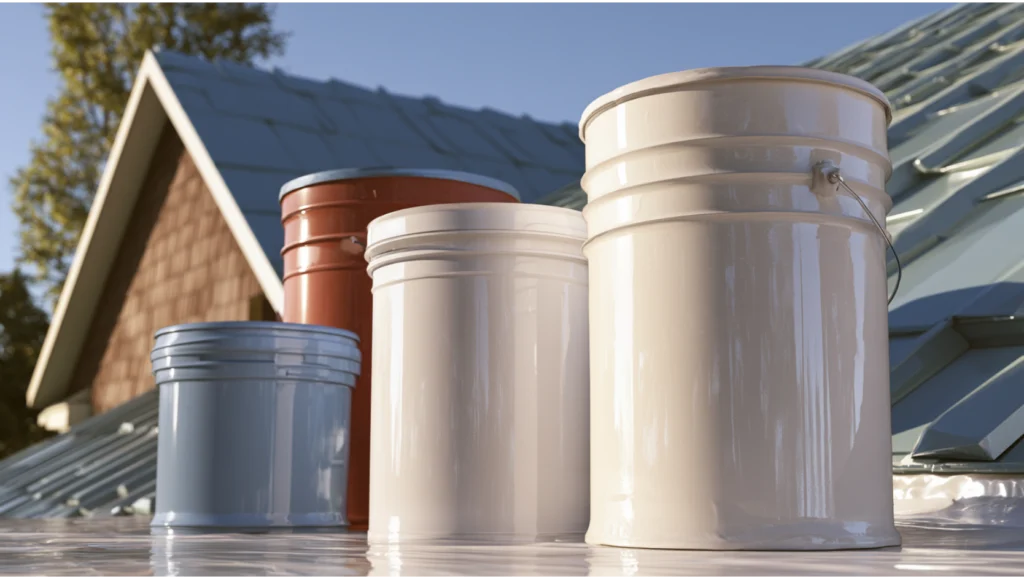
Most types of roof coatings fall into a few broad families: acrylic coatings, silicone coatings, polyurethane coatings, and asphalt coatings or aluminum-based products, plus specialized systems for spray foam roofs. Each has a job it does well and conditions where it struggles. The right choice among these types of roof coatings depends on your roof type, drainage, and what the manufacturer allows for the existing roof coverings you already have.
| Coating Type | Best Used For | Strengths | Watch-Outs |
|---|---|---|---|
| Acrylic | Reflective cool roof work; many low-slope roof surfaces with good drainage | Water-based, reflective, flexible, UV stable | Not ideal for ponding water; needs clean, dry conditions |
| Silicone | Low slope roofs with moisture exposure or ponding water concerns, where compatible | Strong water and UV resistance; holds up in wet conditions | Recoat and adhesion compatibility matter; dirt pickup can dull reflectivity |
| Polyurethane | Roofs with foot traffic or impact exposure, where specified | Toughness and abrasion resistance | Requires correct substrate prep and system design |
| Asphalt / Aluminum | Certain asphalt-based systems like built-up or modified bitumen | Decades of use for reflective and moisture protection on compatible roofs | Not designed to stop active leaks; ponding water and prep are critical |
| SPF (silicone) systems | Spray polyurethane foam roofs | Protects foam from UV degradation | Needs specialized evaluation and ongoing maintenance |
Acrylic Coatings, Silicone Coatings, and Polyurethane Coatings at a Glance
Acrylic coatings are a common, reflective choice for low-slope roofs that drain well, but they don’t love ponding water. Silicone coatings shine where moisture and ponding water are a concern, though adhesion and future recoat compatibility need attention up front. Polyurethane coatings are chosen when the roof takes impact or foot traffic and needs a durable coating that resists wear. Asphalt coatings and aluminum products still serve built-up and modified bitumen roofs well. Other coatings exist for niche substrates, so the right roof coating always depends on your specific assembly. Lifespans vary with the product, climate, and film thickness, so treat any range you hear as typical, not a guarantee.
Which Roof Types Are Good Candidates?
Coatings work on a specific set of roofs, and roof slope matters as much as the roofing materials involved.
- Low-slope and flat roofs: the most common candidates, since these roof surfaces hold coatings well and benefit from added waterproofing protection and reflectivity.
- Metal roofs: good candidates when clean and sound; coatings can protect roofs at the seams and fasteners and improve reflectivity.
- Modified bitumen and built-up roofing: long-compatible with asphalt coatings and aluminum products when properly prepped.
- Single ply membranes: can be coated when the membrane type is compatible and adhesion is confirmed.
- Spray polyurethane foam: coatings are part of the system, protecting the foam from UV breakdown.
- Tile roofs: proceed with caution. This is system-specific and depends on the tile and manufacturer guidance.
These roof assemblies each respond differently to coatings, which is why an evaluation of the existing roof system matters before anyone quotes the work.
Can You Coat Asphalt Shingle Roofs?
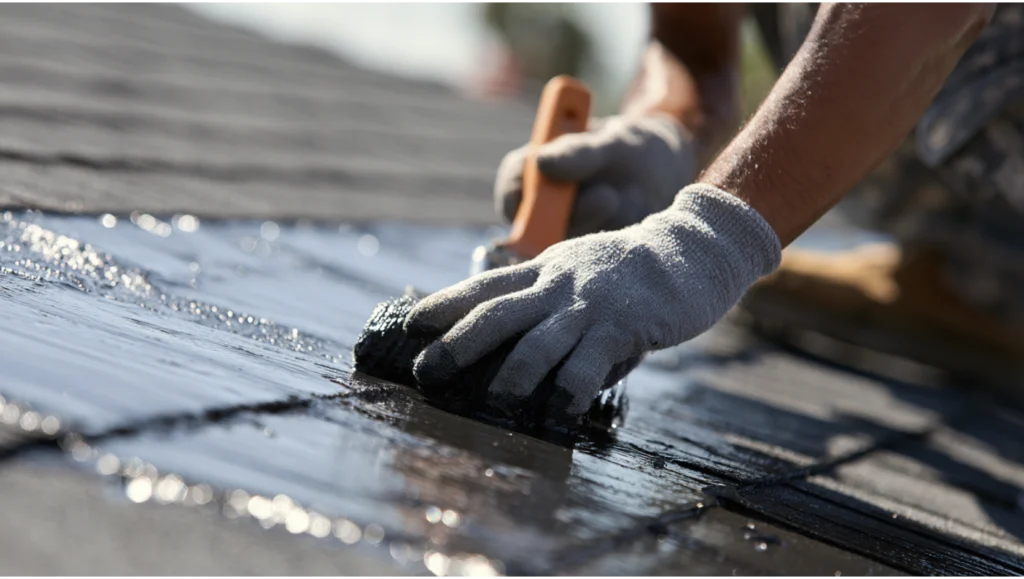
Usually, no. The Asphalt Roofing Manufacturers Association strongly advises against field-coating installed asphalt shingles. Many shingle manufacturers don’t recommend it, and some local codes may prohibit it because a coating can affect fire classification, algae resistance, and impact resistance.
The practical problems are real. Coatings can shrink as they cure, which pulls shingles into curling or cupping. They can loosen granules. A non-permeable coating can trap moisture in the assembly. ARMA also notes there’s limited documentation that coating shingles delivers the longer life, energy savings, or leak fixes that get promised. If you have an asphalt shingle roof, the responsible first step is an inspection. Repair or replacement often protects your home better than a roof coating ever would.
Benefits of Roof Coatings for a Commercial Roof
Applied to the right roof, a coating earns its place. The benefits of roof coatings show up across commercial roofing, where downtime is expensive and every square foot counts. A coating adds UV protection and weathering resistance to roof surfaces that take a beating from the sun. Reflective coatings lower roof temperatures, which can ease the load on your rooftop air conditioning units during hot months. And by responsibly delaying a full tear off, a coating keeps roofing materials out of the landfill, cuts roofing waste, and can lower lifecycle cost when the roof underneath is structurally sound. For a building owner weighing options, that combination stretches service life while protecting the asset.
The honest caveat is on energy costs. Real reductions in cooling costs depend on climate, insulation, HVAC efficiency, and your utility rates. The U.S. Department of Energy is clear that climate matters, so treat cooling benefits as real but variable, not a guaranteed number on your bill.
How Reflective Coatings Lower Roof Temperatures and Energy Costs
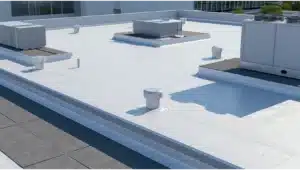
Reflective coatings work through two properties: solar reflectance, which bounces sunlight away, and thermal emittance, which releases absorbed heat. ENERGY STAR, citing Lawrence Berkeley National Lab, notes that on a summer afternoon a clean white roof reflecting 80% of sunlight can stay about 50°F cooler than a gray roof reflecting 20%. Cooler roof surfaces can mean better indoor comfort, lower cooling costs, less peak strain on the grid, and slower material degradation. Reflective coatings reduce interior temperatures across a building and help buildings save energy during peak energy usage. When you compare a traditional roof against a coated one in warmer climates, the cooler surface does more of the work of minimizing cooling costs. At scale, these coatings also ease the urban heat island effect in dense areas, where rooftop heat pushes urban air well above rural air temperatures. When many roof surfaces stay cooler, the surrounding air stays cooler too, and a whole building’s lower carbon footprint follows from less mechanical cooling. Cool roofs pay off most in hot, sunny conditions, which is exactly the point when we get to California.
When Does a Roof Coating Make Sense?
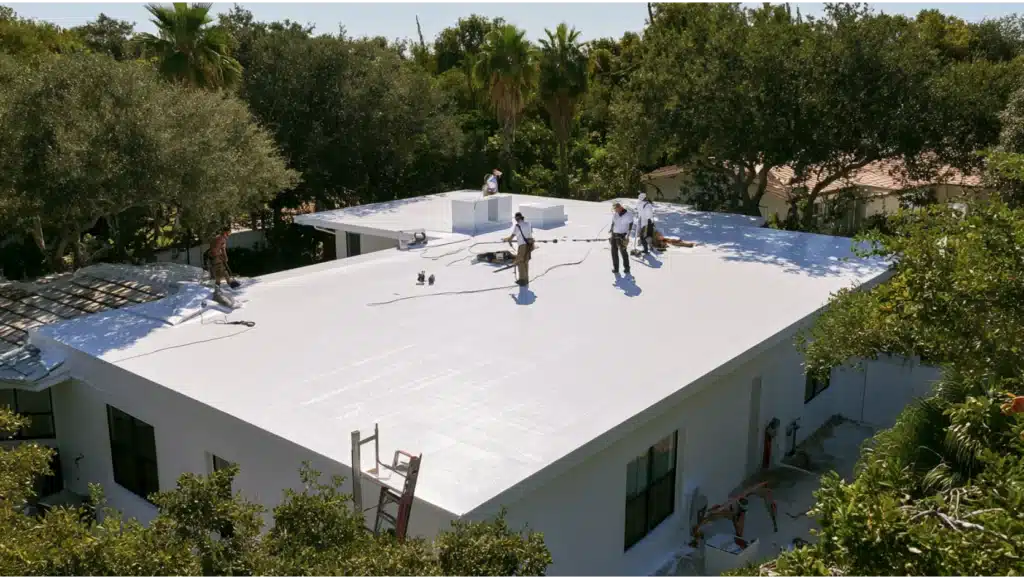
The decision starts with the roof underneath, and proper surface preparation makes or breaks the result. A roof coating can make sense when:
- The roof is structurally sound
- Any leaks are minor, identified, and repaired first
- Decking and insulation are dry and stable
- Drainage is adequate and ponding water is not a chronic problem
- The existing roof material is compatible with the coating
- The manufacturer allows the coating on that substrate
- The coating can be applied to its required dry mil thickness and coverage
- Any local code or cool roof requirements can be met
Meet those conditions and a coating becomes a smart way to extend the service life of your roof and plan maintenance. This is often the calculation a building owner makes on a commercial roof, where a full tear off means downtime and disruption. Miss those conditions, though, and you’re paying to hide problems that will resurface. Roof size also factors in, since larger commercial and industrial buildings see the biggest returns on reflectivity.
When Repair or Full Roof Replacement Makes More Sense
Sometimes the responsible answer is to stop and address the roof itself. A coating is usually the wrong move when:
- There are widespread active leaks
- Decking is rotten or soft
- Insulation is wet
- Flashings are failing
- Ponding water is chronic and caused by the roof’s design
- Shingles are curling, cupping, losing granules, or near end of life
- Coating would void manufacturer coverage or compromise fire classification
- You’re preparing for solar and the roof won’t outlast the panels
An old roof that has run out of life needs a full roof replacement, not a cosmetic layer over failing materials. This is where we inspect, repair, replace, or upgrade based on what the roof actually needs, not on what’s easiest to sell. Protecting your investment sometimes means telling you the coating isn’t the answer. Done once, done right.
California and Roseville Cool Roof Considerations
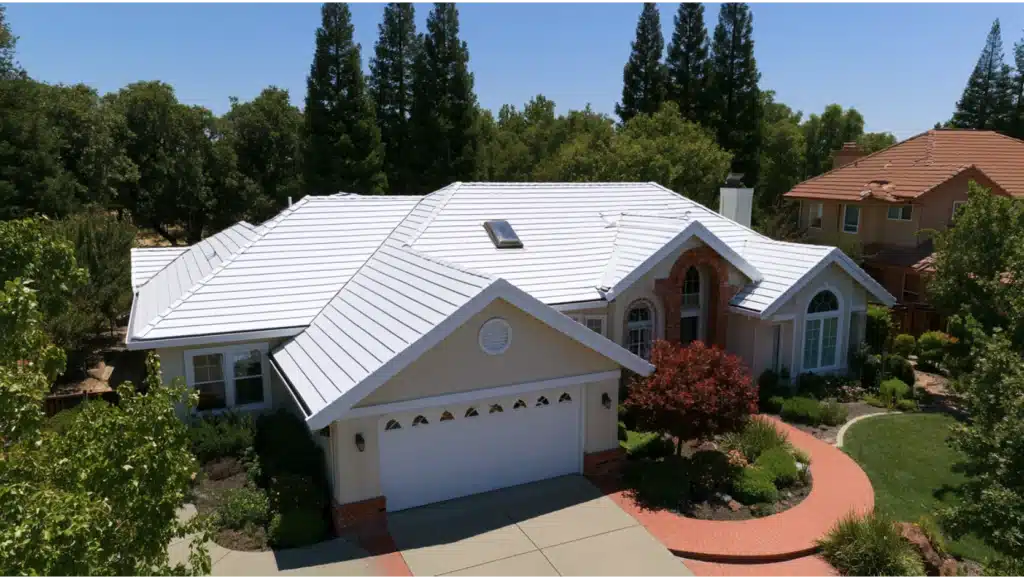
If your project touches enough of the roof, California’s cool roof rules come into play. Title 24, Part 6 sets these requirements, and the 2025 Energy Code took effect January 1, 2026. Roseville falls in Climate Zone 11, where low-slope means a pitch under 2:12 and steep-slope means 2:12 or greater. This matters as much for a homeowner as it does for a commercial building owner planning a commercial roof coating.
Roseville’s residential re-roof form notes that when 50% or more of the roof is replaced, cool roof requirements are triggered for the new roofing area. The Climate Zone 11 minimums look like this:
- Steep-slope: 0.20 aged solar reflectance, 0.75 thermal emittance, or SRI 16
- Low-slope: 0.63 aged solar reflectance, 0.75 thermal emittance, or SRI 75
Local forms and code references change, so verify current requirements with the city before permitting. CAL FIRE also recommends a Class A-rated roof covering when it’s time to replace, which matters in fire-prone parts of Northern California. Coating claims should never override fire classification or code. For work tied to roofing performance, use a licensed C-39 roofing contractor. Cobex Construction Group holds CSLB License #1031864.
What Roseville’s Title 24 Thresholds Mean for Coatings
If a coating is how you plan to meet cool roof requirements, it has to be a product listed by the Cool Roof Rating Council, it must cover the entire roof surface, and it must hit the manufacturer’s dry mil thickness and coverage. Look for a product with the elastic properties to move with the roof and stay UV stable so its aged reflectance holds up over time. Cool Roof Rating Council ratings are based on three years of outdoor weathering, and being listed in the directory doesn’t automatically mean a product meets a specific code threshold. Certain coating systems clear the bar for one slope but not another, so match the product’s aged values to the requirement for your roof.
What a Thorough Roof Coating Process Should Include
The success of any roof coating comes down to inspection, preparation, and adhesion of the coating to the existing surface. A primer is never a substitute for proper prep, and repairs have to be completed and cured before coating begins. A serious process looks like this:
- Inspect the roof condition
- Confirm roof type and slope
- Evaluate moisture, drainage, and any ponding water
- Review flashings, seams, fasteners, and penetrations
- Identify any existing coating or existing roof coverings
- Clean and dry the surface
- Complete all repairs before coating
- Run a primer or adhesion test if needed
- Select a manufacturer-compatible coating system
- Apply to the specified coverage and dry mil thickness
- Walk the finished roof and set a maintenance plan
Our in-house crews handle these steps in order, with clear communication at each stage so you always know where the project stands. Experienced roofing professionals know the roofing industry has no shortcut around good prep, and neither do we.
Frequently Asked Questions
How long does roof coating last?
Does roof coating stop leaks?
Can you coat an asphalt shingle roof?
Can roof coating lower my energy bill?
Do roof coatings meet California cool roof requirements?
Not Sure Whether to Repair, Coat, or Replace?
The right answer starts with an honest look at the roof underneath. Schedule a free roof inspection with Cobex Construction Group. We’ll review the roof, explain your options in plain language, and provide a free, no-obligation estimate with no pressure. Call 916-745-6699 or request a quote online. CSLB License #1031864.