
Key Takeaway
Solar-powered roofing, specifically building-integrated photovoltaics (BIPV), uses materials like solar shingles and solar tiles that replace conventional roofing while generating electricity, unlike traditional panels that mount on racks above the roof. BIPV shingles typically convert sunlight at 14 to 18% efficiency, lower than the 20%-plus common with rack-mounted panels. They make the most sense when a full roof replacement is already needed and aesthetics matter to the homeowner.
Solar powered roofing usually means building integrated photovoltaics, or BIPV: roofing materials such as solar shingles and solar roof tiles that replace part of the conventional roof covering while generating electricity. Traditional solar panels do the opposite, mounting on racks above a finished roofing system. Most homeowners reach this question at a specific moment, either facing a roof replacement or watching an energy bill climb. “Solar roof” gets used loosely in this market, so here is what the solar technology actually is, how it compares to panels, and what to verify before you sign anything.
Building Integrated Photovoltaics BIPV: What It Actually Means
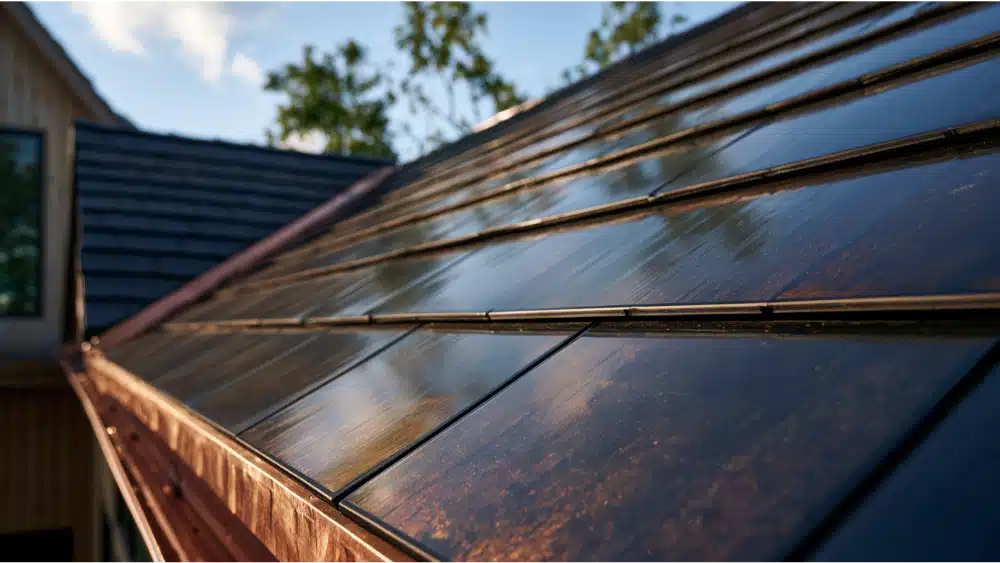
The U.S. Department of Energy describes building integrated photovoltaics as photovoltaic material worked into a building’s outer skin, substituting for traditional roofing material rather than sitting on top of it. Roofing is the most common residential use, though BIPV also appears in windows, skylights, and façades. The distinction matters for everything that follows: a BIPV component has to do the job of the roofing it replaced, standing up to the elements, while also handling energy generation. Rack mounted panels do none of the roofing work.
What Are Solar Shingles and Solar Tiles?
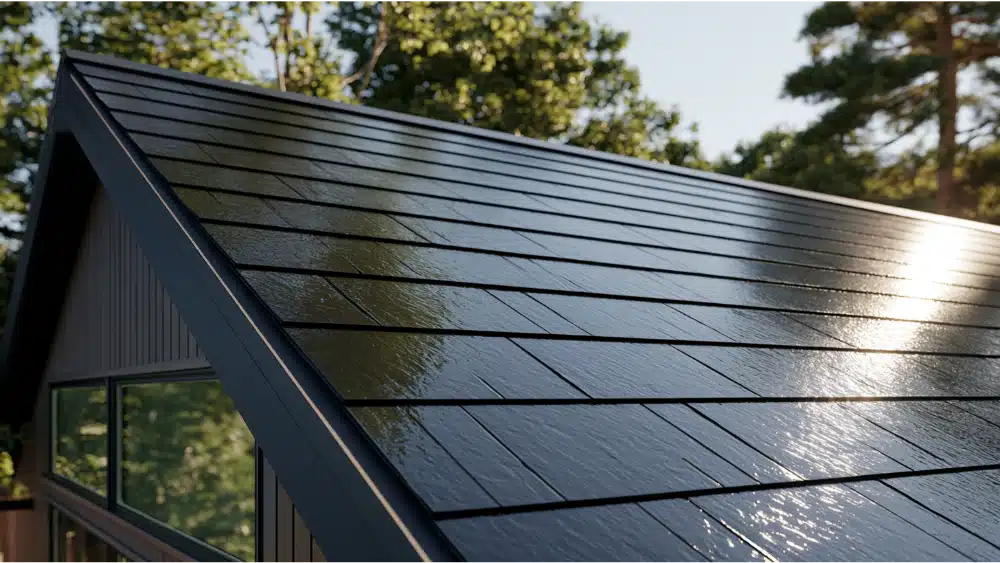
Solar shingles, also called photovoltaic shingles, are the roofing form of BIPV. They are installed as part of the roof surface instead of above it, usually combined with matching non-solar shingles so the finished system reads as one uniform surface. Seamless integration is the selling point. Worth knowing before you read any proposal: on most integrated solar roofs, only a portion of the roof generates electricity rather than the entire roof, and the rest is conventional roofing designed to match. The first solar shingles certified under UL 7103, the safety standard written specifically for BIPV roof coverings, reached the market in 2022.
How Solar Shingles Work to Generate Electricity
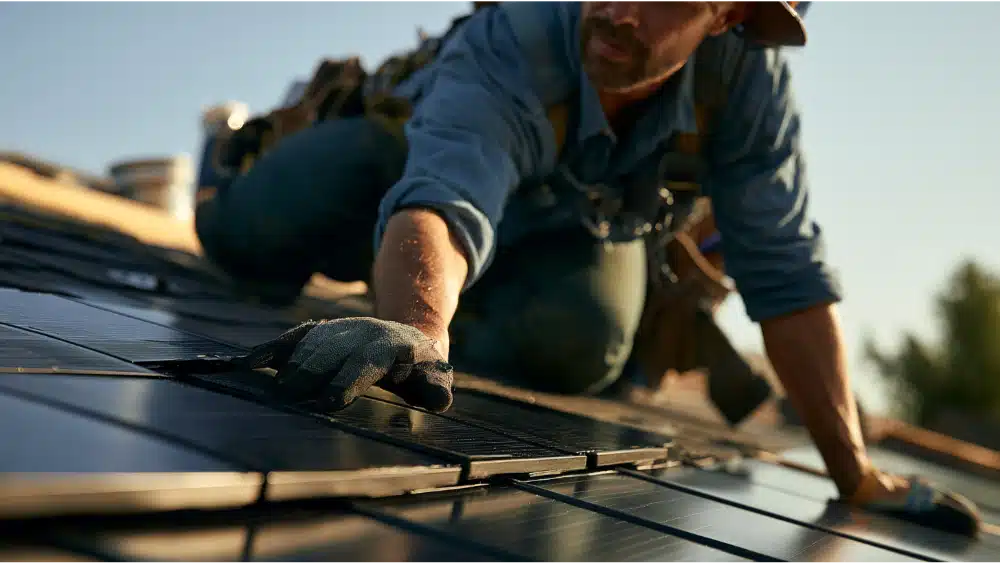
Solar shingles work on the same physics as a conventional panel. Only the form and the installation change.
- Sunlight reaches the photovoltaic cells built into the shingles.
- The solar cells produce direct current (DC) electricity.
- Wiring carries it to an inverter, either a string inverter, microinverters, or module level electronics, depending on system design and shade.
- The inverter converts DC into the alternating current (AC) your home uses, and inverter efficiency affects how much of it you keep.
- Your home consumes what is available at that moment and draws grid power when production falls short.
- Anything left over charges a battery or flows to the grid, depending on your utility’s rules.
A battery is not required for a grid connected system. A standard grid tied roofing system shuts down during a blackout unless it was specifically designed to run independently.
Solar Shingles vs. Traditional Solar Panels: What Is the Difference?
Both convert sunlight into electricity. The real differences are physical, financial, and practical. DOE notes that BIPV typically costs more and delivers less energy output for the same roof area than traditional systems of racked panels, largely because cell efficiency is lower. That is the honest starting point.
| Factor | BIPV solar shingles | Traditional solar panels |
|---|---|---|
| Relationship to the roof | Replace part of the roofing | Mounted above the existing roof |
| Aesthetics | Low profile, integrated | Visibly racked above the roofline |
| Best timing | Reroof or new construction | Added to a sound existing roof |
| Output per usable area | Typically lower | Typically higher |
| Efficiency (category range) | Roughly 14 to 18% | Often above 20% |
| Service | Product specific repairs | Serviced separately from roofing |
Treat those efficiency ranges as category context, not product specs. Confirm real numbers against the data sheet for the exact shingles being proposed. Heat also trims efficiency, roughly 0.3 to 0.5% per degree Celsius above rated conditions, which matters through a valley summer.
The Roofing System Details That Matter Most
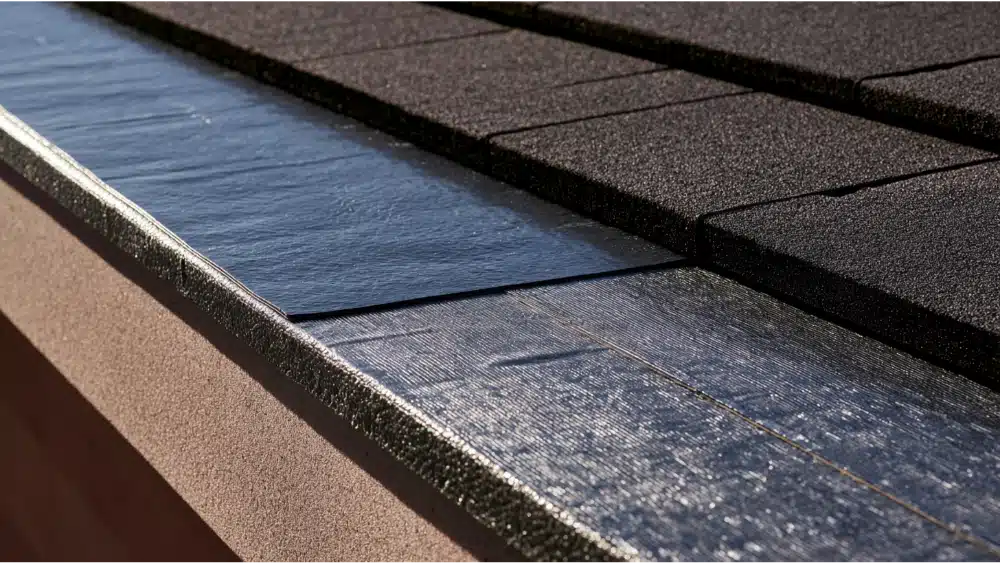
A solar roof is a roofing decision first and a solar product decision second. If it leaks, the wattage does not matter.
Installation requirements start with a sound deck and the right underlayment. Flashing at valleys, ridges, eaves, chimneys, and every penetration still governs whether water stays out. Drainage has to shed water the way it would under asphalt shingles, and attic ventilation still has to manage heat beneath a surface that now carries electrical components. Fire classification and wind resistance apply too. UL 7103 evaluates electrical safety, fire, wind, weather protection, and long term durability together, and the 2021 IBC and IRC require listed and labeled BIPV roofing.
Ask how one of the PV shingles gets located and replaced without breaking the weather seal around it. DOE has flagged serviceability of individual photovoltaic modules and water intrusion as open issues in this category. Get leak responsibility in writing when the roofing and electrical scopes are split between trades. Work like this holds up only when it is done once and done right.
The Benefits of Combining Roofing and Power Generation
The clearest advantage is handling both jobs in one project. A single assembly covers weather protection and power generation, which simplifies scheduling and accountability compared with reroofing now and racking panels later. Aesthetics are the other draw, especially in design sensitive neighborhoods or for homeowners who do not want visible racks. You produce renewable energy onsite, and most BIPV systems can be paired with battery storage after installation. The strongest cases are new construction and roofs already due for replacement.
What Are the Limitations of Solar Shingles?
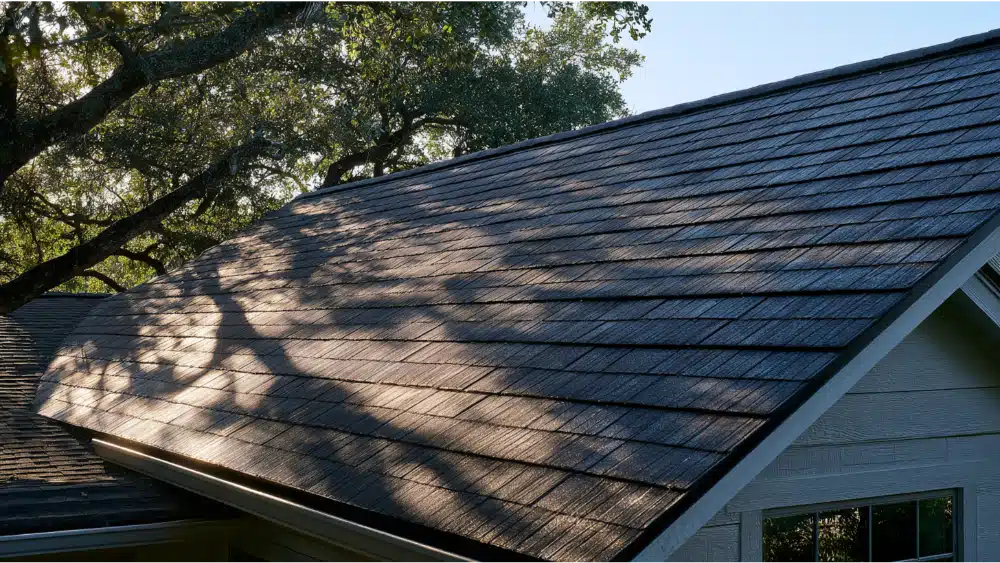
Solar shingles generally require a full roof replacement, so they are a poor fit for a roof with years of life left. They cost more per square than asphalt shingles, sit among the higher cost per watt options, and produce less energy for a given area than panels. On homes with limited roof area, that gap matters more. Availability and installer experience remain thin across the solar industry, and DOE research found that replacement shingles from different manufacturers may not be dimensionally interchangeable, which makes manufacturer continuity a real risk across a 25 year horizon. Complex or shaded roofs cut output further. One correction worth noting: the IRS states the federal Residential Clean Energy Credit is not available for expenditures made after December 31, 2025.
When Does Solar Roofing Make Sense, and When Should You Mount Solar Panels Instead?
DOE advises weighing roof age, condition, shade, and orientation before you mount solar panels or integrate them. Coordinating a reroof with solar also avoids paying to remove and reinstall racked panels later.
Potentially a stronger fit:
- Your roof is due for replacement now.
- You have large, unshaded roof planes.
- Aesthetics are a genuine priority for you.
- A listed product, a trained local installer, and written service documentation are available.
Potentially a weaker fit:
- Your existing roof has substantial useful life remaining.
- The roof is heavily shaded or broken into small, awkward planes.
- Maximum output per square foot is your main goal.
- Product support, parts, or utility terms are uncertain.
What to Ask Before Signing a Solar Installation Contract

- Is this product listed and labeled as a BIPV roof covering under UL 7103?
- Which sections generate energy, and which are matching inactive shingles?
- What annual production estimate, in kilowatt hours, reflects my roof’s real shade and orientation rather than a generic model, and what long term savings does it imply?
- Who is responsible for roofing, electrical, permits, and utility approval, and under which license classifications?
- How is a failed shingle diagnosed, and does removing it disturb the shingles beside it?
- What happens if the manufacturer discontinues the product, and who handles leaks in the meantime?
- Is battery storage included, optional, or unavailable, and what monitoring comes with the system?
On longevity, DOE reports that most solar panels hold at least 80% of their initial output for 25 years or more, while string inverters typically last 10 to 15 years and may need replacement within the roof’s service life.
What California and Roseville Homeowners Should Know
The 2025 California Building Standards Code took effect January 1, 2026, and the California Residential Code references UL 7103 (2019 edition) for BIPV roof coverings. The state’s new home solar requirement does not apply simply because an existing home is being reroofed. CSLB identifies A, B, C-10, and C-46 as classifications authorized for photovoltaic work depending on circumstances, and residential solar contracts must include the Solar Energy System Disclosure Document. Roseville is served by a municipal utility, so statewide investor owned net billing descriptions do not apply here. You will need City building approval, Roseville Electric interconnection approval, and written permission to operate before the system is energized. Roseville currently limits system size to 100% of your prior 12 months of usage. California Civil Code 714 generally prevents HOAs from prohibiting solar outright, though reasonable restrictions still apply, and the state’s active solar property tax exclusion is scheduled to sunset January 1, 2027. Our Roseville office is at 503 Giuseppe Ct Ste 4, and we work under CSLB License #1031864.
Frequently Asked Questions
What are the disadvantages of solar shingles?
Lower efficiency than panels, roughly 14 to 18% against over 20%, higher cost per watt, and the need for a full roof replacement to have them installed. Installer availability and long term replacement compatibility are real concerns DOE has identified.
Which is better, solar panels or solar shingles?
Neither wins universally. Panels are usually more efficient per square foot and better supported by service networks. Solar shingles make their strongest case when the roofing system needs replacing anyway and appearance matters to you.
What is the price of BIPV solar panels?
Cost varies too much by product, roof complexity, and system design for any published range to be reliable. Get a written, itemized quote. California residential solar contracts must include the Solar Energy System Disclosure Document covering total cost, payments, and cancellation rights.
Does solar roofing still qualify for a federal tax credit in 2026?
No. The IRS states the Residential Clean Energy Credit is not available for expenditures made after December 31, 2025. Any guide still telling you to claim a 30% federal residential credit for a 2026 installation is out of date.
Why is it difficult to sell a house with solar panels?
Most friction comes from transferring a lease or loan, incomplete documentation, and handing off monitoring access. With solar shingles, buyers and inspectors will also ask whether the product is still manufactured and who services it.
Start With the Roofing System, Then Decide About Solar
There is no universally right answer between integrated solar shingles and a conventional roof with racked panels. The honest starting point is the roof itself: its age, condition, shade, and orientation. We are family-owned and operated, we use in-house crews, and we will tell you plainly what your roofing system needs before anyone talks about sustainable energy. Request a free, no-obligation inspection or call 916-745-6699. CSLB License #1031864.