
Key Takeaway
A roof not ready for heavy rain typically shows at least one of 7 warning signs: missing or damaged shingles, excessive granule loss, failed flashing or pipe boots, blocked drainage or ponding water, interior moisture or attic stains, a sagging roofline, or a history of unresolved leaks. Any single sign marks a weak point that sustained, wind-driven rain is likely to find and exploit. A professional inspection before storm season is the most reliable way to know your roof’s actual condition.
The clearest warning signs are missing shingles or damaged shingles, excessive granule loss, failed flashing or roof penetrations, blocked drainage or ponding water, moisture showing up inside the house or attic, a sagging roof structure, and a history of leaks or recent storm damage. Any one of them means your roof has a weak point that a hard rain is likely to find.
If you have been watching the forecast and wondering whether this is the storm that finally brings water through the ceiling, that worry is reasonable. Most roofs give some warning before they fail, but the hidden damage tends to announce itself late. Catching one of these signs early is usually the difference between a contained repair and drywall, insulation, and framing that all have to come out.
One thing before you start looking: do not climb onto a wet, steep, or damaged roof to check. Everything worth seeing can be seen from the ground, a secure ladder, or inside your home.
What Heavy Rain Tests, From the Surface to the Layers Underneath
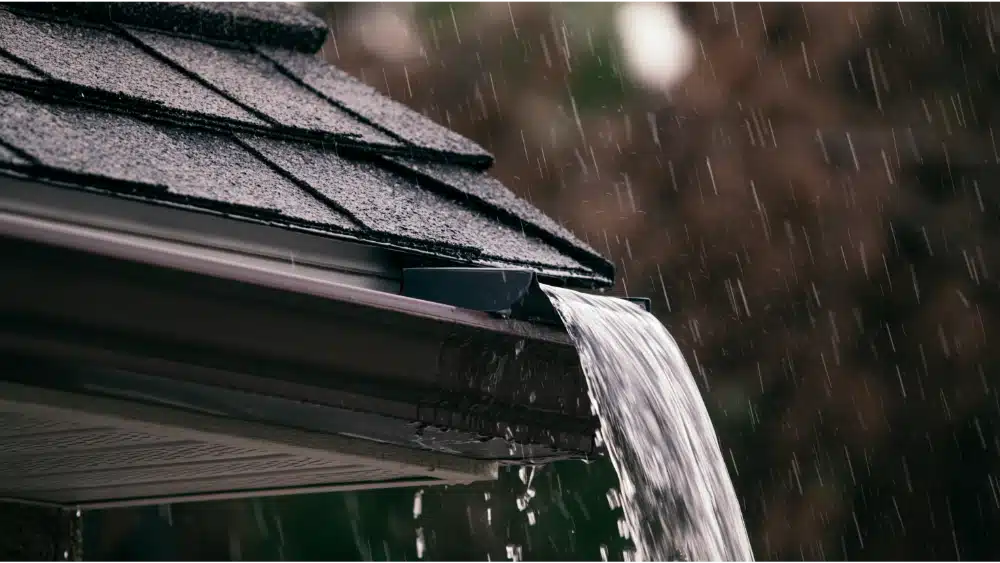
Your roof is a water-management system, not a single surface. The covering, the flashing at every transition, the penetrations, the valleys, the gutters, the decking underneath, and the attic all work together as one roof system. Heavy rain tests the weakest link in that chain.
The National Weather Service classifies rainfall above roughly 0.3 inches per hour as heavy, but no rainfall number is a pass or fail test for a roof. Duration, wind direction, and drainage capacity matter more. A sustained storm delivers more water for longer, high winds push rain sideways and even uphill underneath lifted shingles, runoff concentrates into valleys at volumes a drizzle never produces, and gutters reach capacity and back water up under the roof edge. That combination is why a roof can stay perfectly dry through a light rain and allow water intrusion during a storm. It is also why roof problems tend to stay hidden until the worst possible week.
7 Signs Your Roof May Not Be Ready for Heavy Rain: Obvious Signs and Hidden Ones
These seven warning signs fall into three groups: the roof surface is losing protection, water is not being redirected where it should go, or roof damage is already present. Sorting them this way helps you tell a cosmetic issue from something that needs attention this week.
| What you may notice | Why heavy rain makes it worse | Safe next step |
|---|---|---|
| Missing shingles, or lifted, cracked, and curling ones | Wind-driven rain gets under the covering and spreads shingle damage | Schedule a professional roof inspection |
| Granules in gutters, bare spots on shingles | Thinned protection sheds water less predictably | Monitor, inspect if bare patches show |
| Loose flashing or cracked pipe boots | Transitions are where most leaks start | Schedule inspection |
| Clogged gutters, packed valleys, ponding water | Water backs up under edges and into walls | Clear safely, inspect if overflow repeats |
| Ceiling stains, damp insulation, musty attic | Evidence water is already entering | Prompt inspection |
| Sagging or wavy roofline | Decking or structural issues may be present | Urgent evaluation |
| Past leak, repeated patch, recent storm | The weak point has already proven itself | Schedule inspection |
1. Missing Shingles, Curling Shingles, and Their Tile and Metal Equivalents
The National Roofing Contractors Association lists cracked, warped, curling shingles or missing ones as recognized warning signs, and they are among the most obvious signs that a roof needs attention. Different roofing materials fail in different ways. On tile and metal material, look for cracked or slipped tile, loose or lifted panels, seams that have opened, and open laps on low-slope sections. Any lifted edge gives wind-driven rain a path underneath the covering, where it reaches the underlayment and eventually the deck. High winds loosen shingles at the tabs first, and once a few let go, that wind damage spreads along the same course. Visible damage after a storm is worth a professional roof inspection before the next one arrives.
2. Granule Loss: Normal Wear Versus a Real Problem
Granules shield the asphalt underneath from UV damage, according to the Asphalt Roofing Manufacturers Association. A few sand-like granules in a gutter after installation is normal wear. NRCA flags excessive accumulation in gutters and downspouts as a sign of a potential problem, and the real concern is heavy or increasing loss paired with visibly patchy or bare areas on the roof. Once that protective surface thins, aging materials shed water less predictably and asphalt shingles age faster than their expected lifespan would suggest. Monitor, then inspect if you can see bare patches from the ground.
3. Loose Flashing, Cracked Pipe Boots, or Damaged Roof Penetrations
Flashing is the metal that seals transitions: chimneys, skylights, walls, valleys, and vents. Most roof leaks show up at those transitions and penetrations rather than in the open field of the roof, which is why ARMA treats flashing points as especially vulnerable and recommends checking the underside of the deck nearby for stains. Failed flashing details are among the most common roofing issues we find on roofs that otherwise look sound.
Worth correcting a common shortcut: a bead of caulk smeared over failed flashing is a temporary cover, not a repair. The detail underneath has to be rebuilt correctly or the water finds the same path again. Caught early, that is often a simple repair. Schedule an inspection.
4. Clogged Gutters, Blocked Valleys, Overflow, or Ponding Water
NRCA and ARMA both recommend keeping gutters, drains, and valleys clear. When drainage fails, water backs up under the roof edge and into fascia, soffits, and walls, which is how a gutter problem becomes a roof problem in one storm. Debris buildup in valleys does the same thing at a higher volume. On flat or low-slope sections, ponding water, open seams, and loose fasteners are recognized warning signs, and standing water leaves trapped moisture sitting on seams and fasteners for days after the sky clears. Model provisions in the 2024 IRC call for drains at low points and secondary overflow drainage where water could be trapped, though local adoption varies. Clear debris safely from a ladder, and inspect if overflow keeps happening.
5. Water Stains on Ceilings, Damp Insulation, or a Musty Attic
This is evidence that water is already getting in, not just a risk factor. Brown or yellow stains in rings, peeling paint, damp insulation, and a musty smell from trapped moisture in the attic all belong in this category.
Here is the part homeowners often miss: water travels along decking, rafters, insulation, and fasteners before it becomes visible, so the visible damage inside rarely sits directly under the opening. A small stain on a bedroom ceiling can trace back to a flashing detail ten feet away. The EPA advises drying water-damaged materials within 24 to 48 hours to reduce mold risk and fixing the underlying source. Treat it as a prevention guideline and get an inspection promptly.
6. A Sagging Roof, Wavy Roofline, or Soft Roof Decking
This is the highest-priority sign on the list. Sagging between rafters or along a ridge can point to saturated or failing roof decking, or to structural problems underneath. ARMA recommends structural evaluation whenever a roof does not look straight and solid, and notes that rotted or warped decking has to be replaced rather than covered over. Trapped moisture in the sheathing is usually what softens it, and that hidden damage builds quietly beneath a surface that still looks intact from the curb.
Do not walk beneath a bulging ceiling, and do not climb up to investigate sagging sections. Call for a professional inspection and structural evaluation before the next storm, not after. When the roof structure itself is involved, the scope is decided by what the framing and decking need, not by what is on top of them.
7. A Previous Leak, a Repeated Patch, or Recent Storm Damage
A roof that has leaked during wind-driven or sustained rain has already shown you where it is weak. A leak that stopped is not a leak that was solved, especially if the source was never confirmed.
You will see other articles list “your roof is over 15 years old” as a warning sign. We would not. Age is context, not proof, and no single number makes a roof unready for rain. Two roofs of the same age with the same expected lifespan can be in completely different condition depending on attic ventilation, installation, and weather exposure. An older roof with sound flashing and good airflow can outperform a newer one sitting above poor ventilation. Dark algae streaks are the same story, since ARMA notes algae affects appearance rather than damaging asphalt shingles. Recent high winds, hail, or fallen limbs justify a check even when there is no visible damage inside.
A Safe Five-Minute Roof Condition Check You Can Do Before the Rain
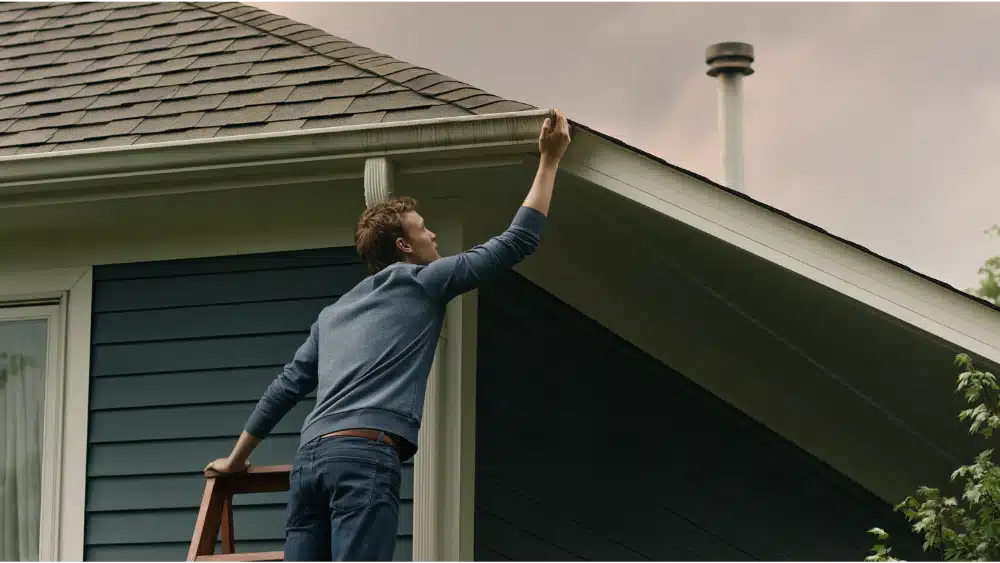
NRCA’s homeowner guidance is direct: stay off the roof where possible, work from a secure ladder, and leave roofing work to trained professionals. Everything below respects that.
- View the roof from your yard or driveway. Binoculars help more than you would expect.
- Look for missing shingles, displaced or lifted material, and any gap where daylight shows through.
- Check gutters and downspout outlets for packed debris and granule buildup.
- Scan upstairs ceilings and the tops of exterior walls for water stains or peeling paint.
- If you have an accessible attic, look in from a secure walking surface with a flashlight.
- Photograph anything unusual, with the date.
No walking on a wet, steep, tile, or damaged roof. No hose testing from a ladder. And if you find moisture inside, watch for wiring and light fixtures near it.
When to Schedule a Professional Roof Inspection, and When Roof Damage Is Urgent
NRCA recommends biannual inspections, commonly fall and spring, plus a check after severe weather. The right schedule for your home depends on roof condition, material, exposure, and what storms have come through recently. Regular inspections catch minor issues while they are still a small repair. That early detection is what keeps a slow leak from turning into costly repairs across the ceiling below.
Schedule before the next heavy rain if you see:
- Missing shingles or damaged shingles anywhere on the roof
- Granule loss paired with bare patches
- Gutter overflow that keeps recurring
- Old water stains or a musty attic odor
- A past leak with no confirmed source
Treat as urgent:
- Active water near lights, wiring, or electrical fixtures
- A bulging or bowing ceiling
- Visible sagging in the roofline
- Widespread dripping during rain
- Impact damage from fallen limbs, or loose material that could fall
A free, no-obligation roof inspection is a reasonable first step in either case.
Does One Warning Sign Mean You Need a Full Replacement?
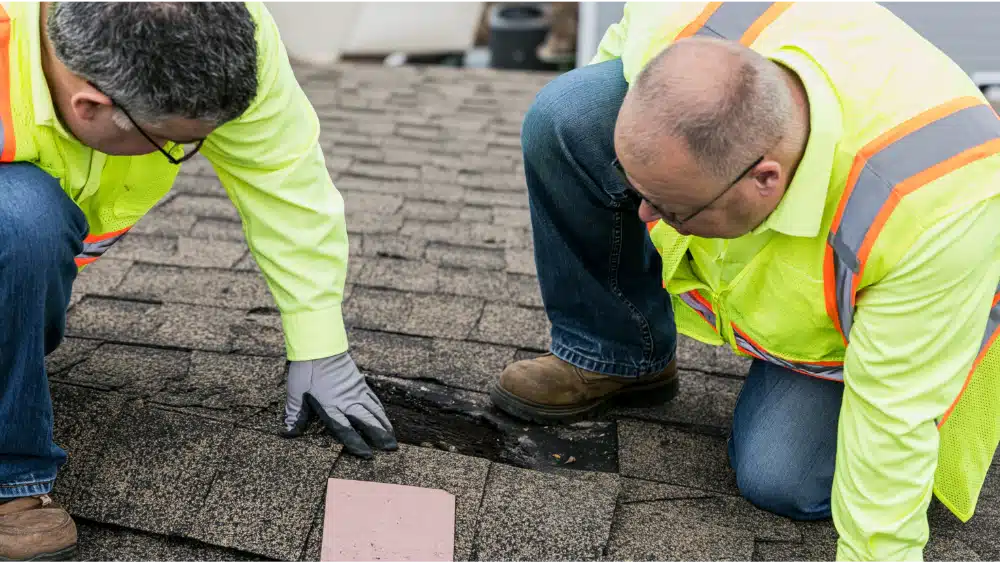
No. Plenty of leaks trace back to one failed pipe boot, a single run of flashing, or localized damage from a branch. A few damaged shingles and a roof with repeated failed patches across multiple areas are entirely different situations. When multiple warning signs appear in different parts of the roof, the conversation changes.
What decides it is roof condition. A thorough inspection reports what is actually happening at the covering, the flashing, the layers underneath, the decking, and the ventilation, then recommends maintenance, repair, or roof replacement based on that. Not on the roof’s age, and not on what is easiest to sell. When the right answer is a repair, we say so. When the decking is compromised or the failures are spread across the roof system, a full replacement protects you better over the long term. Done once, done right, either way. Our maintenance program exists for homeowners who want to stay ahead of the wear rather than react to it.
Heavy Rain, Storm Damage, and Roof Insurance in California
Coverage depends on the cause of loss and the language in your specific policy. The California Department of Insurance notes that homeowners policies typically cover perils such as windstorm, hail, and sudden accidental water damage, while commonly excluding flood, long-term seepage, wear and tear, neglect, and mold. Sudden leaks that begin during a windstorm sit in a different category from water that has been working its way in for years. CDI gives the example that rain entering through an opening created by strong winds may generally be covered.
After a loss, CDI advises reporting promptly, photographing and documenting the roof damage, making reasonable temporary repairs to prevent further damage, keeping receipts, holding off on permanent repairs until the adjuster has evaluated the loss, and not risking your personal safety. We can work with your insurance company through the repair or replacement process, with documentation and photos from the inspection.
Getting Ready for the Rainy Season in Roseville and Northern California
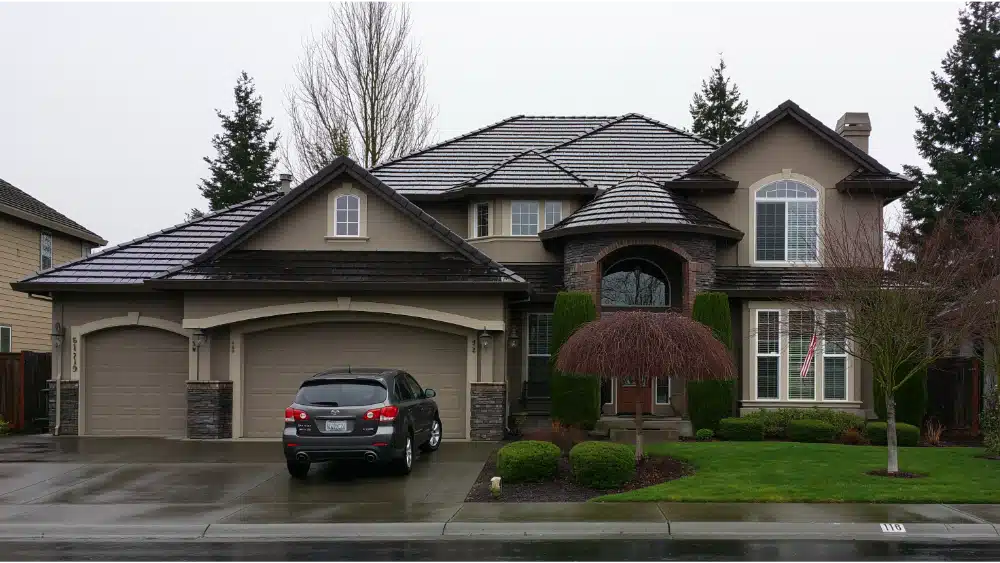
Roughly 75% of California’s annual precipitation falls between November and March, concentrated in December through February, according to the Department of Water Resources. A handful of atmospheric-river storms can deliver much of a winter’s rain, which means our roofs sit dry for months and then get tested all at once. That is why late summer and early fall are the practical window to inspect and to address warning signs while the weather cooperates, and it gives you room to plan ahead instead of reacting mid-storm. Foothill and higher-elevation homes carry added exposure from wind and snow accumulation.
If an inspection points to a roof replacement, the City of Roseville treats residential tear-off and overlay work as a permit application with current-cycle CF1R energy documentation. Scope-specific requirements should be confirmed with the city, since not every repair falls under the same process.
Get a Free Roof Inspection Before the Next Storm
We’re a family-owned and operated exterior contractor with an office at 503 Giuseppe Ct., Suite 4 in Roseville and our corporate office at 4305 Auburn Blvd. in Sacramento. Our in-house crews work under active CSLB License #1031864 with a C-39 Roofing classification, and we’ve been BBB accredited since December 2017, backed by 30-plus years of combined experience on our team.
What you get from us is a clear inspection, a plain explanation of what we found with photos, and an honest recommendation based on your roof’s actual condition, whether that points to a repair or a roof replacement. It’s free, there’s no obligation, and it’s a quick conversation rather than an application. Request a quote online or call 916-745-6699.
Frequently Asked Questions
Does homeowners insurance cover roof leaks from rain?
It depends on the cause. The California Department of Insurance distinguishes sudden damage from covered perils such as wind or hail from long-term leakage, wear and tear, or neglect, which are commonly excluded. Check your policy language and report any storm damage promptly.
What are five signs your roof needs to be replaced?
Widespread missing shingles or damaged shingles, bare areas with heavy granule loss, repeated leaks in multiple locations, damaged or rotted roof decking, and a sagging roof structure. Even with several of these, an inspection is what confirms whether repair or replacement is the right call.
What happens if it rains before shingles are installed?
Exposed decking gets protected with underlayment and tarps, a step called drying in, before rain arrives. If the decking does get saturated, it should be dried or replaced rather than covered over, which is why a careful crew plans the work around the forecast.
What do roofers do if it starts raining?
Stop work, secure loose material, and dry in any open area with underlayment or tarps so water stays out of the structure. Work resumes once the surface is safe and dry. A dry deck and crew safety come before schedule.
How often should a roof be inspected?
NRCA suggests twice a year, commonly in fall and spring, plus a check after any severe storm. An older roof, tile, and low-slope sections often warrant closer attention than that baseline.