
Key Takeaway
A roof anchor is a load-rated attachment point fastened into the structural framing of a roof that connects a worker’s harness and lifeline so a fall is stopped before it causes injury. Roofing crews use them because falls are the leading cause of fatal construction injuries – in 2024, 96 of 120 fatal injuries among roofing contractors involved falls, slips, and trips. OSHA requires fall protection on any unprotected edge six feet or more above a lower level, and each anchor must support at least 5,000 pounds per worker attached.
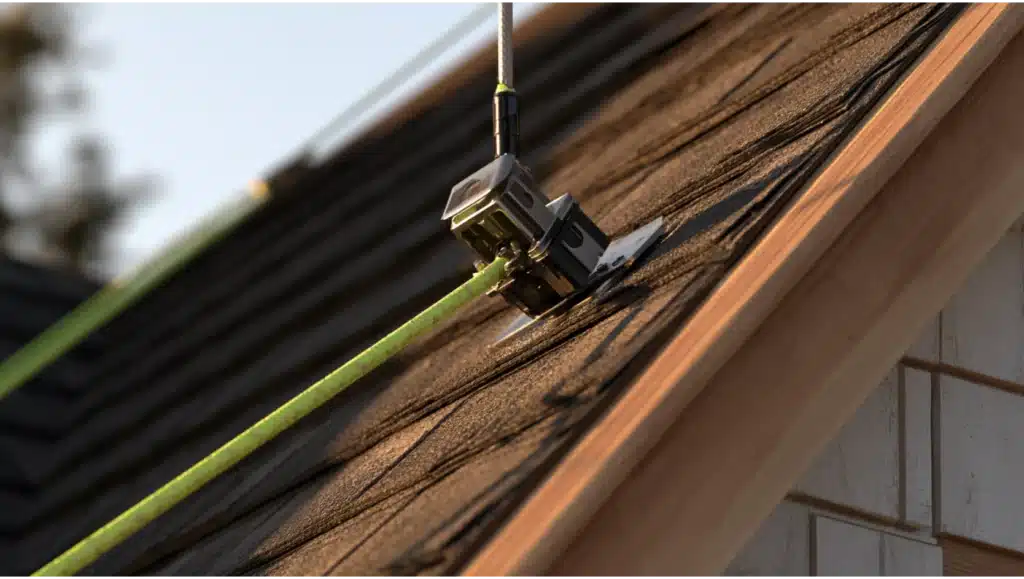
A roof anchor is a secure attachment point that connects a worker’s harness and lifeline to the roof structure, so that if someone slips near the roof edge, the fall is stopped or prevented before it becomes an injury. It’s the fixed connection between a person and the building. Roofing crews use roof anchors because falls are the leading cause of fatal injuries in construction, and a proper tie-off point is one of the simplest safety measures to reduce that risk. If you’ve noticed metal brackets, rings, or ropes on your roof during a project, those are roof safety anchors, and their presence usually signals a crew that plans the work carefully.
What Is a Roof Anchor, Exactly?
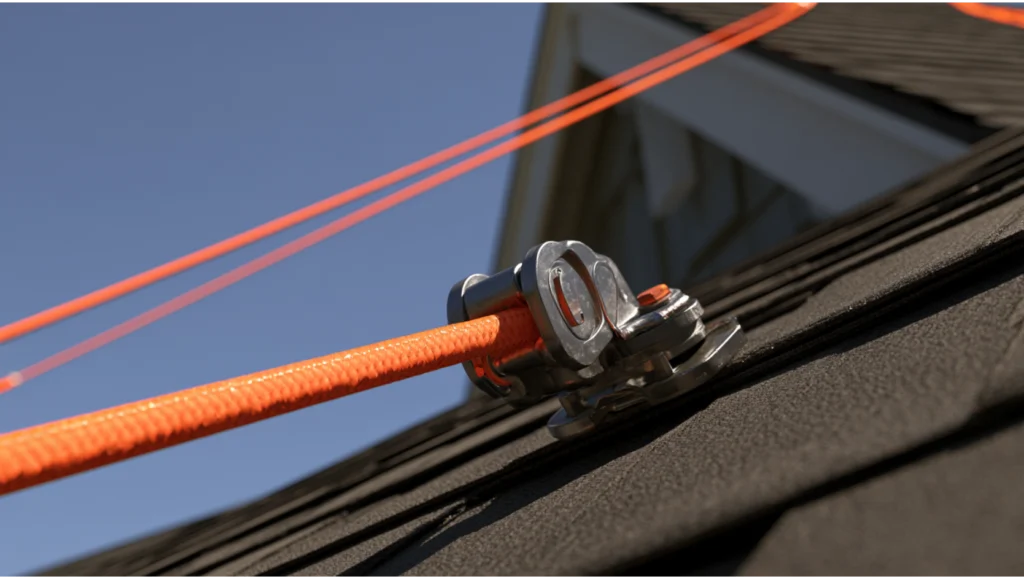
OSHA uses the technical term anchorage, which it defines as a secure point of attachment for lifelines, lanyards, or deceleration devices. In plain terms, it’s the one spot on your roof strong enough to hold a worker if they fall. It gives the lifeline something solid to connect to, and it is the foundation of any roof safety plan. At first glance a small ring may not look like much, but it is doing serious work.
You might see roof anchors in a few forms. A small metal D-ring is common. So is a strap anchor that runs under the roofing material, a flat plate, a ridge or peak anchor mounted near the top of the roof, or a standing seam clamp on a metal roof. Some designs use a u bar attached to framing, or a plate with one fastening ring for a lanyard to clip into. None of these are decorative. Each one is a working safety component designed to carry serious force, and each is chosen to match the roof it’s installed on.
How a Roof Anchor Works Within a Fall Arrest System
An anchor doesn’t work on its own. It’s the primary connection point in a complete personal fall arrest system, or PFAS, which OSHA describes as having three main parts working together:
- The anchor: the fixed point tied into the roof structure, which provides the secure anchor points for the whole system.
- The full-body harness: worn by the worker and rated to distribute the force of a fall across the body. Modern safety harnesses spread that load rather than concentrating it.
- The connector: a lanyard or lifeline that links the harness to the anchor, sometimes with a rope grab or deceleration device in the line. Rope grabs let a worker adjust their position while staying tied off, and self retracting lifelines pull tension automatically as the worker moves.
A harness alone does nothing. Without properly rated safety anchors and a connecting line, there’s nothing to catch the worker. It’s also worth knowing that OSHA has prohibited simple body belts for fall arrest since 1998, because a belt can concentrate the force of a fall in a dangerous way. Only a full-body harness is acceptable now. Together, these fall protection systems keep roof workers connected from the first step onto the roof to the last, which is central to worker safety on any project.
Fall Arrest vs. Fall Restraint: What’s the Difference?
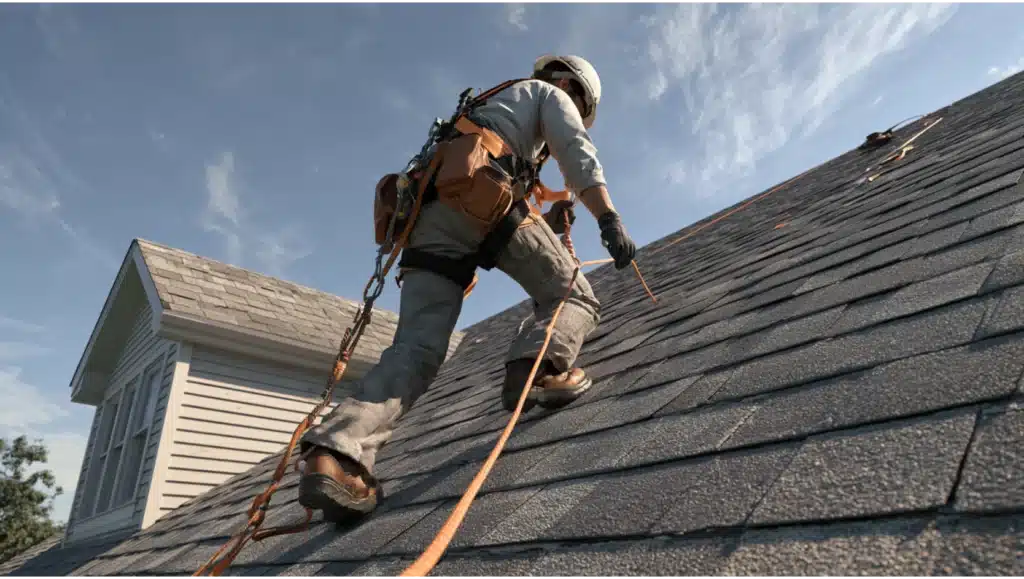
These two terms get blurred often, but the difference is simple. A fall arrest system stops a fall after it starts. The worker can reach the edge, and if they slip, the system catches them. Fall restraint is rigged so the worker’s line is short enough that they physically cannot reach the roof edge to fall in the first place. OSHA recognizes fall restraint as an acceptable approach when it’s set up and used correctly. Both rely on solid roof anchors and sound safety protocols to work.
Why Do Roofing Crews Use Roof Anchors?
The stakes are real. According to Bureau of Labor Statistics data for 2024, there were 120 fatal injuries among roofing contractors, with 96 of those categorized as falls, slips, and trips. Among residential roofing contractors specifically, there were 26 fatalities, 22 of them from falls, slips, and trips. OSHA’s most-cited standards for FY 2025 put Fall Protection general requirements at #1. Falls are among the leading causes of serious injury on a roof, and that is the difference between a routine day and a tragedy.
Roofs are difficult places to work safely. They can be steep, hot enough to soften footing, slick with morning moisture, weakened by storm damage, or cluttered with bundles of shingles and tools. A tie-off point lets a crew stay connected while they inspect, repair, replace, or install roofing without treating every step as a gamble. On most roofing projects, that connection is the first thing a careful crew sets up to protect workers.
There’s a quieter benefit too. When workers aren’t improvising their footing, they can focus on the actual work. Safety planning and quality workmanship tend to travel together, because a team that has thought through how to keep a safe work environment on the roof has usually thought through the rest of the job as well.
Are Roof Anchors Required by OSHA Standards?
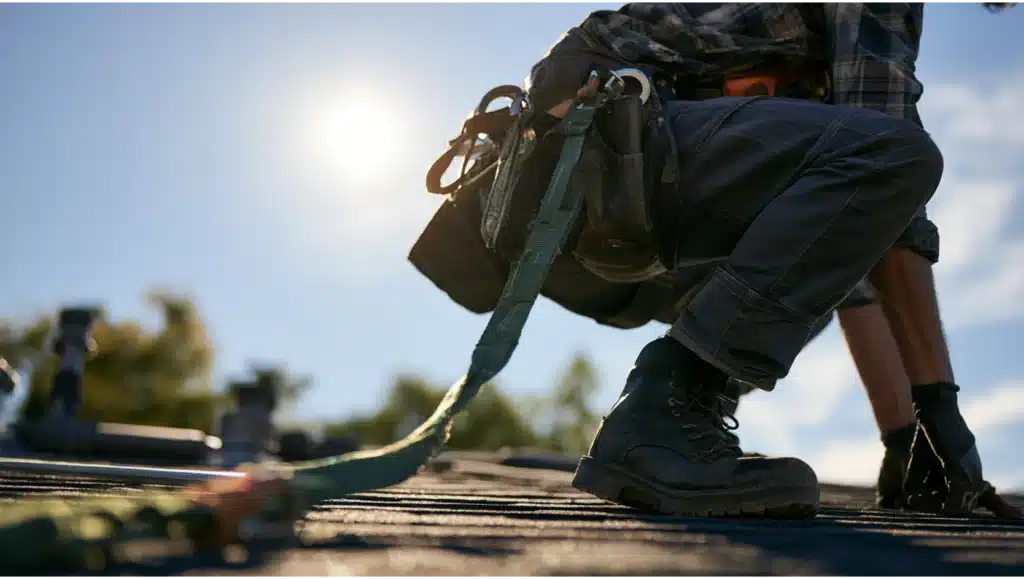
In many situations, yes. OSHA standards for general and residential construction require fall protection for workers on a surface with an unprotected edge six feet or more above a lower level. That protection can come from guardrails, safety nets, or a personal fall arrest system. On most roofs, a roof anchor system with a rated tie-off is the practical choice for rooftop work.
Roof slope matters too. OSHA defines a low-slope roof as 4:12 or less and a steep roof as anything greater than 4:12. Steep roofs generally require guardrails with toeboards, safety nets, or a personal fall arrest system for anyone working six feet or more above the ground. The exact requirement depends on the work type and roof conditions, which is part of why professional crews assess a roof before they start.
California and Roseville: Cal/OSHA Residential Roofing Rules
For homeowners in Roseville and across Northern California, Cal/OSHA has its own residential roofing rules that professional crews plan around. Under Title 8, Section 1731, residential-type roofing on slopes from 0:12 through 7:12 requires fall protection when the fall distance is six feet or more. On slopes greater than 7:12, fall protection is required regardless of height. Section 1724 adds that safety lines used on roofs must be attached to substantial anchorages. A crew that knows these safety standards is planning your project instead of guessing at it, and that planning shows up in how they handle roof safety from the first day on site.
How Strong Do Roof Safety Anchors Need to Be?
Strong. Under OSHA’s construction standard, an anchorage used for fall arrest must support at least 5,000 pounds per employee attached, unless it’s designed, installed, and used as part of a complete PFAS with a safety factor of at least two under the supervision of a qualified person. That’s a lot of force, and it exists because a falling body generates far more load than its resting weight.
This means any hook that simply looks sturdy is not automatically safe. Roof safety anchors have to be rated, placed, and fastened for the job. Reliable equipment that meets these ratings is what makes ensuring safety possible. California adds specific limits worth knowing:
| Requirement | Limit |
|---|---|
| Anchorage strength (per worker) | 5,000 lb, or safety factor of at least 2 |
| Maximum arresting force on the worker | 1,800 lb |
| Maximum free fall | 6 ft |
| Maximum deceleration distance | 3.5 ft |
When more than one worker is on the roof, the crew may need more than one anchor or a specifically engineered system to carry the combined load. Matching the right equipment to the number of workers is part of a proper roof safety plan.
Where Roof Anchor Systems and Anchor Points Are Installed
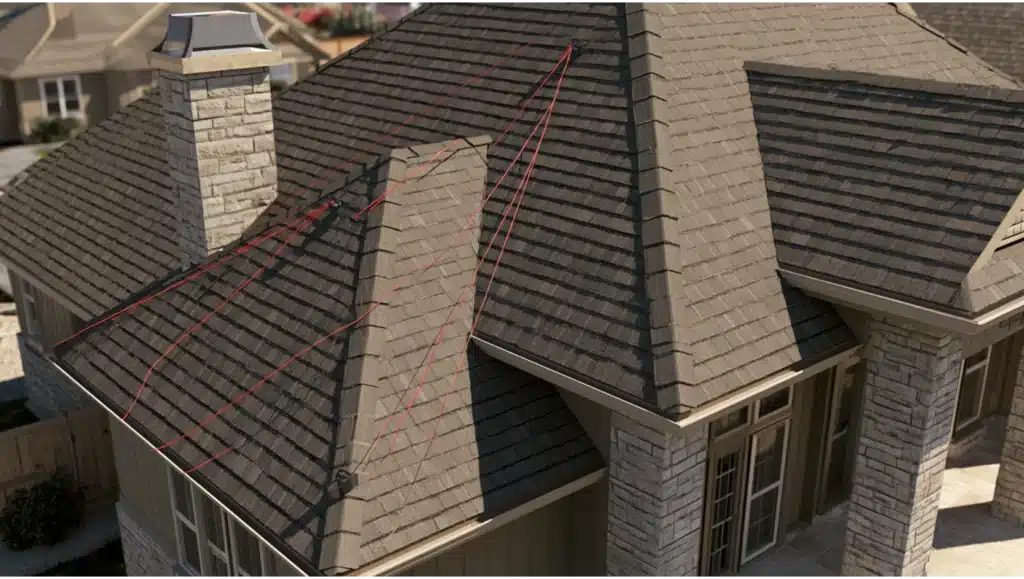
Placement is a planning decision, not an afterthought. Depending on the roof, a crew might install a peak or ridge anchor near the roof’s ridge, a truss support attachment, a standing seam clamp on metal roofing, a top plate anchor, or a strap anchor. Some designs also use soffit or wall attachment points that tie into the side of the structure. Choosing the right anchor points is what keeps workers protected across the whole roof, and each anchor installation should be positioned deliberately.
Here’s the fact many articles skip: a roof anchor must connect to structural framing, meaning the rafters or trusses beneath the roof. Roof sheathing alone is not enough. The plywood or OSB decking you walk on can’t hold the force of a fall, so a properly installed anchor is fastened through it into solid framing. That is why secure attachment points depend on framing, not the surface layer or the ridge cap you see from below.
Location also affects safety in a way homeowners rarely see. If an anchor isn’t positioned overhead, a fall can turn into a pendulum-style swing toward a hard surface. Crews calculate clearance and position anchor points to limit that swing, which is one more reason placement gets planned rather than picked at random. On a commercial property with rooftop light fixtures or equipment, that mapping matters even more.
How Horizontal Lifeline Systems Extend the Safe Work Area
Sometimes a single point anchor isn’t enough coverage. Engineered horizontal lifeline systems connect multiple anchor points with a cable, letting a worker move along a larger span while staying tied off the whole time. These fall protection systems come in single-point and multiple-point configurations, and they have to be installed according to the manufacturer’s instructions or under the supervision of a qualified person. Done right, they turn a fixed tie-off spot into a working zone where several workers can operate safely during maintenance work.
Will Installing Roof Anchors Damage My Roof or Cause a Leak?
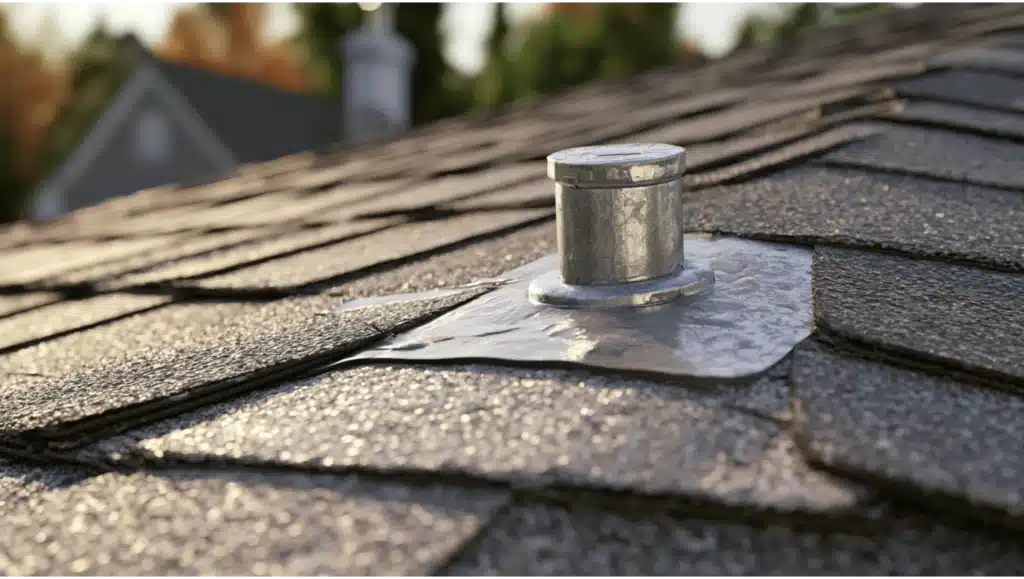
This is a fair concern, and an honest answer helps more than a promise. Installing roof anchors often means lifting, resetting, or replacing shingles or tiles around the mounting point, and any penetration into the roof creates a spot that must be sealed correctly. A rushed or careless installation can absolutely become a leak.
That’s exactly why the work should be planned. A responsible crew considers the roof’s structural integrity before the anchor goes in, protects the surrounding area during the work, and seals penetrations properly afterward. We won’t tell you a roof will never leak, because no one honest can. What we can say is that proper installation is designed to protect the roof system over the long term. That’s the standard behind doing a job once and doing it right, so the roof continues to protect, perform, and hold up over time.
Temporary Anchors vs. Permanent Roof Anchors
Roof anchors fall into two broad categories. Temporary portable anchors are installed for a specific project and removed when the crew finishes, with the mounting points sealed. Some of these portable anchor points are reused across jobs. Permanent roof anchors are left permanently installed for future work, such as a later re-roof, solar installation, HVAC service, gutter maintenance, window washing, or routine inspection.
OSHA notes that leaving anchors in place can reduce the burden for future roofing work. But there’s a firm catch: an existing anchor must be inspected by a qualified person before anyone ties off to it. Time, weather, and previous impact can all compromise hardware, so maintenance and inspection matter as much as the original installation. If you find an old bracket or ring on your building, don’t assume it’s still safe. It needs to be confirmed solid, well-fixed into the framing, and undamaged before it carries anyone’s weight again. Building owners who keep code compliant anchors documented make future service far easier.
Installing Roof Anchors: Common Mistakes to Avoid
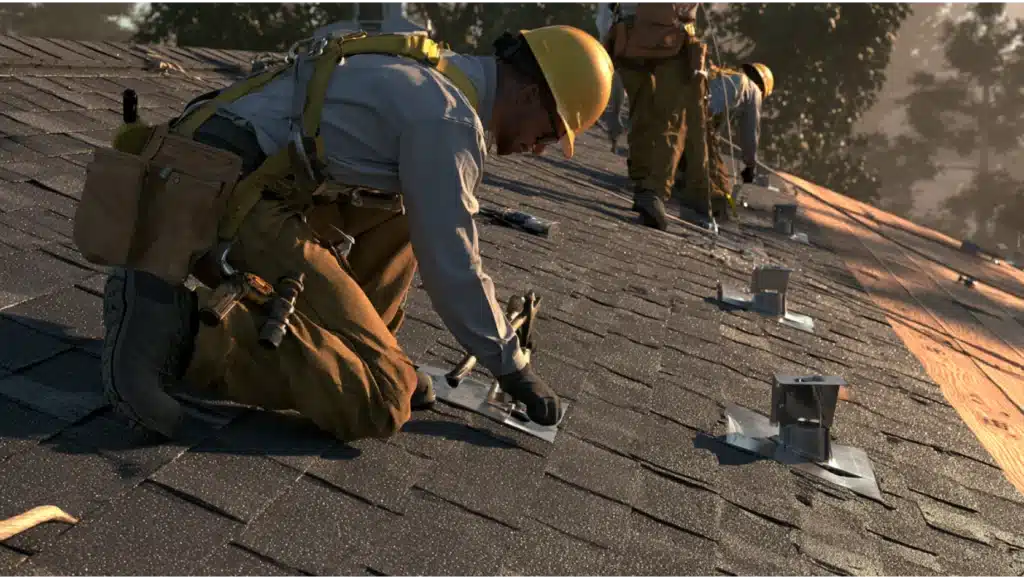
A roof anchor system only works when every part is correct, and a few common mistakes turn safety equipment into a false sense of security. Fastening an anchor into sheathing instead of framing is the most dangerous one. Skipping the pre-use inspection of the harness, lifeline, and hardware is another, since worn equipment can fail under load. Positioning anchor points too far to the side invites a pendulum swing. Reusing an old anchor without confirming its condition, or sealing a penetration poorly, can lead to injury or a leak down the road. Each of these is avoidable when a qualified crew plans the fall protection system before the first worker steps onto the roof.
What Homeowners Should Ask a Roofing Contractor About Safety
You don’t need to be a safety expert to spot a well-run crew. A few direct questions tell you a lot:
- How will your crew handle fall protection on my roof?
- Will any roof anchors be temporary or permanent?
- If you install anchors, where will they attach?
- How will you protect against leaks at anchor locations?
- Who inspects the roof after the anchor is removed or left in place?
- Are you licensed for roofing work in California?
Fall protection equipment also has to be inspected before each use, so a crew that talks openly about its process is showing you how it operates. For the record, Cobex Construction Group holds CSLB License #1031864, and clear answers to questions like these are a sign of a crew that plans rather than improvises.
Why Safety Planning Signals a Contractor You Can Trust
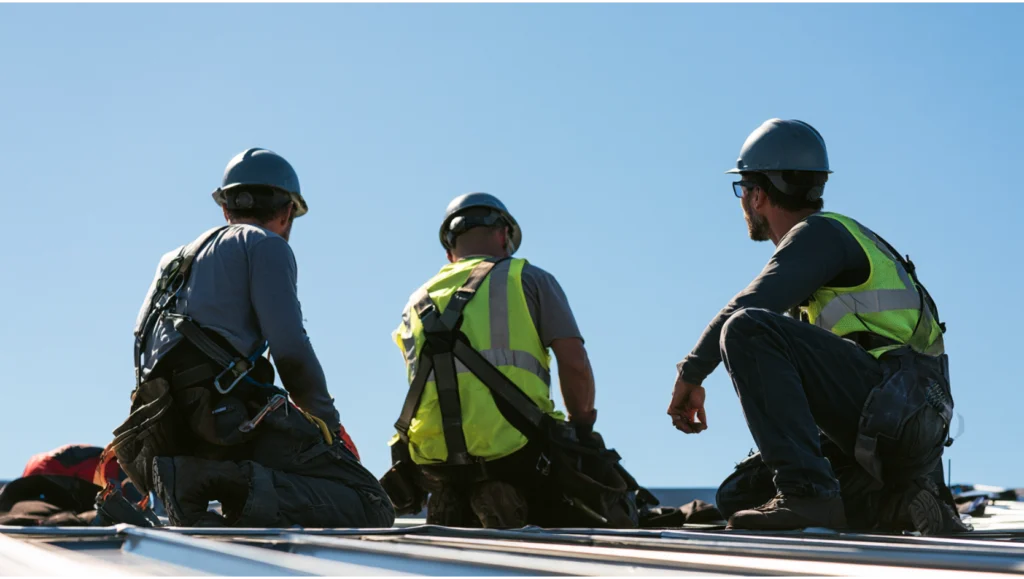
The same attention that keeps a crew safe protects your roof. A contractor who has thought through anchor placement, sealing, and clearance has usually thought through scope, materials, schedule, and cleanup too. Properly installed fall protection reduces the risk of severe injury, and it also keeps a jobsite controlled instead of chaotic.
That’s part of why we run in-house crews and a structured project process, with regular updates so you’re never left guessing. Careful work on the roof and clear communication off it tend to come from the same place: a team that respects your home the way it respects its own people.
Frequently Asked Questions
What is a roof anchor used for?
How much weight does a roof anchor have to hold?
Can roofers tie off to roof sheathing?
Are permanent roof anchors safe to use years later?
Should homeowners install roof anchors themselves?
Planning a Roof Project?
If you’re considering a roof repair, inspection, or replacement, schedule a free, no-obligation roof inspection with Cobex Construction Group. We’ll walk you through the condition of your roof, the work your home actually needs, and the process we use to keep the project clear, safe, and well-managed. Call us at 916-745-6699 when you’re ready for a straightforward conversation, no pressure attached.