

Key Takeaway
Yes, you should get a roof inspection before El Niño if your roof hasn’t been inspected recently, has leaked before, or shows visible damage. NOAA’s September 2026 advisory puts the odds of a very strong El Niño event during fall and winter 2026-27 at greater than 90%, shifting seasonal storm odds for California. Northern California sees damaging winter storms in virtually any year, so the case for inspecting your roof before storm season holds regardless of what the Pacific is doing.
Yes, if your roof hasn’t been looked at in a while, has leaked before, or shows visible damage, have it checked before California’s rainy season. Do it because Northern California gets damaging winter storms in just about any year, not because El Niño guarantees a soaking in Roseville. NOAA’s ENSO update from September 10, 2026 kept an El Niño Advisory in place and put the odds of a very strong event during fall and winter 2026-27 at greater than 90%. That shifts seasonal odds. It does not schedule heavy rain over your house.
If you’re watching the forecast and quietly wondering whether your roof is ready, this is written for you. Here’s what an El Niño winter actually means locally, what an inspection should cover, and what the findings can lead to.
What does an El Niño winter actually mean for Roseville?
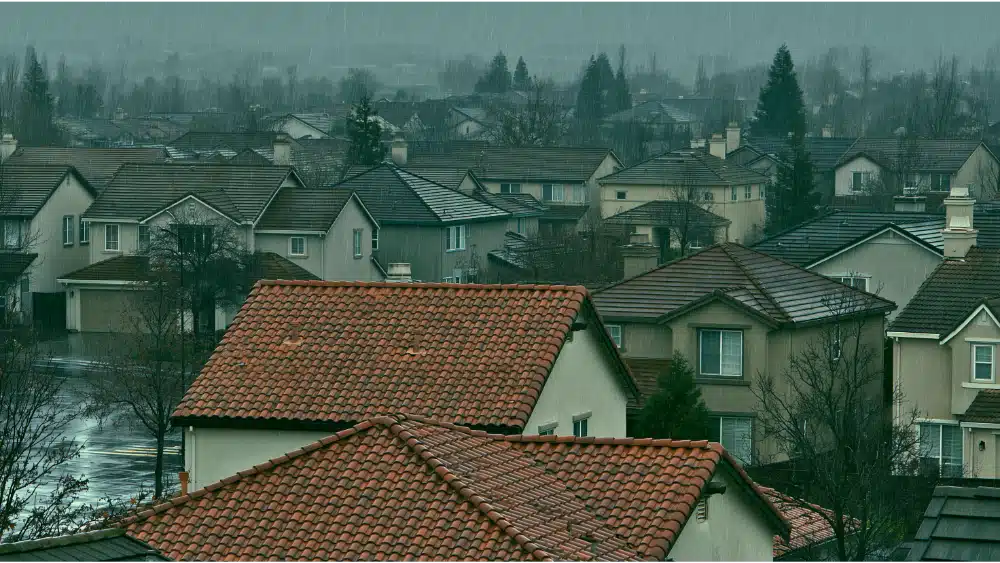
El Niño is a coupled ocean-atmosphere climate pattern driven by unusually warm surface water in the central and eastern tropical Pacific. It nudges weather patterns across North America, but it’s a pattern, not a storm. No single storm can be pinned on it. These events recur irregularly every two to seven years, and their influence on U.S. winter weather is generally strongest from January through March. El Niño also tends to suppress Atlantic hurricane development, which is part of why it dominates national coverage even in years when it changes very little here.
The part most articles get wrong: the National Weather Service office in Sacramento states there is little correlation between precipitation and most ENSO patterns in Northern California. Southern California tilts toward heavier rainfall in strong El Niño winters, which is why San Diego homeowners hear a very different message than we do. San Diego County has a clearer historical wet signal. We don’t. A very strong event here can coincide with more storms, fewer storms, or a winter that feels entirely ordinary. NOAA’s September outlook did include a 75% chance the October to December three-month Relative Oceanic Niño Index reaches at least +2.5°C, which would be a historically strong event. Strong doesn’t mean predictable at your address, and heavier rainfall in San Diego County tells you nothing about what falls on your street.
Getting your roof ready still makes sense. Severe weather moves through here in El Niño years, La Niña years, and neutral years alike, and wind, hail, and saturated ground cause roof damage regardless of what the Pacific is doing.
Who should get a roof inspection before storm season arrives?
California’s water year runs October 1 through September 30, which is why fall has always been the natural planning window for wet-season readiness. An El Niño advisory is a reason to check your calendar, not a reason to panic. You have a stronger case for scheduling a look before storm season gets underway if any of these apply:
- A previous roof leak or ceiling stain, even one you thought was fixed
- Missing shingles, or shingles that are cracked, curled, or lifted, and cracked tile
- No idea when the roof was last inspected or maintained
- Aging roofing materials at or past their expected service life
- Multiple penetrations: skylights, chimneys, vents, solar mounts, rooftop HVAC
- Flat roofs or low-slope sections anywhere on the home
- Gutters that overflow, sag, or pull away from the fascia
- Overhanging or storm-damaged tree limbs
- A roof that took strong winds or a branch impact during past severe weather
- A past repair nobody has re-checked since the day it was done
An older roof has less margin for error, which is why regular roof inspections matter more the further you get from installation day. If your roof is newer, has never leaked, and drains cleanly, an inspection may simply confirm you’re in good shape. That’s a legitimate and useful outcome. Not every homeowner needs work done.
How can you check your own roof for damage before the heavy rain starts?
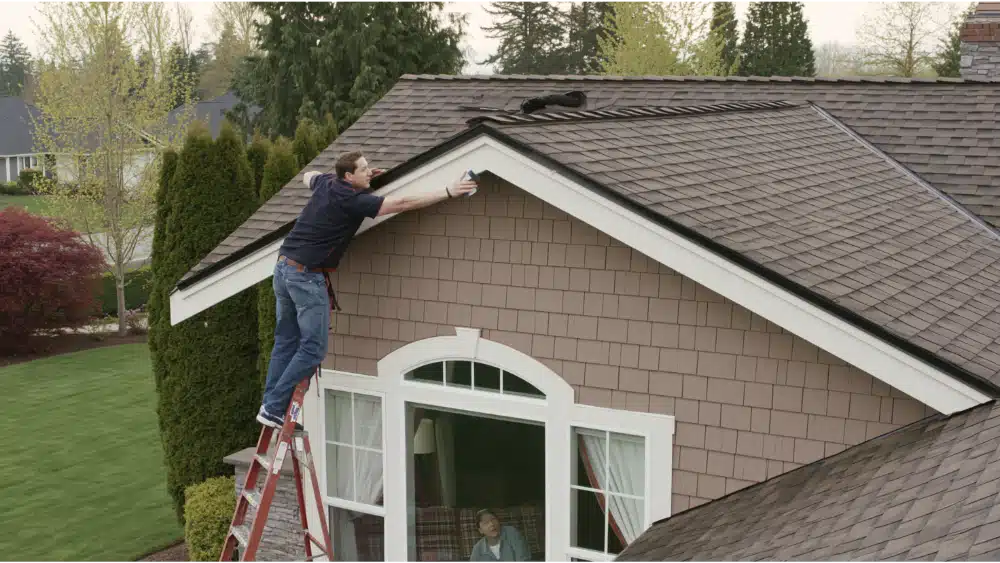
From the ground:
- Rooflines that look uneven or sagging
- Missing shingles, displaced tiles, or lifted metal panels
- Debris piled in valleys
- Gutters separating from the house, or staining that suggests overflow
- Damaged fascia and soffits
- Limbs resting on or near the roof surface
Binoculars or a zoomed-in phone photo will tell you most of what you need from the driveway. This won’t replace a trained set of eyes, but it will tell you whether roof problems are likely enough to warrant a call.
From inside:
- Ceiling water stains, bubbling, or peeling paint
- Attic stains, damp insulation, rusted fasteners, or musty odors
- Daylight around penetrations where you can see it safely
Fresh interior moisture deserves prompt attention. The EPA recommends drying wet materials within 24 to 48 hours to limit mold growth. One safety note we won’t soften: don’t walk a steep, wet, tile, or damaged roof. OSHA’s fall-prevention guidance exists because roof surfaces are genuinely dangerous, and federal maintenance guidance recommends observing tile roofs from the ground wherever possible. Leave walking the roof, lifting tile, and tracing moisture to trained crews.
What does a professional roof inspection include, and why do we check flashing first?
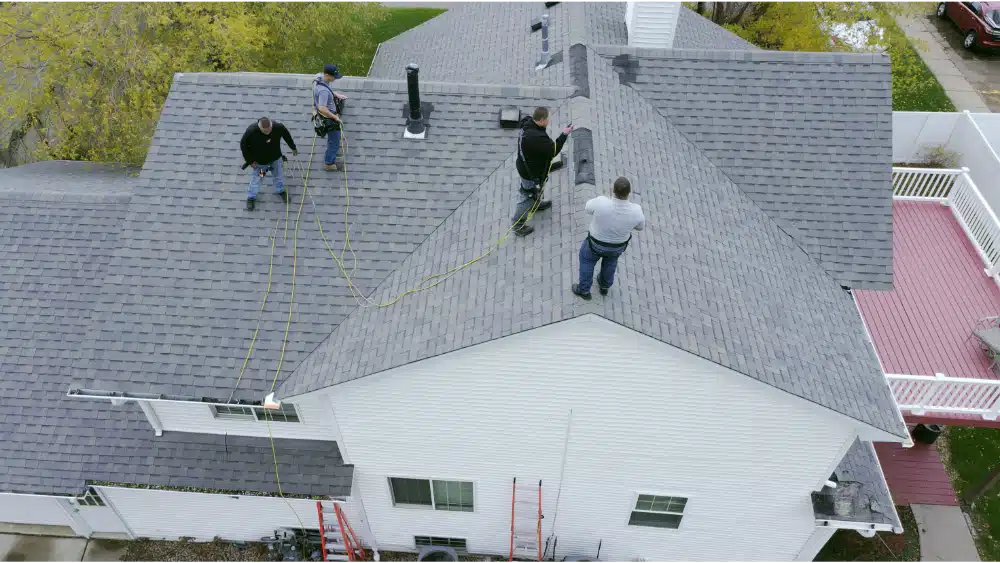
A real inspection treats the roof as one water-management system rather than a shingle count. Roofing systems rarely fail across the open field. They fail at their weak points. Here’s what we look at:
- Roof coverings and roofing materials: shingles, tile, metal panels, or membrane
- Flashing, sealants, and vent or pipe boots
- Valleys and roof-to-wall transitions
- Vents, chimneys, skylights, solar mounts, and rooftop HVAC penetrations
- Gutters, downspouts, drains, and scuppers
- Fascia, soffits, and roof edges
- Attic and the underside of the roof deck
- Ventilation
- Visible structural concerns such as sagging or misalignment
Department of Energy building science guidance identifies valleys and roof penetrations as the most vulnerable points for moisture intrusion. Wall intersections, chimneys, vents, and skylights all depend on step flashing and underlayment being integrated correctly, which is why damaged flashing and worn seals cause far more leaks than people expect. Improperly sealed solar mounts belong on that same list. Wind driven rain will find a gap that a calm shower would never expose. The attic tells the rest of the story through stains, damp insulation, rot, and rusted fasteners from water that got in during an earlier season.
A useful report gives you the location of each issue, a photograph, what was observed, how urgent it is, whether the condition is isolated or widespread, and a plain-language recommendation. Our in-house crews do this work, and you get the photos and the explanation, not vague pressure.
Why clogged gutters, flat roofs, and ponding water matter as much as missing shingles
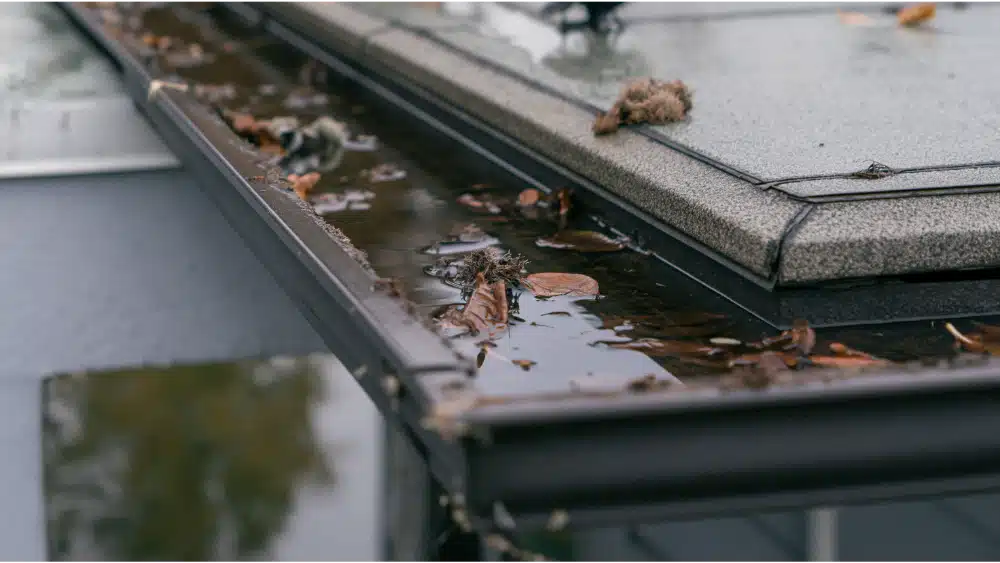
One inch of rain falling on a 40-by-70-foot roof delivers roughly 1,743 gallons of water, according to the USGS. The Department of Energy uses a conversion of about 0.62 gallons per square foot per inch of rainfall. Not all of that becomes runoff (texture, splash, and evaporation take a share), but it’s a useful way to picture the load a few days of heavy rain puts on a home.
A sound roof can still cause trouble if that water can’t leave quickly. Clogged gutters back water up under the eaves. Leaves, needles, and other debris collect faster than most homeowners expect. Clear gutters and open downspouts move water away from the home’s foundation instead of toward it, and a debris-dammed valley will push water into the seam beside it.
Flat roofs and low-slope sections need their own attention, and most homes here have at least one, often over a porch, an addition, or a patio cover. Low-slope coverings such as single-ply membrane, silicone coating, and modified bitumen depend on sound seams, so water pooling there sits on those seams and penetrations rather than shedding off. Drains and scuppers need to be clear before prolonged rain arrives. A slow moving storm that parks over the region for a day or two is exactly the scenario that finds a marginal detail.
What happens after the inspection: maintain, roof repair, or a new roof?
Inspect establishes the actual condition of the roof. Maintain covers clearing drainage and routine upkeep, which is what our maintenance program is for. Repair corrects isolated defects, like deteriorated flashing or damaged roofing materials in one section, before they spread. Small repairs handled in dry weather stay small. Replace is for roofs with widespread deterioration, or where repairs no longer deliver a sound long-term result. Upgrade comes up when ventilation, drainage, or roof-integrated equipment needs rethinking.
El Niño by itself is not a reason to sell you a new roof, and anyone telling you otherwise is selling rather than inspecting. What matters is catching small roof problems while they’re still small, instead of discovering them mid-storm when they’ve become costly emergency repairs. A targeted roof repair in October is a far calmer project than the same fix in January. If work is justified and you need payment flexibility, financing is available.
When should you schedule an inspection before the next major storm?
Book early enough that you can review the findings and complete any necessary repairs while the weather is still dry. Roofing work goes better on a dry roof, and heavy rain doesn’t wait for a convenient calendar slot. Sustained precipitation generally arrives through fall and winter, and the El Niño season’s influence typically peaks January through March, so there’s a real planning window before the rainy months get going. Also worth a look after strong winds or a branch impact, and right away if new interior water evidence shows up. No forecast can tell you the date of Roseville’s first major storm, and we’re not going to pretend otherwise. The goal is simply to be ready before the next storm, not during it.
Insurance and documentation: what to do before and after storm damage
Documentation is your best protection. Dated photos of current roof condition, inspection reports, scopes, invoices, and repair photos build a record that your roof was maintained rather than neglected. That record matters, because the California Department of Insurance explains that standard homeowners policies generally do not cover flood damage, though they may cover water damage from rain entering through an opening created by a covered event such as wind. Wear and tear, deferred maintenance, seepage, recurring leaks, and mold are commonly excluded, depending on your specific policy language.
After severe weather causes a loss, report the roof damage to your insurer, take reasonable temporary steps to prevent further damage, save your receipts, and hold off on extensive permanent repairs until the adjuster has assessed. We can work with your insurance on storm-related roof repair or replacement. Read your own policy and confirm coverage with your insurer. Property managers handling several properties should keep the same file for each address.
Licensing and Roseville reroof permits: what to verify before hiring
California requires a valid contractor license when a job needs a building permit, uses workers, or reaches $1,000 or more in combined labor and materials. Not all roofing companies carry the classifications for the work they take on, so verify any contractor’s status directly at cslb.ca.gov before you sign anything. Cobex Construction Group holds CSLB License #1031864, with B General Building, C-39 Roofing, and C-47 Manufactured Housing classifications.
An inspection isn’t a reroof. But work identified during one may trigger permitting depending on scope. The City of Roseville handles residential reroofs, both tear-off and overlay, through its building permit process, including a current-code CF1R energy compliance form. Your licensed contractor should be handling that paperwork, not you.
Get a free inspection and a straight answer about your roof
If you’re not sure how your roof will handle an El Niño winter, we’ll come look at it and tell you what we find. Free, no obligation, including the answer “your roof looks fine.” The request form is a quick conversation, not an application: service type, location type, and how urgent things feel to you.
We’re a family-owned and operated exterior contractor with an office at 503 Giuseppe Ct Ste 4 in Roseville and our corporate office at 4305 Auburn Blvd in Sacramento. BBB accredited since December 15, 2017, CSLB License #1031864, and 30+ years of combined experience on the team. Our in-house crews, project managers, and client success managers are the reason communication stays clear from the first inspection through the last nail. Call 916-745-6699 or request a quote online, and get your roof ready while the weather is still on your side.
Frequently Asked Questions
Does an El Niño winter guarantee heavy rain in Roseville?
No. There’s no promise El Niño storms will line up over Northern California at all. San Diego homeowners see a clearer wet signal in strong years, and the National Weather Service in Sacramento is direct about the weak correlation here. Treat it as a nudge to get your roof ready, not a rainfall forecast.
How much does a roof inspection usually cost?
It varies by roof size, pitch, material, and how accessible the roof is. Some roofing companies charge for the visit, others fold it into an estimate. Ours comes with a free, no-obligation estimate, so you’ll know what we found and what it would take to address it before you decide anything.
What should you not say to a roof insurance adjuster?
Stick to what you observed and when you observed it. Don’t speculate about the cause, the age of the roof, or dollar amounts you can’t support, and don’t guess at repair history you’re unsure of. Bring your documentation, and don’t agree to a scope you haven’t had a chance to review.
What is the 25% rule in roofing?
It’s a commonly cited building-code provision: when more than roughly 25% of a roof area needs repair or replacement within a 12-month period, the roof generally has to be brought up to current code rather than patched. How it applies depends on the adopted code cycle and your local building department, so confirm with the City of Roseville for work here.
What will fail a roof inspection?
Widespread missing shingles, cracked or lifted shingles and cracked tile, deteriorated or improperly integrated flashing, failed sealants and vent boots, active leaks with attic moisture or rot, standing water on flat roofs and low-slope sections, clogged or detached drainage, and visible sagging. A finding isn’t automatically a replacement. It’s a prioritized list of what needs attention and in what order.