Key Takeaway
Snow guards for metal roofs hold accumulated snow so it melts gradually rather than releasing in a dangerous slide. Whether you need them depends on your design snow load, roof slope, panel profile, and what sits below your eave. A properly engineered system uses tested attachments matched to your exact panel type. No universal spacing rule exists, and a written layout drawing from your installer is the minimum you should accept.
If you have a metal roof and you have watched a full winter’s snowpack let go at once, you already understand why this question matters. Snow guards hold accumulated snow and ice on the roof so it leaves gradually as snow melts rather than releasing in a single slide. Whether you need them, and the correct type, attachment, and quantity, depends on your design snow load, roof profile, slope, and eave-to-ridge length. There is no universal spacing rule, and any article that gives you one is guessing. A well-designed system reduces the risk of a sudden release. It does not eliminate it.
What Snow Retention Does on a Metal Roof
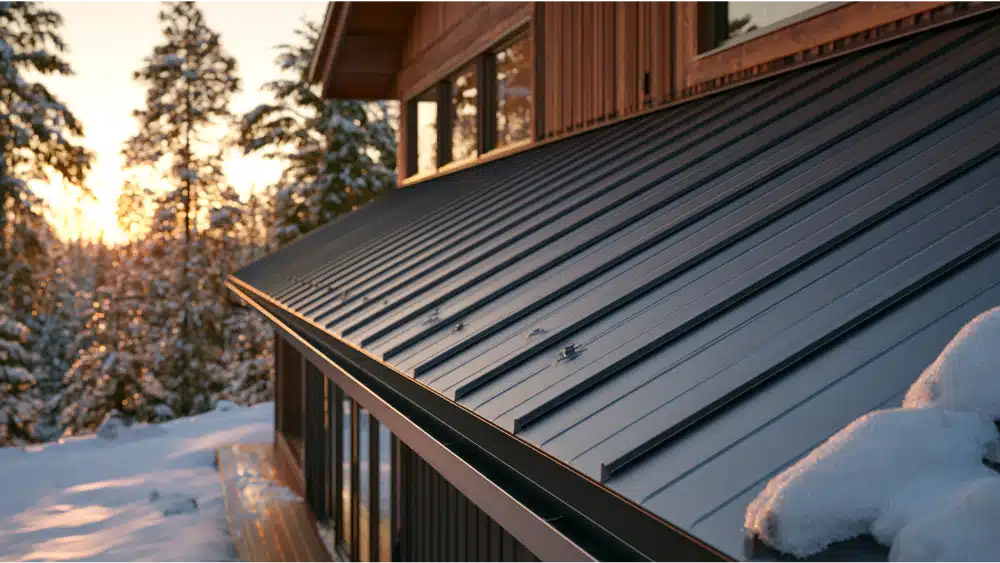
The Metal Construction Association defines a snow guard as a device or system that restrains or retards sliding snow, so the snowpack leaves mostly through thawing and sublimation instead of a rooftop avalanche. You will also see the terms snow stop, snow break, and snow rail used for the same idea.
What holds that snow is a chain, not a part: snowpack to guard face, to clamp or bracket, to fastener, to panel, to sheathing, to structure. Snow guard systems only function as well as their weakest link, which is why the product matters less than the load path behind it.
Snow guards are not structural reinforcement for an overloaded roof, not a cure for ice dams, and never a fall-protection anchor.
Does Your Metal Roof Need a Snow Retention System?
Work through this list. The more items apply, the stronger the case for a designed system.
- Regular snowfall or freeze-thaw cycles
- Smooth metal panels, long eave-to-ridge runs, steeper slopes
- Doors, decks, walkways, driveways, or parking below the eave
- Gutters, landscaping, or a lower roof plane in the slide path
- Solar panels, plumbing vents, chimneys, or rooftop HVAC
- Local egress or snow-shedding requirements
Elevation matters more than city limits. Most valley-floor Northern California homes see little accumulating snow, and a flat or low-slope roof behaves differently than a steep one. Foothill and mountain property is an entirely different design problem.
Types of Snow Guards: Pads, Bars, and Fences
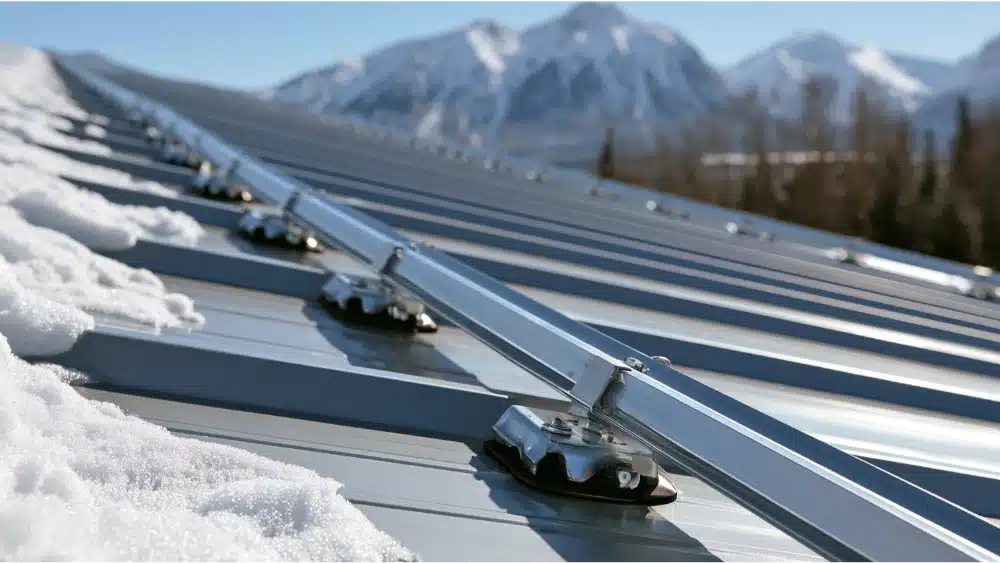
Choose by system category and roof compatibility, not by appearance.
Pad style snow guards
These unitized guards are individual pads or cleats installed in a calculated, usually staggered pattern, and they rely partly on snow bridging between adjacent units. Small-profile pads have under 4 square inches of face area. Large-profile pads exceed that and can reach roughly 15 square inches.
Snow bar and rail systems
Continuous systems run horizontal snow bars, pipes, or rails on brackets or seam clamps, spreading load across multiple panels. A single bar row is common at moderate loads, while fence-style versions stack two or more tubes vertically to handle higher demand.
Common material options include aluminum, stainless steel, copper, and polycarbonate, with finishes that match the panel color closely.
| System | Attachment | Key limitation |
|---|---|---|
| Pad-style or cleat | Clamped or penetrating, depending on panel | Depends on snow bridging between units |
| Bar or rail | Clamped or penetrating | Bracket spacing must match tested capacity |
| Fence-style | Clamped or penetrating | More expensive, higher load demand on attachments |
No type is universally stronger. Performance comes from tested capacity and design.
Standing Seam vs. Exposed-Fastener: How Roof Type Changes Attachment
Panels on a standing seam roof must stay free to expand and contract, so these roofs generally favor tested, non-penetrating seam clamps. MCA advises against through-panel attachment on standing seam unless the system is proven to preserve thermal movement. A clamp also has to be tested for that exact seam profile, metal, and thickness, and it has to be one that fits your panel. Results from a different panel do not transfer, and clamps are installed to a manufacturer-specific torque value.
Compatible face-fastened roofs, including corrugated and metal shingle profiles, may accept structural fasteners. Screws have to engage real structure and be weatherproofed so water stays out. A screw biting only into thin sheet metal is not a load path. MCA recommends a minimum factor of safety of 2.0 from the tested ultimate load, and it does not recommend adhesive-only attachment as the primary system, including silicone-bonded pads, citing coating compatibility and unproven long-term strength.
Where Should Snow Guards Be Placed?
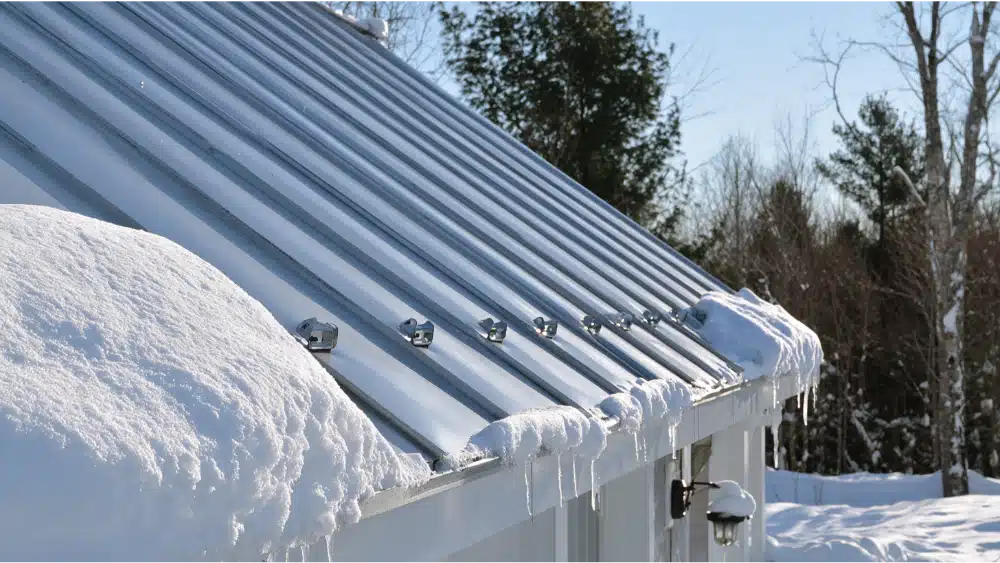
Generic advice says to put a few guards above the door. MCA’s guidance says to protect the entire relevant eave line first, because a short isolated section can end up holding snow from a much larger upslope area of roof surface, and that load is hard to predict.
Once the eave is protected, add supplemental sections upslope of penetrations: vents, chimneys, skylights, solar arrays, and rooftop equipment. Check lower roof planes, adjoining structures, and gutters in the slide path. Valleys and dormers need individual review.
How Many Do You Need, and How Far Apart?
No responsible source can publish a universal spacing number. A designer needs the site design snow load, roof pitch, eave-to-ridge length, the length of eave being protected, panel profile and width, metal thickness, the substrate, and the tested allowable capacity of the chosen system. Those factors change the answer on nearly every roof.
Ask your contractor for a written layout drawing, the tested capacity of the attachment on your specific panel, the row count with the reasoning behind the spacing, and the manufacturer’s installation instructions.
Where Alpine Snowguards and Other Manufacturers Fit In
Most people researching this land on manufacturer catalogs first. Alpine Snowguards and similar brands publish tested capacities, stock common profiles, and ship parts by mail, and that information is useful. What a catalog cannot do is confirm the load path on your roof. If you purchase parts yourself, share the panel details with whoever installs them and keep the instructions you receive. Plenty of products manufactured in the USA to good quality standards still fail because they were mounted to the wrong substrate.
Adding Snow Guards to an Existing Metal Roof
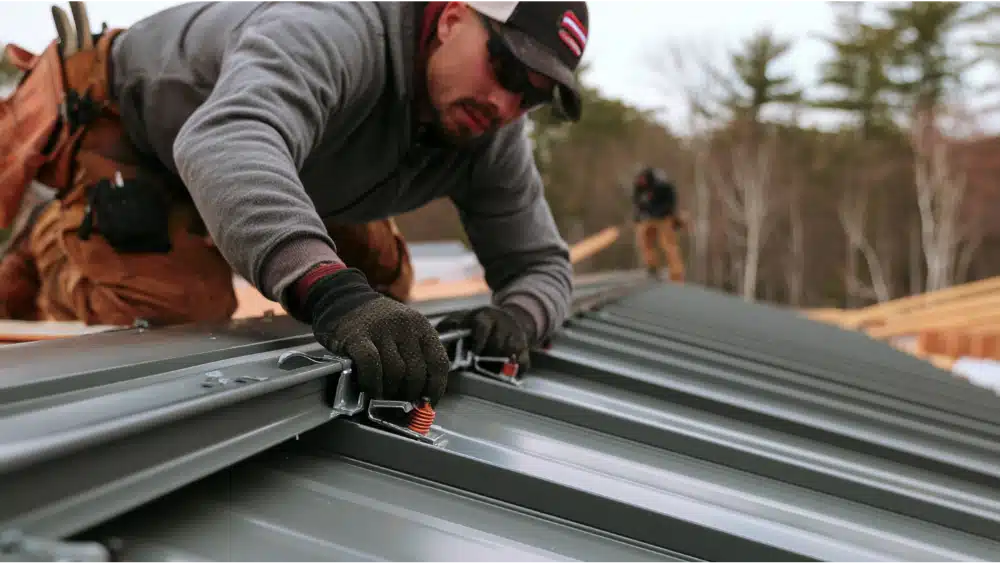
Usually possible, but the steps matter. Confirm the panel manufacturer and the exact seam or rib profile. Inspect panels, fasteners, seams, and coatings, then repair corrosion, loose screws, or leaks before anything gets mounted.
Next, review the original structural design. If the building was designed using a reduced sloped-roof snow load because snow was assumed to slide off, MCA warns that retention should not be added until you address that question. The addition of a system that holds more snow, longer, changes the loading the roof was built for.
On the DIY question: OSHA requires fall protection for residential construction work at 6 feet or more above lower levels, so protection is required before anyone steps onto a sloped metal roof.
Common Installation Mistakes
- Guarding only above a door without calculating the tributary load
- Using adhesive-only guards as the primary system
- Fastening into thin metal with no structural engagement
- Using an untested clamp on a different seam profile
- Pinning standing seam panels so they cannot move thermally
- Leaving penetrations unsealed
Done once, done right is not a slogan on this kind of work. Shortcuts show up two winters later.
Codes, Snow Loads, and California Considerations
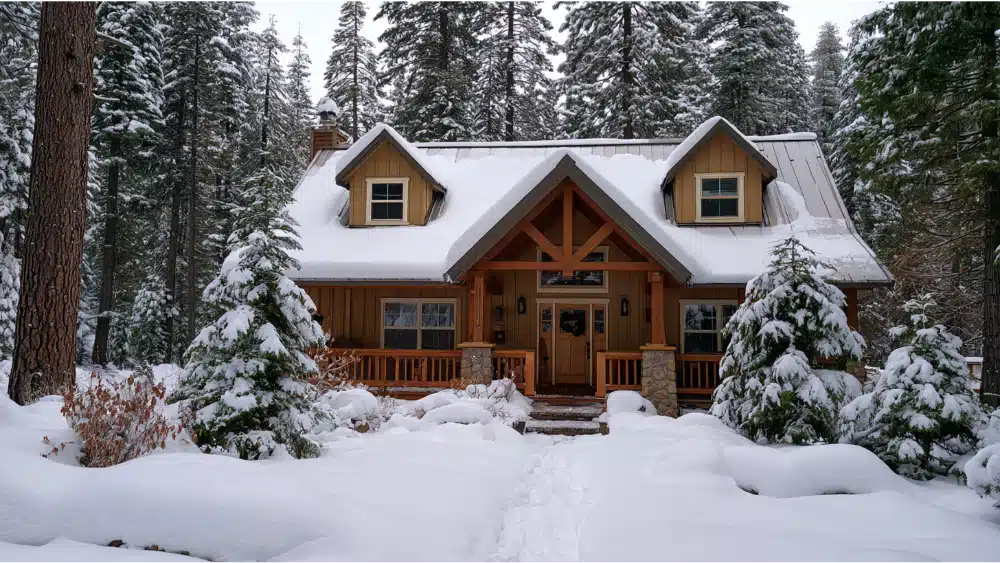
ASCE/SEI 7-22 is the loading standard referenced by modern codes, and Chapter 7 covers snow loads including drifting and sliding snow. It uses reliability-targeted ground snow loads, so older references to a uniform 50-year load are dated. The 2025 California Building Standards Code took effect January 1, 2026, and unincorporated Placer County amendments add sliding-snow protection requirements at higher ground snow loads and elevations. Those county amendments are not automatically City of Roseville rules, so confirm Roseville projects with the City of Roseville Building Division.
Frequently Asked Questions
Do snow guards on metal roofs work?
Yes, when designed to the roof’s snow load and mounted with a tested attachment. MCA is clear that no system can promise 100% effectiveness.
How much do snow guards cost?
There is no honest universal figure. Cost tracks roof size, panel profile, system type, row count, and whether structural review is needed.
What works on metal shingle roofs?
A system tested for that specific panel and substrate, which usually means a fastened pad or bar system rather than a seam clamp.
Do snow guards prevent ice dams?
No. Ice dams come from heat loss and ventilation problems. Snow retention controls how snow leaves the roof, not why ice forms at the eave.
Have Your Metal Roof Inspected First
We are a family-owned and operated exterior contractor with in-house crews, offices in Sacramento and Roseville, CSLB License #1031864, and BBB accreditation since 2017. For a clear read on your metal roof, request a free, no-obligation inspection at 916-745-6699 or through our online form. It is a quick conversation about your roof, not an application.