
Installing solar panels is one of the best decisions a homeowner in California can make. But one of the most common and important questions we hear from customers is simple: how many solar panels do I need?
It’s a valid question. Figuring out the number of solar panels needed for your home depends on several factors, including your energy usage, roof conditions, solar panel wattage, how much electricity you consume, how much solar power your system can generate, and how much sunlight your home receives throughout the year. The right solar panel system should be custom-tailored to your specific needs, not pulled from a generic solar calculator.
In this comprehensive guide, we’ll explain what affects your solar system size, how to estimate the number of panels, the typical solar panels cost, and why a custom design always delivers better results. If you are considering installing solar panels for your home, here’s everything you need to know.
What Determines the Number of Solar Panels You Need?
1 | Your Annual Electricity Usage
Your electricity usage is the most important factor when determining the solar panels you need. The more energy you consume, the more solar panels you will need to offset that usage. This is typically measured in kilowatt hours or kWh. The average U.S. household uses around 10,791 kWh per year, according to the Energy Information Administration.
In California, thanks to milder weather and growing energy efficiency, many homes use slightly less. However, if you have an electric vehicle, a heated swimming pool, or multiple appliances running year-round, your electricity consumption may be higher.
Checking your utility bills for the last 12 months will give you the most accurate view of your home’s annual energy usage and help estimate how many solar panels are needed.
2 | Your Location and Peak Sun Hours
Your location directly affects your solar system’s power output. The amount of energy your solar panels produce depends heavily on how much sunlight your roof receives each day.
In California, most homes enjoy between 5 and 7 peak sun hours per day. This is higher than many other states, which means fewer solar panels are needed to generate the same amount of electricity.
The more peak sun hours you get, the more solar power your system will generate. This is reflected in what’s called the production ratio, the relationship between your system’s size and the total amount of electricity it produces over time. In California, your production ratio may range from 1.5 to 1.7 depending on your location and roof orientation.
3 | Solar Panel Wattage and Efficiency
Not all solar panels are created equal. In 2025, the typical solar panel wattage for residential solar panels ranges between 400 and 450 watts. The higher the panel wattage, the more electricity each panel generates.
Higher efficiency panels allow you to generate more power using fewer panels and less roof space. If you have limited square footage on your roof or shaded areas, opting for higher efficiency panels can help you maximize your system’s potential.
For example, a 450-watt panel will require fewer units to meet your needs than a 350-watt panel. The total number of solar panels depends on how many watts your entire system needs to produce to meet your energy consumption.
4 | Roof Size, Shape, and Roof Orientation
Your roof plays a major role in determining how many solar panels you can install. The usable roof space depends on the roof’s size, slope, shading from trees or nearby buildings, and how your roof is oriented toward the sun.
Most solar panel systems require between 350 and 500 square feet of unobstructed space for a standard system. If your home has vents, skylights, or multiple gables, that can reduce the usable area.
A south-facing roof generally receives the most sun, which improves your solar panel array’s electricity output. If your roof space is limited, more efficient panels may be the right choice.
5 | Energy Offset Goals
Not every homeowner wants to offset 100 percent of their electricity consumption. Some aim to reduce their electricity bills by 50 to 75 percent, while others want complete energy independence from the utility grid.
The number of panels required will depend on how much of your electric bill you want to offset. If you plan to add more appliances or an electric vehicle in the future, we may recommend a slightly larger solar panel system to account for the increase in energy usage.
Planning ahead helps avoid having to add more solar panels later, which could increase your upfront cost if the system needs expansion.
How to Estimate the Number of Solar Panels You Need
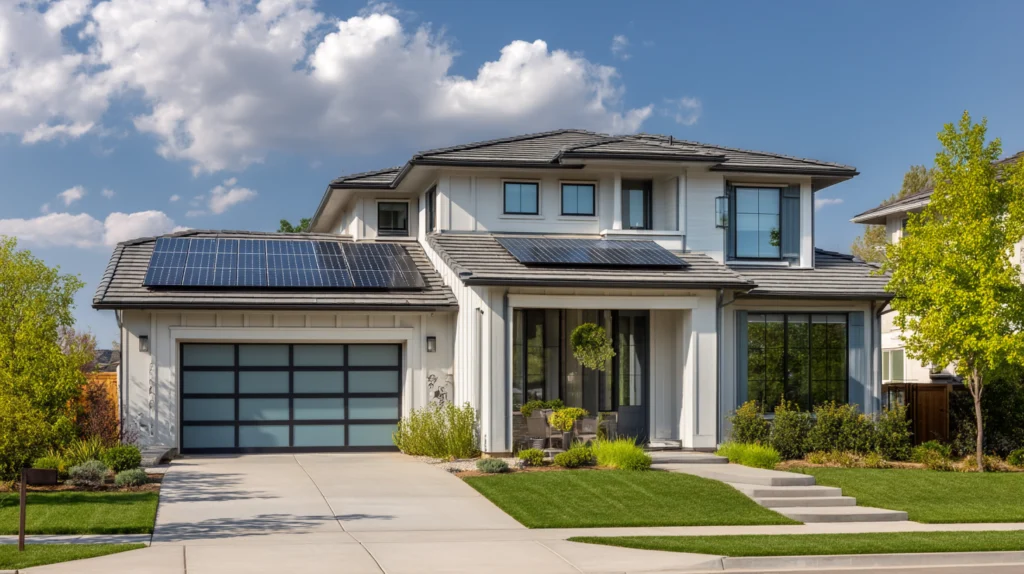
Use the Basic Formula
A general formula to calculate how many solar panels you need is:
Annual electricity usage ÷ Production ratio ÷ Panel wattage = Number of panels
Here’s how that might look for a California home that uses 9,000 kWh per year, with a production ratio of 1.6 and panels rated at 450 watts:
9,000 ÷ 1.6 = 5,625 watts (or 5.625 kW)
5,625 ÷ 450 = 12.5 panels
In this case, you would need approximately 13 solar panels to meet your needs.
Average Ranges for Typical Homes
While every home is unique, here are some general ranges:
- Low energy homes (under 7,500 kWh per year): 10 to 14 solar panels needed
- Average homes (7,500 to 11,000 kWh per year): 15 to 22 solar panels
- High usage homes (over 11,000 kWh per year): 23 to 30 or more solar panels
These ranges assume standard solar panel wattage and typical California peak sun hours.
What About Battery Storage?
Adding battery storage changes your system design. If you want to store excess electricity generated during the day and use it at night or during outages, you may need to install more solar panels to account for the extra energy needs.
Solar batteries, like Tesla Powerwall or Enphase systems, give you greater control over your electricity costs and help reduce your reliance on the utility company.
Custom Solar Design: Why One Size Doesn’t Fit All
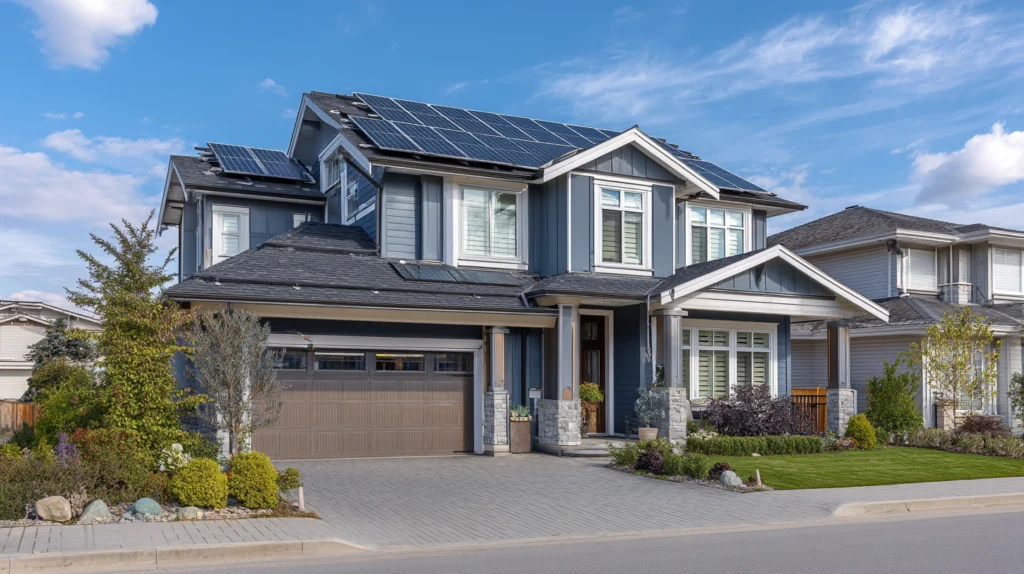
Why Online Calculators Can Be Misleading
A solar calculator might give you a quick estimate, but it cannot analyze roof space, roof orientation, local shading, or changing energy usage. That makes the output of these tools unreliable for most homeowners.
A professional solar installer will provide a far more accurate and tailored assessment based on your actual home and energy needs.
The Cobex Approach to Solar Design
Cobex takes a custom approach to every solar installation. That includes:
- Analyzing your actual utility bills and electricity usage
- Inspecting your roof for usable square foot coverage
- Evaluating shading and peak sun hours
- Designing a high-efficiency solar panel system that fits your goals
- Helping you choose between standard and higher efficiency panels
A proper design ensures your system delivers reliable power output, reduces your electricity bills, and maximizes long-term savings.
Common Mistakes to Avoid When Estimating Solar Panel Needs
Ignoring Future Usage Increases
As more homeowners switch to electric vehicles, install HVAC upgrades, or build home additions, electricity consumption often goes up. If your system is sized too small today, it may not cover your future energy needs.
Always account for upcoming lifestyle changes when calculating panels needed.
Underestimating Roof Limitations
Just because your energy needs suggest a 22-panel system does not mean your roof can support that layout. Chimneys, vents, trees, and odd roof shapes can reduce usable roof space and make installation more complex.
A roof inspection ensures your solar panel installation fits your actual space and delivers the right power output.
Going Too Cheap on Panel Quality
Lower-wattage panels may reduce upfront cost, but they typically require more space and generate less power over time. That means more panels and possibly a larger investment in the long run.
In contrast, higher efficiency panels generate more power in less space, making them ideal for homes with limited square footage.
Real-Life Example: What a Typical California Solar Setup Looks Like
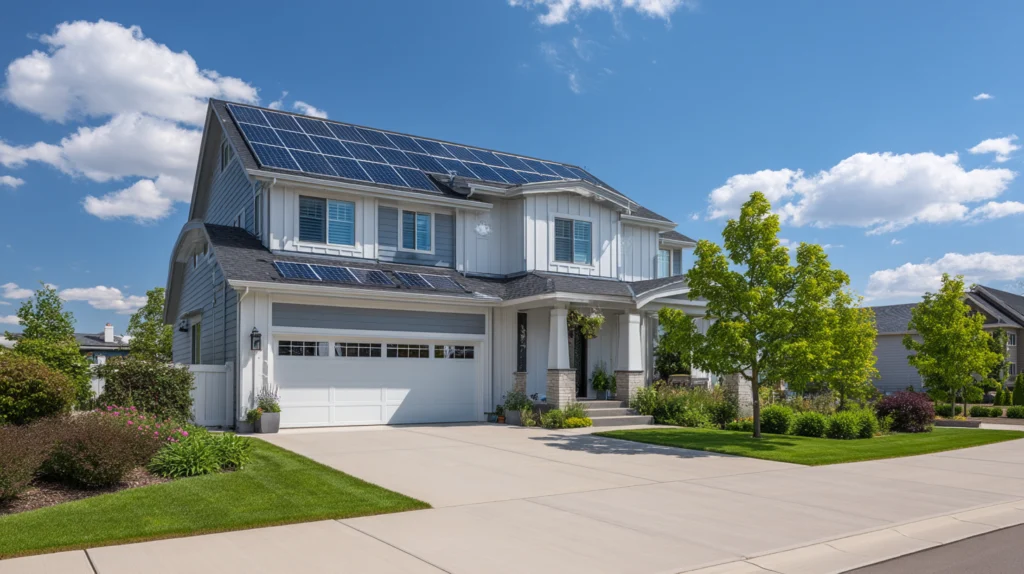
Let’s look at a real example of how many solar panels might be needed for an average home in California.
Home Size: 1,800 sq ft
Annual Electricity Usage: 9,500 kWh
Solar Panel Wattage: 430W
Production Ratio: 1.6
Peak Sun Hours: 5.5 per day (average for Sacramento area)
Roof Space Available: ~400 square foot
First, we divide the annual electricity usage by the production ratio:
9,500 ÷ 1.6 = 5,938 watts (5.94 kW)
Then divide that number by the solar panel wattage:
5,938 ÷ 430 = approximately 13.8 panels
This homeowner would need around 14 solar panels to meet their current energy consumption. The exact number could vary depending on roof orientation, seasonal electricity usage, and whether the homeowner plans to add an electric vehicle or solar batteries in the future.
With higher efficiency panels, the total number of panels could be reduced even further while maintaining the same total electricity output.
FAQs About Solar Panel Sizing
How many solar panels do I need for a 2,000 sq ft home?
Square footage is not the best way to determine your system size. Instead, focus on your electricity consumption. A 2,000 sq ft home that uses around 10,000 kWh per year may need 16 to 22 solar panels, depending on panel wattage and location.
Can I install solar panels if my roof is small or shaded?
Yes, but your system may need to be customized with higher efficiency panels. If your roof space is limited, or partially shaded, you may not be able to install as many solar panels, but creative layouts and powerful modules can still generate strong solar power output.
Will I still have an electric bill?
In most cases, yes. Unless your solar panel system is designed to offset 100 percent of your electricity usage and includes battery storage to cover nighttime usage, you may still receive a small electric bill from your utility company. However, it will likely be much lower than before.
How much roof space do I need for solar panels?
Most standard solar panels are about 17 to 18 square feet. A 20-panel system may require 350 to 400 sq ft of roof space. The exact amount depends on your panel wattage, roof layout, and system design. If you’re wondering how many square feet are needed for your home’s system, a proper site inspection is the best next step.
Should I oversize my solar system?
Oversizing can be a smart move if you anticipate increased electricity consumption in the future. For example, adding a second EV, upgrading to an electric furnace, or installing a heated swimming pool could significantly increase your energy usage. Building a system now that accounts for future needs avoids additional costs later.
Start with a Custom Solar Assessment
The truth is, there is no universal answer to the question how many solar panels do I need. While a solar calculator can provide an estimate, the best way to determine the correct number of panels for your home is through a custom analysis of your energy needs, roof conditions, and long-term goals.
By analyzing your electricity usage, square footage, expected power output, and considering the solar panels cost, a professional solar installer can design a system that delivers long-term savings, better energy production, and reduced electricity bills.
Whether your priority is lowering your electric bill, gaining energy independence, or reducing your carbon footprint with renewable energy, we help California homeowners make the right investment in solar power. With careful planning and high-quality equipment, we ensure your solar panel installation is built to last.
The sooner you take control of your electricity costs, the sooner you can benefit from reliable, clean solar energy and a more efficient home. Know your goals, understand your system size, and choose the right partner to help you install solar panels the right way.