
Our Roofing Services in Milwaukie
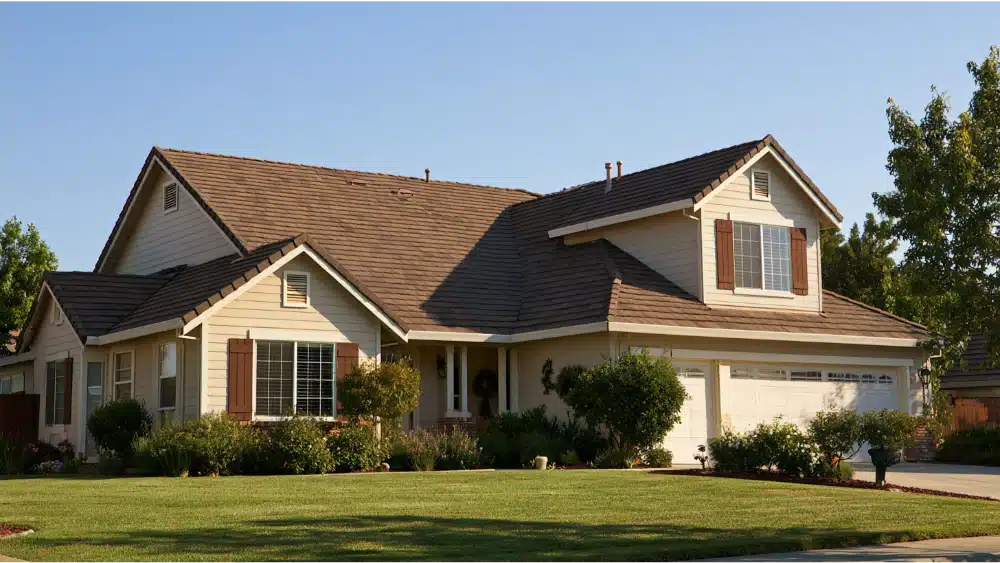
We inspect, repair, replace, and maintain residential roofs across Milwaukie, and we respond quickly to active leaks during the wet season. Every one of our roofing services connects to the same outcome: water stays out, and problems caught early stay small. If rain is finding its way in now, emergency response is available so your home stays protected while we trace and solve the source. Below is a closer look at the roofing projects we take on and what each one involves, from a simple roof repair to a whole new roof.
Roof Repair & Leak Tracing
We fix leaks at their source rather than sealing the surface and hoping. A proper roof repair means replacing damaged or missing shingles, repairing flashing at chimneys, walls and valleys, and sealing penetrations the right way. A surface patch hides a problem; tracing the leak solves it. Many smaller repairs are finished in a few hours once we’ve identified where the water is actually entering. Common culprits we find on Milwaukie roofs include failed pipe-boot gaskets, lifted step flashing behind a chimney, nail pops that have worked loose over years of thermal movement, and valleys that have collected debris and backed water up under the shingles. We don’t guess. We find the entry point, document it, and repair it so the fix holds through the next wet stretch instead of reopening the moment the rain returns. When a roof repair is the right call, we scope it honestly and tell you plainly if the underlying roof is too far gone to patch.
Roof Replacement & Full Replacement Roof Installation
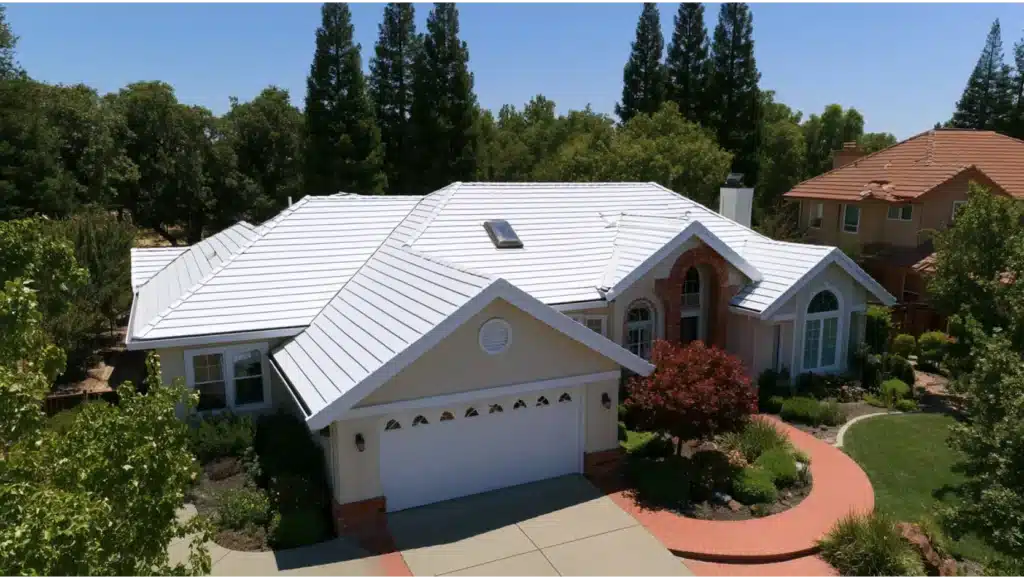
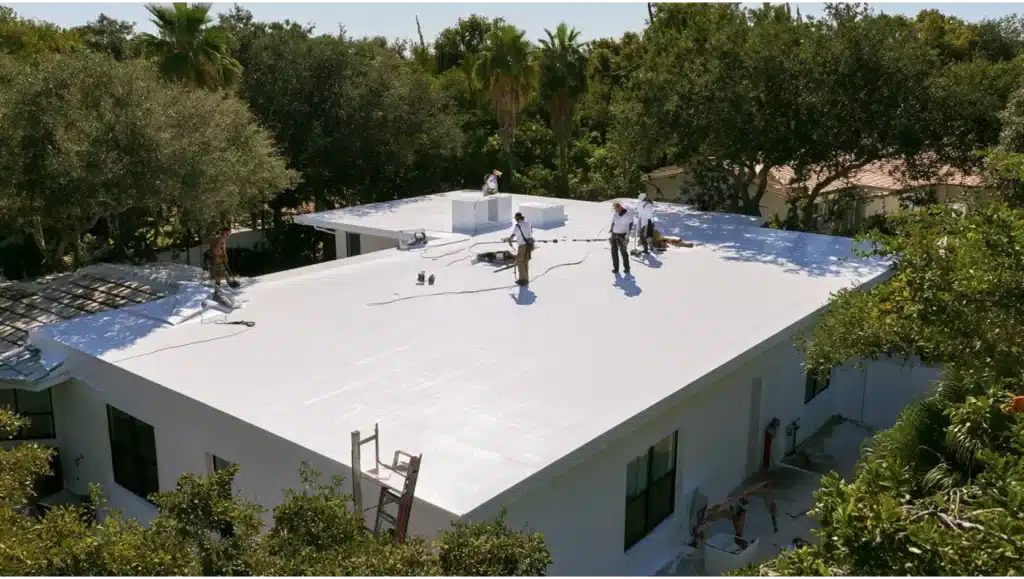
A full roof replacement is a complete roofing system, not just new shingles laid on top of old problems. We tear off, evaluate the decking, then install underlayment, ventilation, flashing and new roofing. Material options include asphalt shingle, tile, metal, and flat roofs or low-slope systems for additions and porches. We match the system to your home and your Milwaukie exposure, so it performs through December rain and summer heat alike. A clean roof installation starts with honest decking: if a tear off reveals soft or rotten plywood once the old roof is off, we show you the photos and replace what needs replacing before the new system goes down. That is the difference between a new roof that lasts and one that fails early around hidden rot. When you weigh a full replacement against years of repeated patching, the total cost of doing it once and doing it right is almost always the better investment for an aging roof. Most of our residential roof replacements are asphalt shingle roofs, and we install Owens Corning and Malarkey shingles among the systems we trust in this climate. Every roof installation is handled by our own crews, so the quality you were promised is the quality that gets nailed down.
Metal Roof Options & Long-Term Materials
Not every home needs the same roofing materials, and part of our job as roofing contractors is helping you choose the system that fits your house, your budget, and your plans for the home. Architectural asphalt shingle remains the most common choice for Milwaukie homeowners because it balances performance and value, and a quality shingle system handles our rain well when it is installed with the right underlayment and ventilation. A metal roof is a strong option for homeowners who want a longer service life, excellent shedding of rain and the occasional snow the valley sees, and a clean modern look. Tile and low-slope silicone or single-ply systems round out what we install, and we handle commercial roofing on flat and low-slope buildings as well. We’ll walk you through the trade-offs in plain language so the material decision is yours, made with good information rather than a sales pitch.
Roof Inspection
A roof inspection catches early damage before a prolonged wet period turns a small issue into an interior repair. On older Milwaukie homes, many built decades ago, we check for layered roofs, the roof condition of the decking, flashing at chimneys and valleys, and whether intake and exhaust ventilation are working as they should. We also look at the attic from below when we can, because stains on the sheathing and daylight at the ridge tell a story the surface shingles don’t. You get a clear read on what needs attention now and what can wait, so you can plan and budget on your own timeline instead of reacting to an emergency. Our free inspections carry no obligation and no pressure to decide on the spot.
Gutters, Ventilation & Roof Maintenance
Gutters and ventilation are part of a healthy roof, which is why we offer gutter cleaning, gutter replacement, and installation alongside our roofing work. Clogged gutters in a rainy climate push water back under the roof edge and against the fascia boards, so keeping your gutters clear is one of the cheapest ways to protect an expensive roof. We evaluate intake and exhaust ventilation because Milwaukie’s heavy winter rain and moss risk make drainage and airflow critical. Proper flashing and attic ventilation prevent interior leaks and wood rot. Roof cleaning and moss treatment also matter here, since moss holds moisture against the shingles and shortens their life if it’s left to spread across a north-facing slope. Regular roof cleaning keeps that growth from taking hold in the first place. For homeowners not ready for a full project, our roof maintenance program is a step-down option that keeps small issues from growing into large ones.
Storm Damage & Insurance Documentation
After a storm, we inspect and document the damage clearly and work with your insurance provider’s process. We photograph what we find and give you a straightforward record. We can’t promise coverage or claim approval, and we won’t pressure you into anything. Our job is to reduce the confusion, document honestly, and help you understand your options. Wind-lifted shingles, damaged flashing, and debris strikes are the kinds of storm damage we see most often in the valley, and catching them early keeps a covered repair from turning into an uncovered interior claim later.
Why Milwaukie Homeowners Choose Cobex, Your Local Roofer for the Job
Homeowners choose us for in-house crews, a named communication structure, Oregon registration, and local code knowledge that other contractors don’t offer. The roofing market is full of companies that say the right things to win the job. We’d rather show you how we work and let that earn your trust. Picking the right roofing company for your home isn’t about who promises the most; it’s about who can prove how they’ll treat the project and the people inside the house. Customer satisfaction is the standard we measure every job against, from the first roof a young family ever buys to a complex reroof on a historic home.
In-House Crews, Not Subcontractors
We staff the job ourselves, which means you know who shows up after you sign. Superintendents, project managers, and a Client Success Manager carry the work from start to finish. When a crew is your own people rather than whoever was available that week, accountability isn’t a promise. It’s built into how the project runs. In-house crews also mean the person who inspected your roof, the person who wrote the scope, and the roofer who installs the new roof are all part of the same company, so nothing gets lost in a handoff between a salesperson and a subcontractor you never met. Not every roofer works this way, and the difference shows up in the finished roof.
Family Owned, Values-Driven
Family, Freedom, and Faith are operating principles here, not a tagline. Treating you like family has never been a business decision for us; it’s ingrained in who we are, and it’s part of what being a family owned roofing company actually means day to day. That’s why transparency and no surprises are standard. We tell you what the scope includes, what it doesn’t, and what happens if we find something unexpected, because integrity drives how we communicate. The founders are sons of immigrants who built this company as an expression of the freedom their families came here for, and that gives every job a sense of meaning beyond the invoice.
Licensed and Accountable
We hold Oregon CCB registration, our authority to contract for roofing work in Oregon through the Oregon Construction Contractors Board, along with California CSLB License #1031864. A licensed contractor is easier to hold accountable if problems arise, and you should expect any roofer to carry general liability insurance and active workers’ compensation coverage. BuildZoom ranks Cobex in the top 1% of California licensed contractors, with hundreds of permit-pulled projects on record. Ask us for current registration details, look us up with the Oregon Construction Contractors Board, and verify everything yourself before you sign with anyone. A legitimate roofing company will never flinch at that request.
Concierge Communication You Can Count On
You get a named point of contact from contract to final walkthrough, so you’re never left guessing. A Client Success Manager keeps you updated at each step, because clear communication is a structural feature of how we work, not an afterthought. Strong local reputations are built this way: regular updates, honest answers, and a person who picks up the phone. If the weather shifts your schedule or we find something in the decking, you’ll hear it from us directly, not discover it when the invoice arrives. Homeowners tell us we did an excellent job precisely because we talked to them the whole way through.
Have questions before you commit? Reach out through our contact page or call and we’ll walk you through it. No obligation.
How It Works — From First Call to Final Walkthrough
Our process is simple and written down: inspect, scope, build, and walk through. Each step is designed to remove uncertainty, including the two questions homeowners ask most: what happens if you find rotten wood, and what happens if it rains. We identify the permit path early so nothing stalls once work begins, and we keep you informed at every stage so the job never feels like a black box.
Step 1 — Free Inspection & No-Obligation Estimate
We inspect the full roofing system and give you a written scope with no pressure attached. That scope defines tear-off layers, decking evaluation, underlayment, ventilation, flashing, disposal, and who handles the permit. A detailed original estimate like this is what lets you compare bids honestly, because vague quotes hide the differences that matter. When you set our estimate beside another contractor’s, line-item detail is how you tell fair pricing from a number pulled out of thin air. Two quotes can look similar on the bottom line and describe completely different work once you read what each one actually includes.
Step 2 — Clear Scope & Permit Path
We confirm whether a permit or downtown review applies before any work starts. Building permits for properties inside city limits are administered by the City of Milwaukie Building Department, and contractors submit through Oregon’s online ePermitting system. Most standard reroofs are exempt from a structural permit, but we check first so there are no surprises mid-project. Knowing the permit path up front is part of keeping the cost and the timeline predictable, since a review requirement discovered halfway through is exactly the kind of delay nobody wants. If your project involves structural changes to the roof framing, we flag that early too.
Step 3 — Production, Rain Plan & Dry-In
Before tear-off, we review the forecast and plan the dry-in, because weather can delay roofing work and rain is the main reason. We open only what we can protect, install dry-in materials, and keep emergency covering ready. Most replacements take one to three days depending on size and conditions, and a run of sunny day weather lets us move faster. If we find rotten decking, we document it with photos and get your approval before any scope change. Work pauses until you’ve said yes. That approval step is how we keep the final cost honest: you never pay for extra materials or labor you didn’t agree to see and sign off on first.
Step 4 — Final Walkthrough & Thorough Cleanup
We finish with a thorough cleanup, a magnetic nail sweep, and a final walkthrough so you see the work and sign off satisfied. On nonexempt projects, an approved final inspection is required before the permit is completed. The city schedules inspection requests received before 7:30 a.m. for the same day, which helps us keep your timeline moving. The walkthrough is also your chance to ask questions about caring for the new roof, from keeping the gutters clear to watching for moss, so you get the longest life out of the system you just invested in.
Serving Every Milwaukie Neighborhood — Permits, Climate & Housing
We serve all of Milwaukie from our Portland office, covering every neighborhood district, the full range of local housing stock, and the wet-season conditions that make quality roofing essential here. We also handle roofing needs throughout the surrounding Oregon area and into Southwest Washington. The Pacific Northwest’s heavy rain and moss growth demand high standards for materials and workmanship, and roofing work must meet local building code. As a local roofer, we know how these conditions behave on real homes, not just on paper. Here’s what that looks like in your city.
Neighborhoods We Serve
Milwaukie officially recognizes seven Neighborhood District Associations, and we serve homeowners across all of them:
- Ardenwald-Johnson Creek
- Hector Campbell
- Historic Milwaukie
- Island Station
- Lake Road
- Lewelling
- Linwood
Whether your home sits along McLoughlin Boulevard, Lake Road, King Road, Johnson Creek Boulevard, Harrison Street, Monroe Street, Linwood Avenue, or OR 224, our Portland office covers homeowners throughout the city. Landmarks like Milwaukie City Hall on SE Main Street and Ledding Library on SE 21st Avenue sit in the heart of the area we work, and our crews move easily between older neighborhoods near the river and the newer streets further east.
Permits & Downtown Review
Most standard residential reroofs in Milwaukie do not require a structural permit, but some projects do. Downtown properties, townhouses, integrated solar roofing, and extensive redecking may call for additional review. Milwaukie’s downtown guidance classifies replacement of more than 25% of a roof as a major exterior alteration in the applicable downtown zones, and major alterations there may require Type III design review involving the Design and Landmarks Committee and Planning Commission. We confirm the applicable path before work begins, so you’re never caught off guard by a review requirement. For most homeowners this never comes up, but when it does, handling it correctly protects you from stop-work orders and the added cost of redoing a job that wasn’t approved.
Older Homes, Wet Winters
The median Milwaukie structure was built in 1968, which shapes what we look for on these roofs. Older homes often carry multiple roofing layers, aging flashing at chimneys and valleys, and ventilation that no longer meets the demands of the home. The city’s architectural record runs from early wood buildings and Craftsman-era properties to mid-century construction, so no two roofs are identical. A steep Craftsman roof and a low-slope mid-century addition call for different materials and different details, and part of our job is reading the house in front of us rather than applying one template to every home. With roughly 44 inches of rain a year and December as the wettest month, flashing, drainage and a solid dry-in are not optional. We provide tailored services matched to the house and its exposure rather than forcing one approach on every roof. Milwaukie’s climate planning also notes occasional snow, which is why we build for year-round performance. Roofing can be completed during appropriate weather windows throughout the year; before tear-off, we review the forecast and dry-in plan so your home stays protected.
Frequently Asked Questions
How much does a new roof cost in Milwaukie?
There’s no fixed price, because cost depends on roof size, pitch, access, tear-off layers, decking condition, ventilation, flashing, and the roofing materials you choose. We don’t publish a starting figure that could mislead you. Instead, we give you a free, no-obligation estimate after inspecting your roof. A detailed written estimate should itemize tear-off layers, decking assumptions, underlayment, flashing, ventilation, disposal, permit responsibility, and the manufacturer system components. Getting multiple detailed written quotes helps you compare price and warranty terms on equal footing, and it’s the surest way to recognize fair pricing when you see it rather than chasing a low number that leaves out half the work.
Do I need a permit to replace my roof in Milwaukie?
Most standard residential reroofs are exempt from a structural permit under current Oregon code. Exceptions include downtown properties, townhouses, building-integrated solar roofing, and work involving extensive structural or decking repairs. Milwaukie’s downtown guidance also treats replacement of more than 25% of a roof as a major exterior alteration in the applicable downtown zones. Building permits inside city limits are administered by the City of Milwaukie Building Department, and we confirm the correct path before work begins so the permit question is settled before a single shingle comes off.
How long does a roof replacement take?
Most roof replacements are completed in one to three days, depending on size and weather. Smaller repairs often finish in a few hours, and in some cases a straightforward repair can be handled the same day. Rain can delay roofing work, which is why we review the forecast and plan the dry-in before tear-off. You’ll know the expected schedule and who to contact if weather shifts the timeline, so the job stays predictable even when the forecast doesn’t cooperate.
Can you repair a roof leak during the rainy season?
Yes. We trace leaks to the source and protect your home during Milwaukie’s wet months, when roughly 44 inches of annual rain and a December peak make careful, well-planned work important. We open only what we can dry-in and monitor the forecast throughout. A surface seal can hide the real problem, so we find where the water actually enters before we close anything up. If a full roof repair has to wait for a dry window, we can stabilize the leak in the meantime so the damage inside your home stops spreading.
Are you registered to work in Oregon?
Yes. We hold Oregon CCB registration through the Oregon Construction Contractors Board, which is our authority to contract for roofing in Oregon, and we also carry California CSLB License #1031864. A licensed contractor is easier to hold accountable if something goes wrong, and you should always confirm that your roofer carries general liability insurance and active workers’ compensation coverage. Ask us for current details, verify them with the Oregon Construction Contractors Board, and check them yourself before signing with any contractor.
Do you offer financing or help with insurance after storm damage?
Yes. Financing options are available so you can invest in a quality roof with payment flexibility, and after storm damage we can inspect and document what we find to work with your insurance process. We cannot promise coverage or claim approval, and we won’t coach you to inflate a claim. Our role is honest documentation and clear guidance through the process, whether that leads to a targeted repair or a full replacement.
Do you handle more than roofing?
Yes. As an exterior specialist we also offer window installation and siding alongside residential roofing, so if your project touches more than the roof, you can keep it with one accountable company. Whatever the scope, our aim is top notch workmanship that leaves your home in good shape for the long run.
Get Your Free Milwaukie Roofing Estimate
The next step is simple: request a free, no-obligation estimate online or call 916-745-6699. We’ll inspect your roof, explain what needs attention, and give you a clear written scope before anything is decided. Whether you need a single roof repair or a full roof replacement, you’ll know what the work involves and what it costs before you commit to anything.
Protecting your home before the next wet stretch is worth doing well, and it’s worth doing on your terms. No pressure, no scarcity, just a quick conversation about your roof and your options. Reach out through our contact page whenever you’re ready, and we’ll take it from there.


