
Key Takeaway
If your roof starts leaking during an El Niño storm, stay off the roof, move people and belongings away from the leak, and check for hazards like sagging ceilings or water near electrical fixtures before doing anything else. Contain dripping water only if it is safe, photograph the damage, and call a licensed roofer for a full inspection once conditions allow. Notify your insurer promptly and begin drying wet materials within 24 to 48 hours to prevent mold.
Stay off the roof. Move people, pets, and belongings away from the leak, keep clear of wet light fixtures and any ceiling that looks swollen or sagging, and catch dripping water only if you can do it safely. Photograph what you see, write down when the leak started, and call a licensed roofer for temporary protection and a roof inspection once conditions allow. Notify your insurance company promptly and begin drying wet materials within 24 to 48 hours.
A roof leak during an El Niño storm is stressful, and it usually shows up at the worst possible hour. Heavy rain does not wait for business hours, and neither does the water now moving through your ceiling. This guide walks through four phases: what is safe while the rain is still coming down, what has to wait until the weather clears, what needs to happen in the first 24 to 48 hours, and what to settle before anyone starts permanent repairs.
First, Decide Whether the Room Is Safe

Before you go looking for a bucket, look at the room. Water finds electrical boxes and pools above drywall, and both of those change the situation from a mess into a hazard.
Treat any of these as stop signs:
- A ceiling that is sagging, bulging, or bowing
- Water at or near lights, ceiling fans, outlets, or appliances
- Sparking, buzzing, smoke, or a burning smell
- Drywall or insulation falling
- New cracking sounds or visible structural movement
- Water rising on the floor from outside the home
Leave the room if the ceiling is sagging or water is reaching a fixture. Leave the home if you smell burning, see smoke, or hear structural cracking. Call 911 for fire, sparking, or any injury. FEMA notes that trapped water can make a ceiling unsafe, and the CDC is blunt about electricity: never operate a breaker or switch while standing in water. If a flood warning or evacuation notice is active in your area, your safety outranks the building every time.
What to Do While the Storm Is Still Active
Containment matters, but it sits below safety. And it helps to be clear about what containment actually is: catching water inside buys you time until a crew can work on the roof safely. It is not a repair.
- Keep people and pets out of the affected area.
- Move furniture, electronics, rugs, and anything with sentimental or resale value.
- Catch drips with buckets or bins, but only if the ceiling is sound and there is no water near electrical fixtures.
- Protect flooring with plastic sheeting and towels underneath your containers.
- Photograph or video active leaks from a safe spot in the room.
- Write down the time the leak began, the wind direction, how hard it was raining, and whether the flow picks up with gusts. That last detail tells a roofer a great deal.
- Call a licensed roofer. During an active El Niño storm, expect that any work on the roof will have to wait until the weather allows it.
Stay Off Your Own Roof: What Not to Do During Heavy Rain
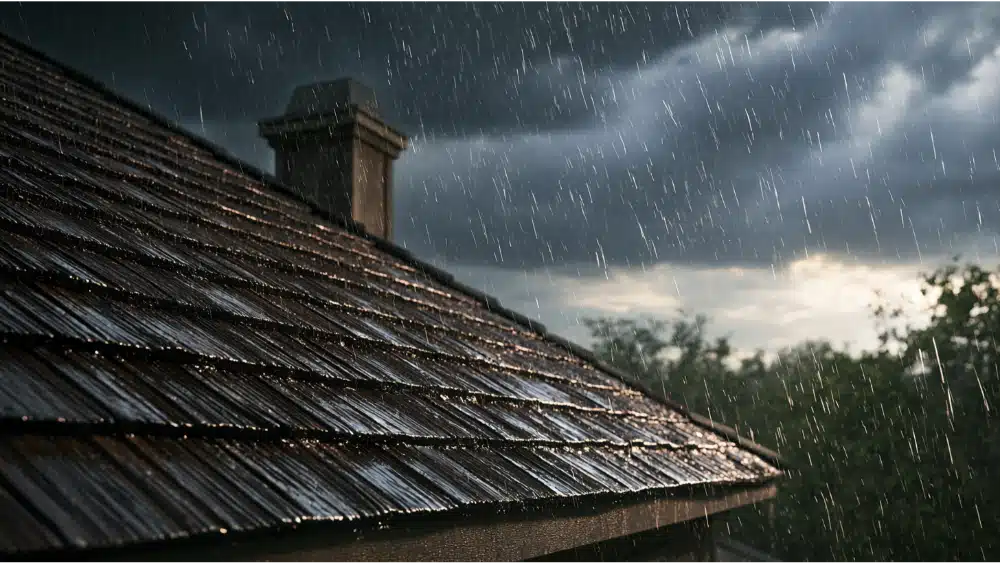
- Do not climb onto a wet roof. The National Weather Service is clear that there is no safe place outside during a thunderstorm.
- Do not lean a ladder against wet siding or set its feet on saturated ground.
- Do not touch wet electrical equipment or reach into a wet fixture.
- Do not stand beneath a sagging ceiling to get a better look.
- Do not caulk from the inside and assume the roof is fixed.
- Do not cut wide openings in a ceiling without knowing where the wiring runs.
- Do not sign a high-pressure agreement with someone who knocks on your door after a storm. Established roofing companies do not need a signature on the spot.
The goal right now is to keep a contained leak from becoming an injury, or from turning into the kind of costly emergency repairs that follow a major storm.
Should You Drain a Bulging Ceiling?
Not until the room is cleared and electrical hazards are ruled out, and not at all if you are unsure. The casual advice to “just poke a hole” ignores real risks: a saturated section of drywall can come down all at once, wiring often runs directly above, and the water itself may be contaminated with insulation and roofing debris. The American Red Cross does describe controlled drainage during disaster recovery, and if you attempt it, the conditions are strict: room cleared, power to that circuit off, eye and head protection on, a long tool, standing off to the side rather than underneath, bucket positioned below. When in doubt, wait for a professional or call for emergency help.
What to Do as Soon as the Weather Clears
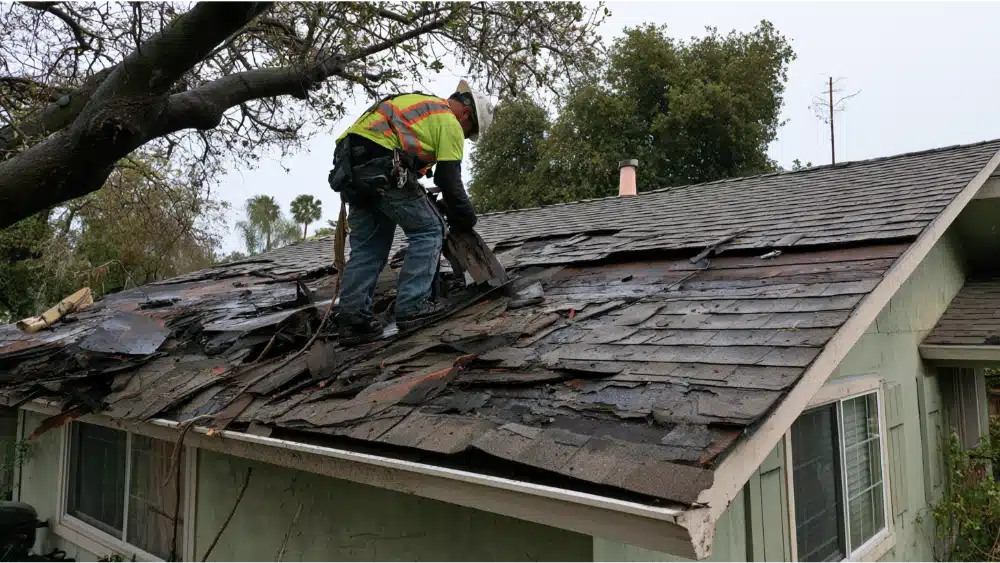
Wait at least 30 minutes after the last thunder before going outside, per NWS guidance. When storms arrive back to back, as they often do in a wet winter, use the break between them. Then inspect from the ground only, phone in hand, and photograph any roof damage you can see:
- Missing shingles, lifted shingles, or curled edges
- Cracked or displaced tiles and broken pieces on the ground
- Debris sitting on the roof surface
- Gutter overflow and clogged gutters
- Flashing that looks bent, lifted, or separated
- Peeling paint or blistering on fascia and eaves, which often means water has been sitting
- Downed limbs and anything that struck the roof
- Vents, pipe boots, skylights, or solar mounts that look disturbed
Tarping and temporary stabilization are roofer work. A wet roof is the most common place homeowners get hurt after a storm, and a poorly anchored tarp can make the leak worse. The California Department of Insurance does ask homeowners to make reasonable temporary repairs to prevent further damage when it is safe to do so, so keep every receipt for that protection.
How to Document Storm Damage for Your Insurer and Your Roofer
Good documentation costs you nothing and it is easiest to gather before cleanup changes the scene. Following CDI guidance, collect:
- Wide shots and close-ups of the interior damage
- Video of water actively dripping
- Ceiling and wall water stains, including older ones
- Wet flooring, furniture, and belongings
- The approximate time the leak started
- Weather conditions and wind direction at the time
- Exterior roof damage photographed from the ground
- Records of prior roof repairs or inspections
- Receipts for temporary protection and drying equipment
- A log of every call with your insurance company, including names and dates
Do not throw out damaged property until your insurer tells you it is fine to do so. And here is the honest part: documentation gives the adjuster and your roofer a clear picture of what happened. It does not decide the outcome, and no contractor can promise one.
Dry the Affected Areas Within 24 to 48 Hours

The EPA’s position is precise and worth quoting properly: wet or damp materials dried within 24 to 48 hours will not support mold growth in most cases. Remove standing water once it is electrically safe, move air across wet surfaces, and run a dehumidifier. Pull back or open wet materials only under professional direction.
The hidden risk is the moisture intrusion you cannot see. Wet insulation, drywall cavities, and the roof deck can hold water long after the surface feels dry, and a lingering musty odor is usually the first sign. When water has spread into more than one wall or ceiling assembly, bring in a water-restoration specialist who works to the ANSI/IICRC S500 standard.
Why Does a Roof Leak Only During Heavy Rain or Wind-Driven Rain?
Because most roofs do not fail everywhere at once. They fail at weak points that only get tested by volume, wind angle, or standing water. Common culprits:
- Lifted edges that seal fine in light rain but open under wind
- Missing shingles from an earlier storm
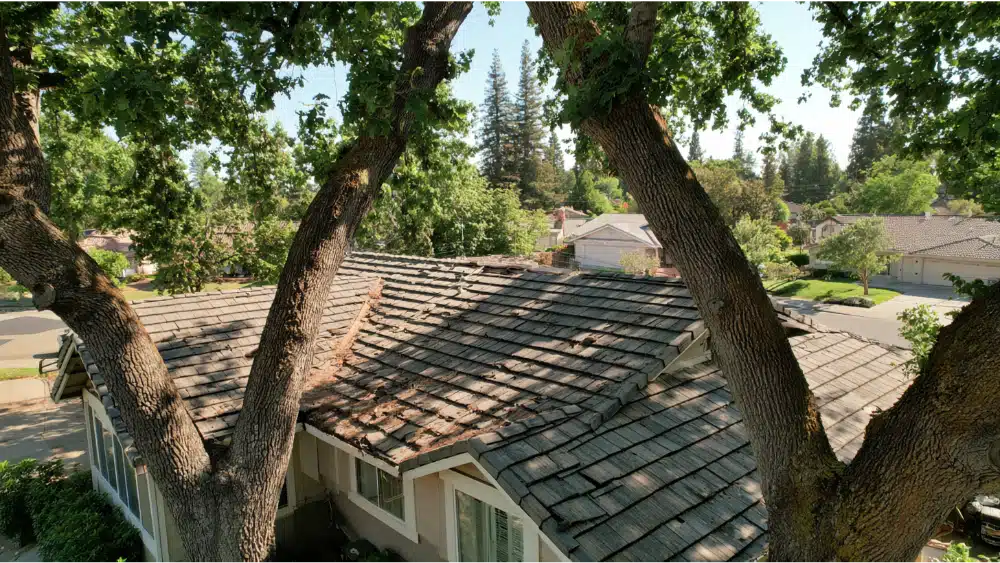
- Cracked tile on concrete or clay tile roofs
- Failed pipe boots and other roof penetrations
- Flashing that was never sealed correctly, since improper installation tends to reveal itself under load
- Damaged flashing at chimneys, skylights, and wall-to-roof transitions
- Valley or gutter overflow caused by clogged drainage and debris from overhanging branches
- Ponding water on flat roofs and low-slope sections
- Thin metal panels or corroded fasteners
- Worn seals around roof-mounted solar arrays or HVAC units
Tile, Metal, and Flat Roofs: Wind-Driven Rain and Ponding Water
Different roofing materials fail in different ways, and knowing which one is over your head helps. Asphalt shingles tend to give way at the edges and tabs. A cracked tile can sit in place for years and leak only when wind driven rain pushes sideways underneath it, which is exactly why damage to concrete tiles is so easy to miss from the ground. Metal panels loosen at fasteners and seams. Flat roofs and low-slope sections hold standing water instead of shedding it, so poor drainage there raises leak risk as much as a worn membrane does. El Niño storms often arrive in sequence, giving none of these roofing materials time to dry out in between.
| Roof type | Where it typically fails | What triggers the leak |
|---|---|---|
| Asphalt shingle | Edges and tabs, missing or curled shingles | Wind lifting sealed edges during heavy rain |
| Concrete or clay tile | Cracked or slipped tile, often invisible from the ground | Wind-driven rain pushed sideways underneath the tile |
| Metal panel | Fasteners and panel seams | Loosened fasteners or corrosion under prolonged rain |
| Flat or low-slope | Membrane and drainage points | Ponding water that sits instead of shedding |
| Any roof with penetrations | Pipe boots, flashing, skylights, solar and HVAC seals | Worn or separated seals at the penetration |
One thing surprises most homeowners: the stain on your ceiling may sit several feet from where water actually entered. Water travels along sheathing, rafters, pipes, and insulation before it finds a seam to drip through. That is why a professional inspection traces the full water path instead of patching the spot you can see.
Will Your Roof Need a Repair or a Replacement?
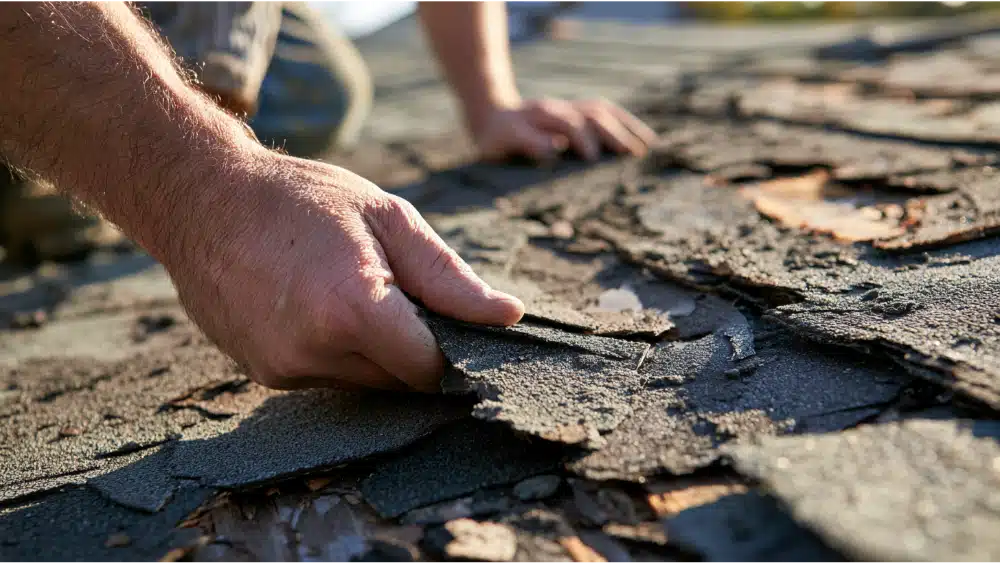
| Repair may be appropriate when | Replacement deserves consideration when |
|---|---|
| Damage is isolated to one area | Damage is widespread across the roof |
| The surrounding roofing system is still serviceable | Leaks keep appearing in multiple locations after repeated storms |
| The entry point can be clearly identified and corrected | Soft decking or failing underlayment shows widespread deterioration |
| The underlying deck is sound | Repeated repairs no longer deliver long-term protection |
An honest roof inspection should tell you which of those roof problems you are actually facing, backed by photos of what the roofer found. We do not use age alone as a verdict, because the right answer depends on the roofing materials, the inspection findings, and what the manufacturer documentation supports. If the work turns out to be larger than expected, financing options and a maintenance program both exist as paths forward.
What an El Niño Winter Actually Means for Your Roof
As of September 10, 2026, NOAA has an El Niño Advisory in effect and gives a greater than 90% chance of a very strong El Niño event during fall and winter 2026 to 2027. NOAA also cautions that even a very strong event does not guarantee the expected weather patterns in any given place. These weather patterns recur every two to seven years and typically run nine to 12 months.
Here is the part most articles skip. The National Weather Service office in Sacramento states that there is little correlation between most ENSO patterns and precipitation in Northern California. The relationship is considerably stronger in Southern California, which is why San Diego homeowners tend to hear far more confident El Niño forecasts than we do, and why rainfall records in San Diego County track the signal more closely. The California Geological Survey makes a similar point, noting fewer than 30 El Niño events since 1950 and only four categorized as very strong, which is a small sample to draw conclusions from.
Atmospheric rivers are the bigger factor for a Roseville roof. NOAA estimates they supply roughly 30% to 50% of annual West Coast precipitation, and they show up in El Niño, La Niña, and neutral years alike. What tests your roof is rainfall intensity, wind direction, saturated soil, and drainage, not the label on the season. Treat an El Niño season as a reasonable prompt to get your roof ready, not as a forecast you can schedule repairs around.
California and Roseville Considerations for Storm-Damaged Roofs
Insurance. Report possible damage promptly, mitigate safely, and save receipts. CDI advises against extensive permanent repairs until your insurer has had a chance to assess the loss. California insurers generally must acknowledge notice of a claim within 15 calendar days and accept or deny it within 40 calendar days of receiving proof of claim, subject to exceptions. Homeowners policies typically exclude flooding, and coverage for rain intrusion depends on what created the opening. An older roof that has gone without maintenance and leaks in an El Niño downpour is not automatically a covered storm claim.
Contractor protections. Verify any contractor through the CSLB before money changes hands. California caps the down payment on a home improvement contract at $1,000 or 10% of the contract price, whichever is less, and progress payments should never run ahead of completed work or delivered materials. Licensing is generally required for projects of $1,000 or more or whenever a permit is needed. You can look up any license number, including ours: CSLB License #1031864.
Permits and alerts. The City of Roseville handles residential reroofing as an online over-the-counter permit. If your situation is an isolated emergency repair, confirm the scope with the Building Division rather than assuming an exemption. During severe weather, follow NWS Sacramento, Placer Alert, and the City of Roseville for local emergency information.
El Niño Roof Preparation: Getting Your Roof Ready Before the Next Storm
The best El Niño roof preparation happens on a dry day in early fall, before the rainy season fills every calendar in town. Storms rarely give useful notice, and a roof ready for heavy rain is one that was checked before the first system arrived. Keep in mind that a roof can leak without any obvious damage visible from the ground.
- Schedule a professional roof inspection before storm season arrives
- Clear gutters and downspouts safely, or have it done
- Have flashing around chimneys, skylights, valleys, and roof penetrations checked
- Have roof debris removed professionally instead of walking the roof yourself
- Cut back overhanging branches
- Keep photos, permits, and repair records together in one place
A Professional Roof Inspection Prevents Costly Emergency Repairs
Small roof problems caught early stay small. A leak found in October is usually a flashing detail. The same leak found in February, after weeks of heavy rain, can mean damp insulation, ceiling stains, and costly emergency repairs scheduled at the busiest stretch of storm season. That is the whole point of doing it once and doing it right.
Talk to a Licensed Roofer Once Conditions Are Safe

When the weather allows, we will inspect the leak, trace the source, and tell you plainly whether it calls for targeted repairs, temporary stabilization, or something broader. We are family-owned and operated, we run in-house crews, and we can help you document roof damage for your insurer, though no contractor can promise how a claim will be decided. Request a free estimate with no obligation, or call 916-745-6699. It is a quick conversation, not an application. Our Roseville office is at 503 Giuseppe Ct Ste 4. CSLB License #1031864.
Frequently Asked Questions
What should you do if your roof starts leaking during a storm?
Check the room for hazards first: sagging ceiling, water at fixtures, any burning smell. Then contain the water from inside, move belongings clear, and photograph everything. Call a licensed roofer once conditions allow, notify your insurer, and start drying within 24 to 48 hours. Stay off the roof.
How long can you leave a leaking roof?
Not long, and less than that in an El Niño winter when the next storm is days away. Contain it immediately and begin drying within the EPA’s 24 to 48 hour window. Have the roof inspected as soon as weather permits, because concealed decking and framing keep absorbing water well after the visible drip stops.
Does homeowners insurance cover roof leaks from rain?
It depends on the cause and your policy. Per CDI, rain entering through an opening created by wind or another covered peril may be covered, while a leak traced to wear, age, or deferred maintenance generally is not. Flooding is typically excluded. Report promptly, mitigate safely, and keep your receipts.
Is it normal for a roof to leak a little?
No. Any water reaching the interior means the roofing system has a failure point somewhere. Small stains and musty odors are early evidence, not something to live with. A professional roof inspection identifies the entry point before water reaches the roof deck.