
Key Takeaway
Commercial roofing involves selecting the right membrane or panel system for your building’s slope, climate, and rooftop equipment, then protecting that investment with documented inspections and maintenance. Commercial Roofing 101 covers three main system families: single-ply membranes like TPO, PVC, and EPDM; bituminous systems; and metal roofing panels. A well-designed, well-maintained commercial roof can last 25 years or more. Inspections at least twice a year are the single most cost-effective step to reach that lifespan.
What Property Owners Need to Know About Commercial Roofing

Commercial roofing comes down to matching the right roofing system to your building’s slope, climate, rooftop equipment, and code requirements, then protecting that investment with regular inspections and documented maintenance. A well designed, well maintained roof can last 25 years or more. That performance depends on catching small problems early, which is why owners should plan on routine inspections at least twice a year. This guide on commercial roofing systems is written for property owners, facility managers, and business owners weighing a large decision. It’s education, not a sales pitch.
How Is Commercial Roofing Different From Residential Roofing?
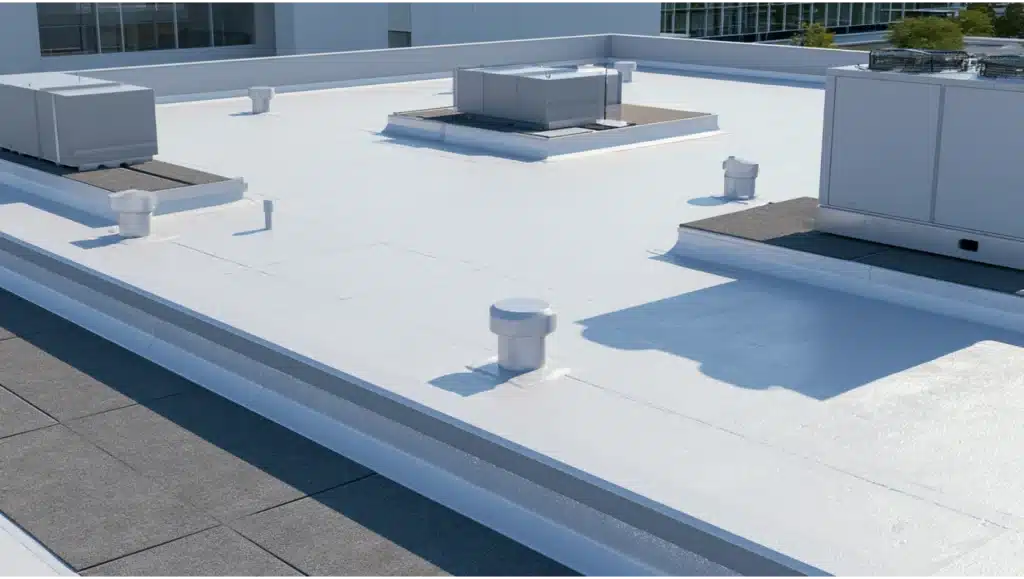
Commercial roofs are usually flat or low-slope, and they’re often much larger than a home’s roof. Instead of shingles, flat roofs rely on membrane systems that seal a broad, mostly horizontal surface. That design changes what matters most for a commercial property, whether you own office buildings, retail space, or industrial facilities.
- Drainage over shed: water doesn’t run off quickly on flat roofs, so effective drainage is critical to prevent ponding.
- Rooftop equipment: the roof has to support and work around HVAC units, vents, exhaust, skylights, and sometimes solar.
- Membrane systems: the surface is a sealed roofing system, not overlapping pieces.
- Business risk: a leak can reach tenant spaces, inventory, or business operations, not just an attic.
These differences drive nearly every decision that follows for business owners and any property manager responsible for the building.
What Are the Main Parts of a Commercial Roof System?
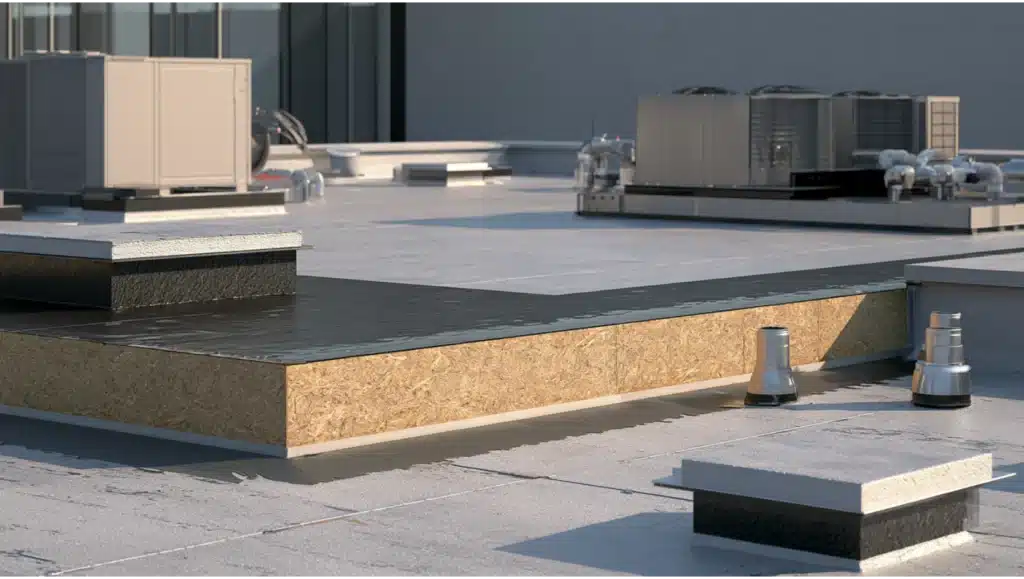
A commercial roof is a roofing system, not a single surface material. Understanding the layers helps explain why a quick patch on one part rarely fixes a problem coming from another.
- Deck or substrate: the structural base.
- Insulation: thermal layer that also affects energy efficiency.
- Cover board: adds durability and support beneath the membrane.
- Membrane or roof covering: the waterproofing surface.
- Flashing and edge metal: seal transitions and perimeters.
- Drains, scuppers, and gutters: move water off the roof.
- Penetrations and walk pads: equipment mounts and protected service paths.
Types of Commercial Roofing Materials You Should Know
Most commercial roofing systems fall into three broad families: single-ply membranes (like TPO, PVC, and EPDM roofing), bituminous systems (built up roofing and modified bitumen), and metal roofing panels made of steel or aluminum. Coatings and specialized systems round out the options. There’s no single “best” among these types of commercial roofing. The right choice depends on the commercial building.
Commercial Roofing Materials at a Glance
| Material | What it is | Works well for | Watch-outs |
|---|---|---|---|
| TPO | Single-ply membrane with a reflective surface | Low-slope flat roofs where reduced cooling load matters | Seam and installation quality matter |
| PVC | Strong single-ply membrane | Roofs with grease or chemical exhaust exposure | Confirm compatibility with existing system |
| EPDM | Lightweight, UV-resistant rubber membrane | Large low-slope areas | Darker surface absorbs more heat |
| Modified Bitumen | Asphalt-based membrane in reinforced layers | Buildings with foot traffic | Watch for granule loss and seam wear |
| Built-Up Roofing (BUR) | Multiple layers for waterproofing | Durable, time-tested low-slope roofs | Heavier; drainage must be right |
| Metal Roofing | Steel or aluminum panels, often standing seam | Durability and long lifespan | Fastener and panel corrosion over time |
| Fluid-Applied / Silicone | Liquid coating that restores a viable roof | Restoration when the substrate is sound | Needs dry insulation and good drainage |
| SPF | Spray foam with a protective coating | Seamless coverage over complex shapes | Coating-dependent; specialized install |
| Green / Vegetative | Planted overburden system | Specialized design goals | Added structural and drainage complexity |
How Do You Choose the Right Commercial Roofing System?

The right roofing system protects the building over the long term, which is why the lowest bid rarely tells the whole story. When you weigh cost effectiveness against durability, look at these factors together:
- Roof slope and drainage
- Condition of the existing deck and insulation
- Heat and UV exposure, since reflective, energy efficient roofing materials support lower cooling costs in warmer climates
- Fire classification and local code
- Rooftop HVAC and service foot traffic
- Grease or chemical exposure from exhaust
- Solar or future rooftop equipment plans
- Warranty terms and maintenance obligations
- How long you plan to own the building
Roof Maintenance: A Maintenance Plan and What Should Be Done and When
The NRCA recommends inspecting a roof at least twice a year, ideally in spring and fall, plus a post-storm check after high winds, hail, or heavy rain. Neglected roofs tend to fail years earlier, while prompt repairs can add five to ten years to the roof’s life. Proper roof maintenance is one of the most cost effective solutions for extending a roof’s lifespan. A basic roof maintenance routine covers:
- Clearing drains, scuppers, and gutters
- Removing debris
- Reviewing flashing and seams
- Checking penetrations and rooftop equipment
- Inspecting HVAC curbs and service paths
- Documenting any ponding water
- Tracking interior leaks and stains
- Keeping dated photo reports
Open seams and clogged drains lead to leaks, and small punctures spread fast when nobody is watching. Proactive maintenance keeps a minor issue from becoming a major repair, and one of the best maintenance tips is simply to stay consistent. For owners not ready for larger work, a commercial roof maintenance plan is a sensible step-down option and the backbone of good commercial roof management. Regular maintenance protects your building, one of your most valuable assets, and keeps proper maintenance from slipping through the cracks.
Why Not Just Inspect the Roof Yourself?
Don’t climb onto a commercial roof. OSHA requires fall protection for roofing work at heights of six feet or more, and roofs carry real safety hazards. Stick to ground-level observation and documenting roof leaks from inside, then bring in a professional roofing company for the rooftop professional inspection.
Warning Signs Your Commercial Roof Needs Attention
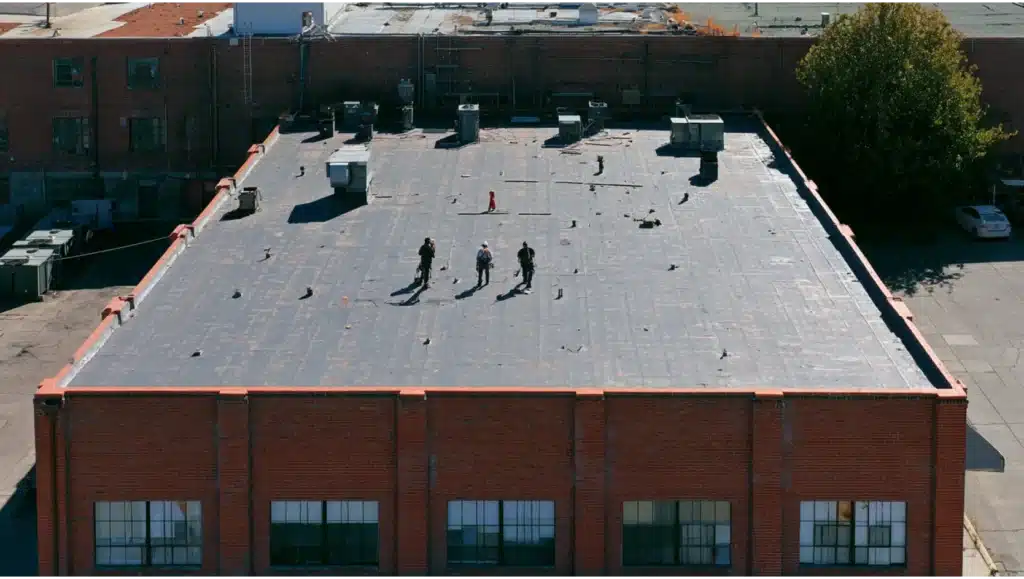
Standing water is the number one cause of commercial roof failure, so treat ponding as a signal, not a nuisance. Most roof problems trace back to neglect and skipped routine maintenance, and ignoring them can push repair costs far higher. Watch for:
- Water stains on ceilings or walls
- Recurring tenant leak reports
- Ponding or standing water
- Loose flashing
- Open or separated seams
- Blisters or splits in the membrane
- Missing shingles, granule loss on BUR, or modified bitumen wear
- Membrane punctures and clogged drains
- Soft spots underfoot
- Rusted panels or fasteners
- Repeated repairs in the same area
Catching these early keeps small problems from turning into structural damage and expensive repairs. Frequent repairs in the same spot often signal a deeper issue that needs a roofing professional. A structurally sound roof rarely surprises you, and that is the whole point of staying ahead of it so the roof remains dependable.
Repair, Restore, or Replace: How Do You Decide?
Three paths cover most situations, and the right roof repair or replacement decision depends on the roof’s age and condition:
- Repair: localized damage, an isolated leak, or a known source, handled quickly to avoid emergency repairs down the line.
- Restore / coat: a viable substrate, dry insulation, a compatible system, and good drainage. A cost effective option when conditions allow.
- Replace: widespread membrane failure, saturated insulation, chronic leaks, poor drainage, end of service life, or a code and energy upgrade opportunity. A full tear off and replacement resets the clock and improves energy efficiency.
Because the right call depends on what’s under the surface, a professional roofing assessment beats guessing from the ground.
Warranties, Records, and Insurance Documentation

A long warranty is not the same as a roof that performs. Warranties carry owner maintenance responsibilities and exclusions, so read them closely. Keep a roof file with:
- Installation date and system type
- Contractor information
- Warranty documents
- Inspection reports and repair invoices
- Photos and storm dates
- Leak reports and rooftop access logs
- HVAC and solar work records
After a major storm or other severe weather events, the California Department of Insurance advises protecting the property from further loss, reporting the damage to your carrier, and getting written bids from a licensed commercial roofing contractor.
California and Roseville Considerations for Commercial Roofs
California adds a few local factors. Title 24 cool roof requirements can be triggered when a roof replacement, recover, or recoat affects more than 50% or 2,000 square feet of the roof, whichever is less, though the exact requirement varies by climate zone and should be verified for your project. CAL FIRE requires Class A fire-rated roof assemblies and clear debris control. In the Sacramento Valley, seasonal temperature swings and UV exposure make reflective commercial systems worth considering, and ENERGY STAR notes that a reflective white roof can run meaningfully cooler than a dark one, which helps lower energy bills. Northern California wind, rain, and debris also make post-storm inspections a smart habit for any commercial property.
How Building Owners Can Choose a Roofing Contractor They Can Trust

In California, verify that any roofing contractor holds an active CSLB license with the C-39 Roofing classification, confirm workers’ compensation coverage, and check the license directly at CSLB before you sign. That step alone screens out a lot of risk for building owners.
Cobex Construction Group is a family-owned and operated exterior contractor with in-house crews rather than subcontracted labor, defined project roles, and a concierge-style communication process that keeps you informed at every step of the roofing project without letting the work disrupt business operations. We give transparent recommendations, so there are no surprises about scope. We handle metal roofing, single-ply membranes, and coatings, and we hold CSLB License #1031864 while serving commercial and residential property owners from our Roseville and Sacramento offices. We’re not the lowest bid, and we’re honest about that. We focus on the right investment for your building. Roofing done once. Done right.
Schedule a Commercial Roof Inspection
Ready to understand what your roof needs now, what can wait, and what protects the building long term? Schedule a commercial roof inspection or request a free, no-obligation estimate. Call us at 916-745-6699 or reach out online. No pressure, and no surprises. CSLB License #1031864.