
Key Takeaway
A roof rake is worth using for cold-climate snow removal when heavy or repeated snowfall is building up on a low-slope or ice-dam-prone roof, but only if you can work safely from the ground the entire time. Wet, packed snow can reach roughly 60 psf combined, well beyond the approximately 20 psf threshold a typical roof can handle as additional load. Raking buys short-term relief, but sealing attic air leaks, adding at least R-30 insulation, and improving ventilation are what prevent ice dams for good.
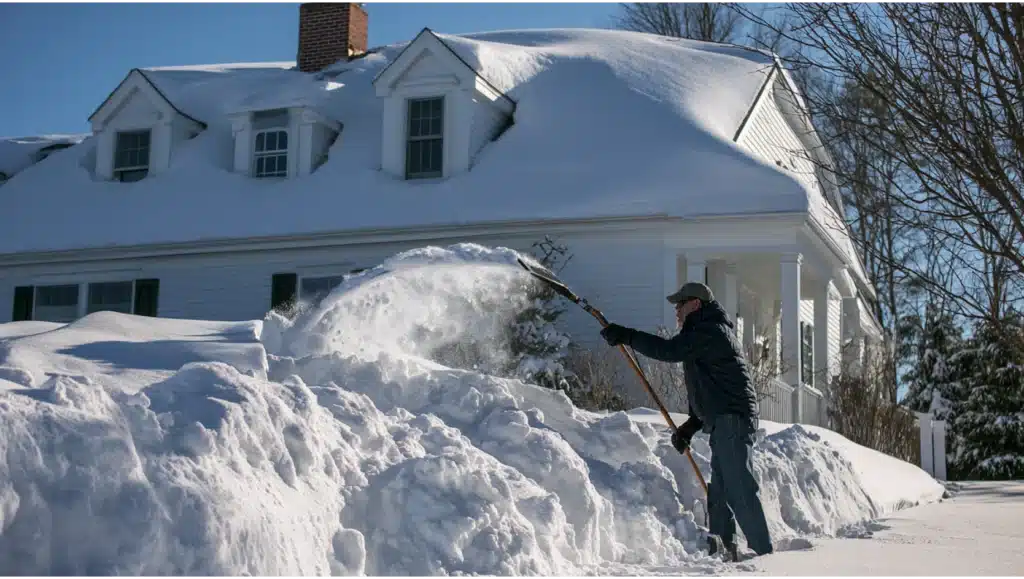
Watching snow pile up on your house is stressful, and the honest answer is that not every home needs a roof rake. You may need one if heavy, wet, packed, or repeated snowfall is building up on a low-slope or ice-dam-prone roof, and only if you can pull that snow off safely from the ground. A snow rake is a long-handled tool that lets you remove snow while standing on solid footing, which keeps you off a slippery roof entirely. That matters, because a thick layer of heavy snow can push a roof past its weight capacity, and climbing up to deal with it is where people get hurt.
This guide is for cold-climate homeowners staring at snow on the roof or a snowy forecast. What you’ll get here is a calm decision framework, not a product review. One thing to understand up front: a roof rake reduces snow load and can lower ice-dam risk, but it does not fix attic heat loss, inadequate insulation, or a structural problem. Think of your options as three paths: use a snow rake, monitor and wait, or call a professional.
What a Snow Rake Does, and When It Actually Makes Sense
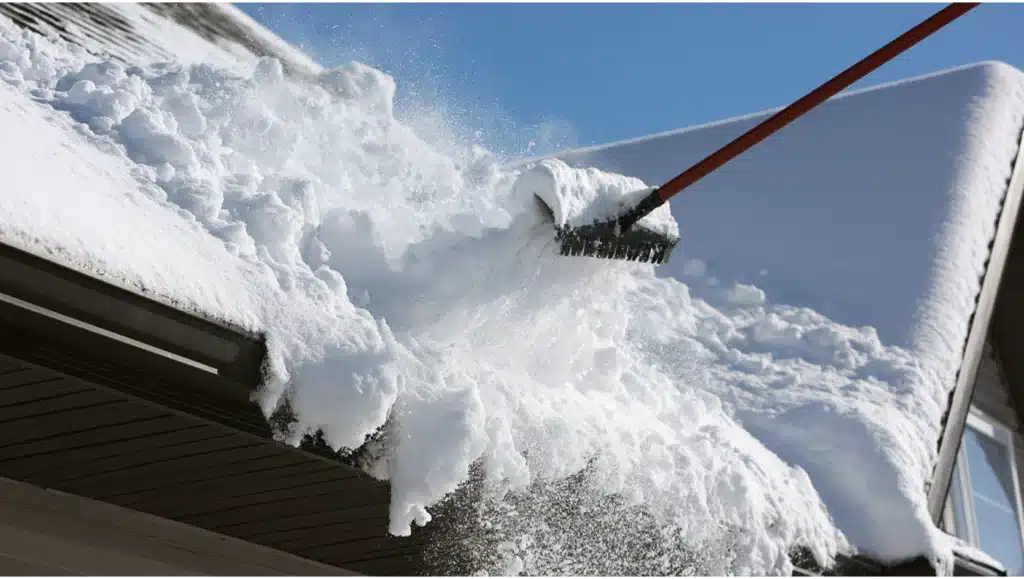
A roof rake is exactly what it sounds like. It has a wide, flat blade attached to a telescoping pole that can extend up to about 30 feet, and you use it from the ground to pull snow down and off the roof edge. A lighter rake is worth choosing because raking is tough, tiring work, and fatigue leads to mistakes.
What it does well: it lowers the total weight sitting on your roof, and it clears snow near the eaves where ice dams tend to form. Heavy snow also strains gutters and drainage, so pulling the load back can ease that too. What it does not do is solve the underlying reasons snow keeps melting and refreezing in the first place. That melting cycle is driven by heat inside the house, not by the snow rake in your hands.
A roof rake makes sense when:
- Snow keeps coming. Check your roof after every snowstorm or during continual snowfall.
- The snow is wet and heavy rather than light and dry.
- Snow is packing down and another storm is on the way.
- You have low-slope roof sections or areas prone to ice dams.
- You’ve had ice dams or a leaking roof near the eaves or gutters before.
- You have a single-story roof with edges you can reach safely from the ground.
Raking is short-term control. It buys you relief during a hard winter, but it isn’t a permanent fix, and we’ll come back to why that distinction matters.
When You Should NOT Remove Snow Off Your Roof Yourself
Some situations call for a professional, full stop. The most important rule comes from OSHA: never climb onto a snowy roof to remove snow. Falls from roofs in winter weather are often fatal, and no amount of snow is worth that risk.
Stop and call someone if any of these apply:
- You’d need a ladder to reach the snow. OSHA specifically warns against raking or shoveling while on a ladder, because it throws off your balance.
- Overhead power lines are near the roof. Keep at least 10 feet of clearance, use a nonconductive pole, and never bring a metal rake near wires, since metal conducts electricity.
- Heavy ice has formed on the roof or in the gutters.
- The roof is multi-story or steep.
- You have a flat or low-slope roof that would require someone to actually get up on it.
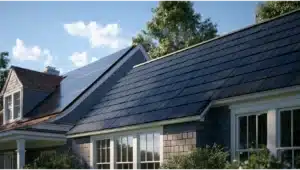
- You have tile, fragile, or aging roofing, skylights, or solar panels, where the risk of doing damage is high.
- You see any structural warning signs.
OSHA also recommends keeping a 10-foot safe zone below where snow will fall, so no one gets buried or struck. Reaching some sections of a roof from the ground is simply impossible, and that alone is a reason to stop. Avoid shovels and sharp tools on the roof surface entirely, since that kind of work is dangerous even for people who do it often. When the safe answer isn’t obvious, treat that uncertainty as your signal to bring in help and keep everyone in the home safe.
How Much Snow Is Too Much? Understanding Snow Weight
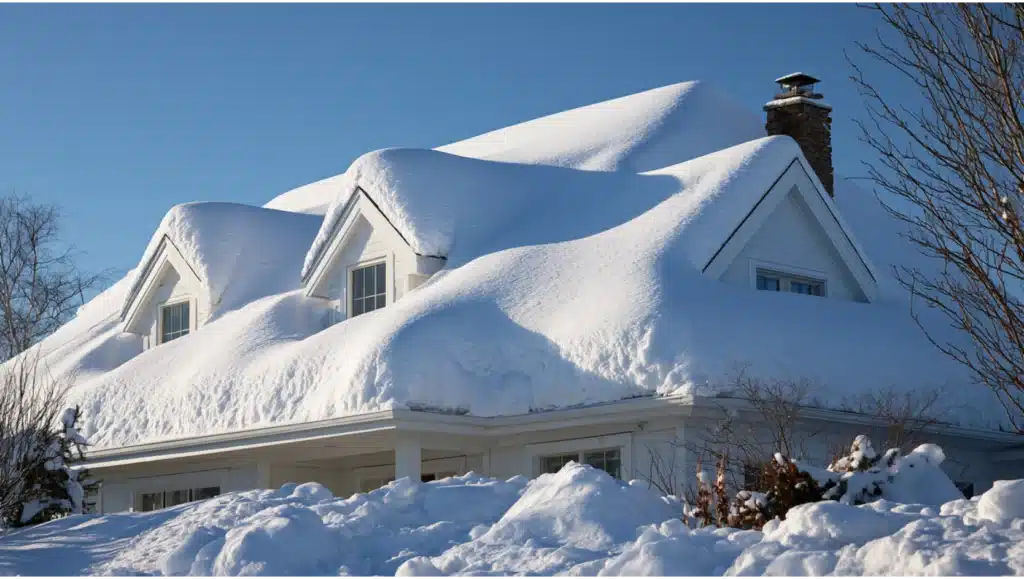
Depth is what you see, but weight is what your roof feels. Wet, packed snow can weigh far more than the same depth of light powder, and it’s weight that pushes a roof past what it was built to carry. Here’s a rough guide to how snow type translates to load, using figures from Maine Emergency Management and IBHS:
| Snow type | Approximate equivalent | Approximate weight |
|---|---|---|
| 10 to 12 inches fresh snow | About 1 inch of water | Roughly 5 psf |
| 3 to 5 inches old/packed snow | About 1 inch of water | Roughly 5 psf |
| 1 inch of ice | About 1 foot of fresh snow | Roughly 5 psf |
| 2 feet old + 2 feet new snow | Example combined load | Roughly 60 psf |
As a rough rule of thumb, IBHS notes a typical roof may handle around 20 pounds per square foot of additional weight. Read that with strong caveats. Older homes, aging roofs, prior damage, or any structural deterioration can lower that number. It’s a homeowner’s gut check, not a code rating. Your roof’s real capacity is site-specific, and the only reliable way to confirm it is through your local building department records, your structural plans, or a qualified professional. If you’re seeing warning signs like sagging or new cracks, skip the math and read the section below on when to call a pro.
How to Remove Snow Safely, and Roof-Type Notes
If a snow rake is the right call, work through it carefully. This checklist pulls from FEMA and OSHA guidance:
- Stay on the ground the entire time.
- Use a roof-safe tool with wheels or bumpers that keep the blade off your roof shingles. Avoid metal, sharp tools, or shovels.
- Remove small amounts at a time to reduce strain and avoid a sudden dump of snow.
- Work from the ridge toward the eave where you can, clearing the lower portion of the slope last.
- Leave about 2 inches of snow on the roof. Scraping down to bare shingles invites shingle damage, and stripped shingles can leave the deck exposed to a leaking roof.
- Keep people and pets at least 10 feet from where snow will land, ideally over open grass rather than a walkway.
- Steer clear of gutters, flashing, skylights, vents, and any roof penetrations.
- Don’t pile removed snow back onto another part of the roof.
Clean your gutters before winter, since clogged gutters feed ice dams, and inspect them for ice buildup after heavy storms. Heated cables can help with melting water at trouble spots as a supplemental measure, so meltwater has a path to drip and drain off the edge instead of freezing back into place. A run of them over the garage eaves is a common spot for trouble.
Roof type changes the calculus. Asphalt shingle roofs handle careful ground raking with a padded blade, and the goal is always to keep the snow rake blade off the shingles themselves. Metal roofs shed snow readily when the sun warms them, but can still hold load; keep any tool nonmetal near wires. Flat or low-slope roofs usually require access, which means a professional. Tile roofs are easy to crack, so leave them alone. Solar panels should never be scraped; removal equipment can damage them or void coverage, so call a pro. For rooftop HVAC, vents, chimneys, and flues, keep them clear of snow and ice. The EPA warns that a blocked furnace, water heater, stove, or dryer vent can trap carbon monoxide indoors.
Roof Rakes vs. Ice Dams: How to Prevent Ice Dams for Good
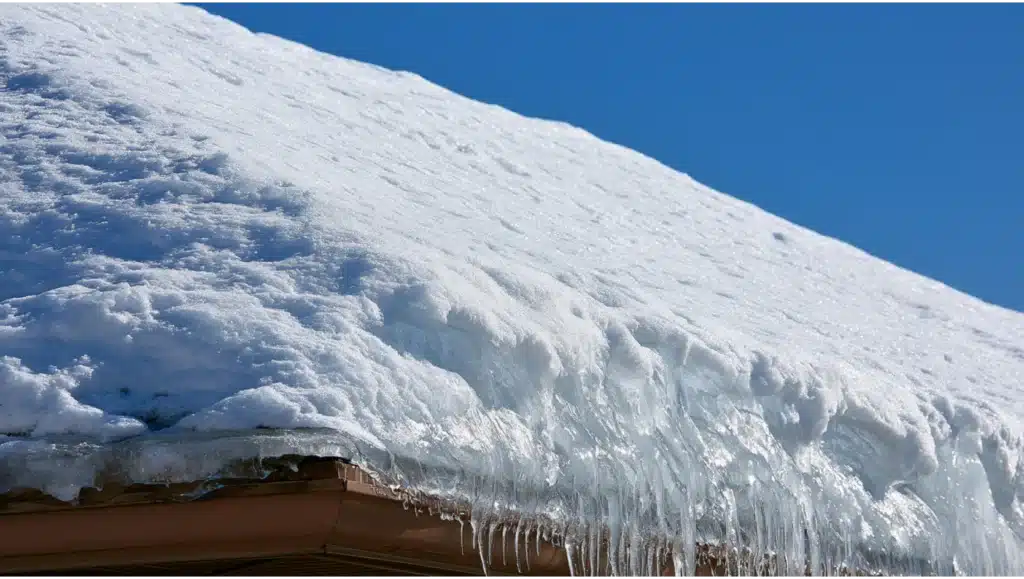
Ice dams follow a predictable pattern. Heat escaping into the attic warms the upper roof above 32°F, melting the snow there. That melting water runs down to the colder eaves and gutters, which stay below freezing, and refreezes into a ridge of ice. Water then pools behind that dam and works its way under the shingles, into the attic, ceilings, and walls, causing water damage that spreads well beyond the roofline. Icicles hanging off your eaves are an early warning sign that this cycle is underway, and a steady drip indoors means moisture has already found a way in.
Raking clears snow near the edge and gives you short-term relief. Using a snow rake to keep the eaves clear after each snowstorm can slow the buildup, but it doesn’t address the heat loss driving the whole process. The durable way to prevent ice dams is a colder attic: sealing air leaks, adding insulation, and improving ventilation so warm air can escape before there is enough snow melting from below to feed a dam. The National Weather Service points to at least R-30 attic insulation, with R-38 preferable in northern climates, plus proper ventilation at both the ridgeline and the overhang to keep attic air cold. A well insulated attic is what stops the melting-refreezing loop that lets ice dams damage your roof.
During a roof replacement, installing an ice-barrier underlayment adds another layer of protection. The IRC calls for it to extend from the roof edge to at least 24 inches inside the exterior wall line in areas with a history of ice dams. This is where our approach at Cobex Construction Group comes in. We inspect the whole system, not just the surface: shingles, underlayment, flashing, ventilation, and attic performance. Repeated ice dams are a symptom, and constant raking treats the symptom. Of course, fixing the system is how a roof is built to protect, perform, and hold up over time. Done once. Done right.
When to Call Cobex, and a Note for Cold-Weather Homeowners Facing Heavy Snowfall
Some signs mean stop what you’re doing and get a professional out. Call right away if you notice sagging or deformation in the roof, new cracks near windows or doors, doors and windows that suddenly bind, creaking or popping noises, or an ice dam already pushing water inside. Uncertainty about your snow load or unsafe access is reason enough to call too. After a week of continuous storms, when heavy snowfall keeps stacking layer on layer and each night the surface can freeze harder, the load can climb faster than you expect. When cold weather finally breaks, all that mass can shift at once. If a roof’s integrity is in doubt, both FEMA and Placer County advise seeking professional advice before anyone re-enters the space.
In Roseville and the Sacramento Valley, roof rakes aren’t an everyday tool for most homes. But for snow-affected Placer County properties, foothill and mountain homes, and our cold-climate service areas including Idaho, the same safety rules apply, whatever the weather does. As a family-owned company with in-house crews and concierge communication, we’ll inspect the roof, explain what we see, and help you understand your options with no surprises. If a snowy roof, ice, icicles, or a leak has you worried, schedule a free, no-obligation inspection at 916-745-6699. CSLB License #1031864.