

Key Takeaway
To prepare your roof for El Niño in Sacramento, inspect your attic and ceilings for water stains, repair damaged shingles and flashing, and clear all gutters, valleys, and downspouts before the wet season begins. NOAA maintained a greater-than-90% chance of a very strong El Niño event through fall and winter 2026 to 2027. Do this work during dry weather, when crews can work safely and sealants cure properly.
Prepare before the heavy rains arrive. Inspect your attic and ceilings for water stains, look over the roof surfaces from the ground, have damaged roofing and flashing repaired, clear valleys, gutters, downspouts and drains, confirm runoff moves away from the house, and cut back branches that hang over the roof. NOAA maintained an El Niño Advisory on September 10, 2026, with a greater-than-90% chance of a very strong event through fall and winter. But El Niño is a climate pattern, not a scheduled set of storms.
If you’re reading this because of a stain on the ceiling, an aging roof, or a contractor who let you down last time, we understand. What follows is a prioritized plan to prepare your roof for El Niño, written for Sacramento-area homeowners. The governing idea is simple: El Niño doesn’t create roof damage. Prolonged rain exposes the weak points already there, and it usually does it during the first storm of the season. Don’t wait for that storm to find them for you.
What Does an El Niño Winter Actually Mean for Sacramento? (Updated September 2026)
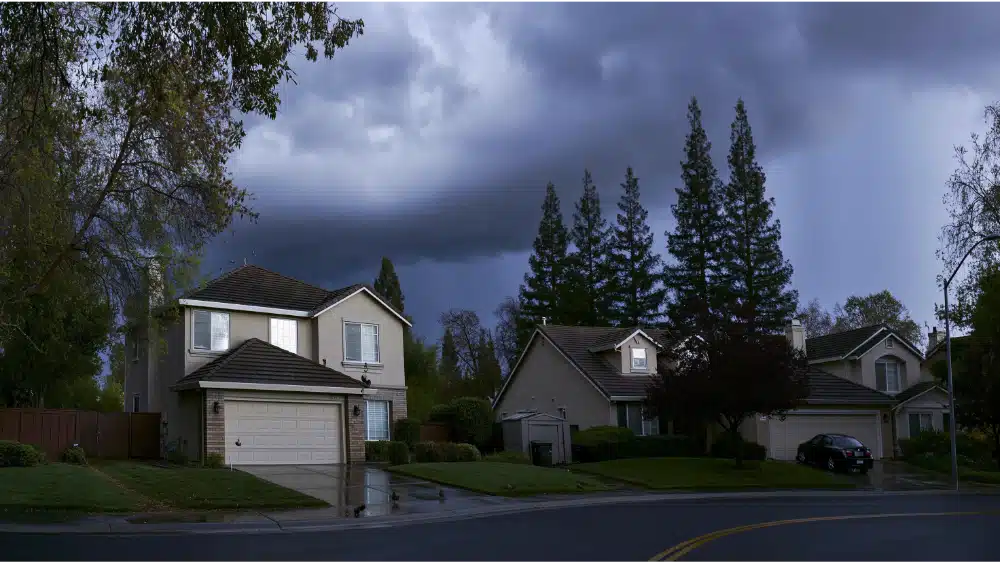
Updated September 2026. NOAA’s Climate Prediction Center maintained an El Niño Advisory on September 10, 2026, reporting a strengthening event with a greater-than-90% chance of being very strong during fall and winter 2026 to 2027. NOAA also put a 75% chance on the October through December period reaching a RONI value of +2.5°C, a measure of ocean-temperature anomaly that would exceed anything in the record going back to 1950.
Here’s the part most articles skip. The National Weather Service office in Sacramento notes that Northern California has historically shown little correlation between precipitation and most ENSO weather patterns. The clearer wet signal sits over Southern California, down through San Diego County, where San Diego homeowners can count on a wetter winter with more confidence than we can. A historically strong El Niño raises the odds of an active storm season here without guaranteeing Sacramento rainfall, which is exactly why preparation beats prediction. Most of our significant winter rain arrives by atmospheric river, a narrow plume of moisture that can sit over the valley for a day or more, and those events show up in the forecast whether or not the El Niño signal cooperates. NOAA’s next ENSO discussion is scheduled for October 8, 2026, and individual storm impacts generally come into focus in the one-to-two-week forecast window. Watch NWS Sacramento as each storm approaches.
When Should You Prepare Your Roof for El Niño? Before Storm Season Arrives, Not During It
During dry weather, before the wet season stacks up. An El Niño winter doesn’t change when our rain falls, only how much might come. NOAA’s 1991 to 2020 normals for the Sacramento 5 ESE station show 19.20 inches of normal annual precipitation, concentrated in a narrow window:
| Month | Normal precipitation |
|---|---|
| October | 0.93″ |
| November | 1.78″ |
| December | 3.49″ |
| January | 3.87″ (wettest) |
| February | 3.63″ |
| March | 2.82″ |
| April | 1.44″ |
Those seven months total 17.96 inches, roughly 93.5% of the annual normal by our calculation from the published figures. Valley heat and months without rain hide roof weaknesses beautifully. Cracked sealant, split flashing, and brittle underlayment sit quietly all summer and only announce themselves under sustained heavy rains. Dry weather is also the season when crews can work safely and sealants cure properly, which is why work scheduled in August or September holds up better than work scrambled together in December.
Start Inside: What Your Ceilings and Attic Are Telling You Before the First Storm
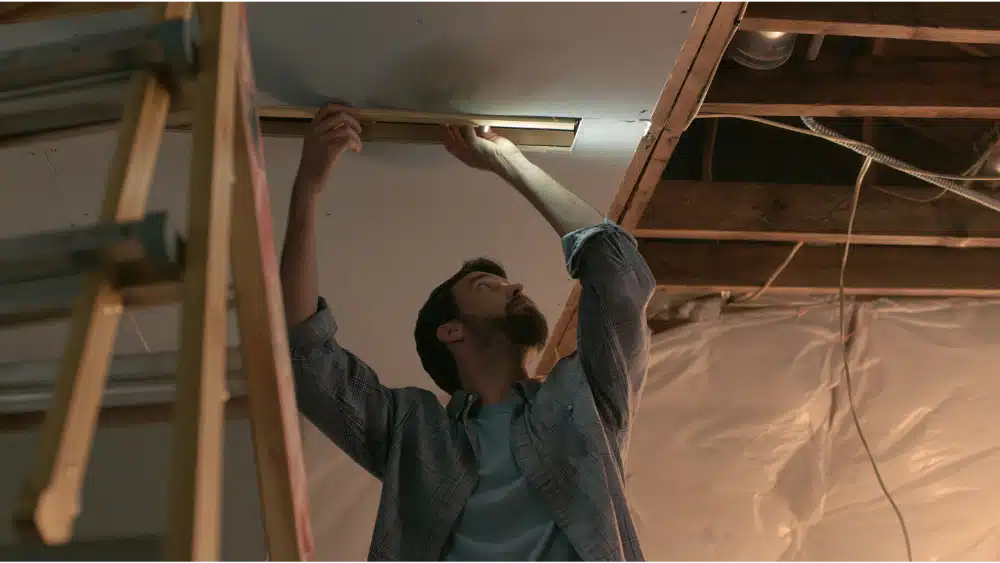
FEMA’s winterization guidance flags attic and ceiling stains as indicators of past or active water entry. Grab a flashlight and look for:
- Water stains, bubbling paint, or discolored drywall
- Damp, matted, or compressed insulation
- Musty odors anywhere in the attic
- Daylight visible around vents, chimneys, or other penetrations
- Any spot that has leaked before, even once
A dry ceiling today doesn’t prove the roof system is sound. Underlayment and decking can deteriorate for years before water ever reaches drywall, and slow leaks often surface as stains only after several days of heavy rains.
What Can Homeowners Safely Inspect From the Ground?
More than you’d think. Take binoculars and walk the perimeter of your property, looking for the same things FEMA and California’s storm preparedness checklists call out:
- Missing shingles, along with lifted, cracked, curled, or slipped shingles and tiles
- Sagging or uneven rooflines
- Leaves, dirt, and debris piled in valleys
- Sagging, separated, or detached gutters
- Visible flashing gaps, corrosion, cracked sealant, or lifted edges
- Granule accumulation at downspout outlets
- Trees and branches touching or hanging over the roof
Then stop there. Don’t climb onto a wet, steep, tile, metal, or already-damaged roof. Tile cracks underfoot, metal turns slick, and a compromised deck can give way. Fall injuries happen exactly here, and this is the point where a professional should take over.
What Should a Professional Roof Inspection Cover Before El Niño Season Arrives?

A proper inspection reaches the components you can’t assess from the driveway:
- Underlayment beneath tile or other coverings
- Decking condition and any soft spots
- Flashing at wall intersections and roof transitions, where wind-driven rain pushes water sideways instead of down
- Seals at plumbing vents, exhaust vents, skylights, and chimneys, including cracked pipe-boot collars
- Solar mounts, conduit penetrations, and rooftop HVAC curbs
- Low-slope membrane seams, drains, and evidence of ponding
- Attic ventilation and prior repair locations
Roof penetrations from solar attachments and rooftop HVAC equipment are common leak points around here, and because we install both, they’re part of what we inspect rather than something we work around. Every inspection should end with documentation: photographs and a written explanation of what was found, so you can decide without pressure. The California Department of Insurance also recommends taking dated photos or video of your roof, attic, and ceilings before a loss occurs. Do it now, while the roof is dry.
Clear the Entire Drainage Path Before Heavy Rains Arrive, Not Just the Gutters
California’s storm preparedness guidance asks homeowners to clear drains and gutters before storm season, confirm they actually function, and direct water from the roof into appropriate drainage areas instead of letting it saturate soil against the structure. Follow the water in order:
- Roof surface
- Valleys
- Gutters or internal drains
- Downspouts and discharge points
- Yard or approved drainage area
Cleaning the gutter is incomplete work if the downspout or its outlet is still blocked. Water backs up, sits against the roof edge, and finds its way under the covering. Overflowing gutters are also a common source of localized flooding at the foundation, which is why the EPA adds one more step most people skip: make sure the ground slopes away from the house. Trim overhanging branches so leaves stop reloading the system between storms, and recheck the drains after each big storm. Ten minutes of clearing between El Niño storms protects the whole property.
How to Prepare Your Roof for El Niño by Material: Shingles, Tile, Metal, and Flat
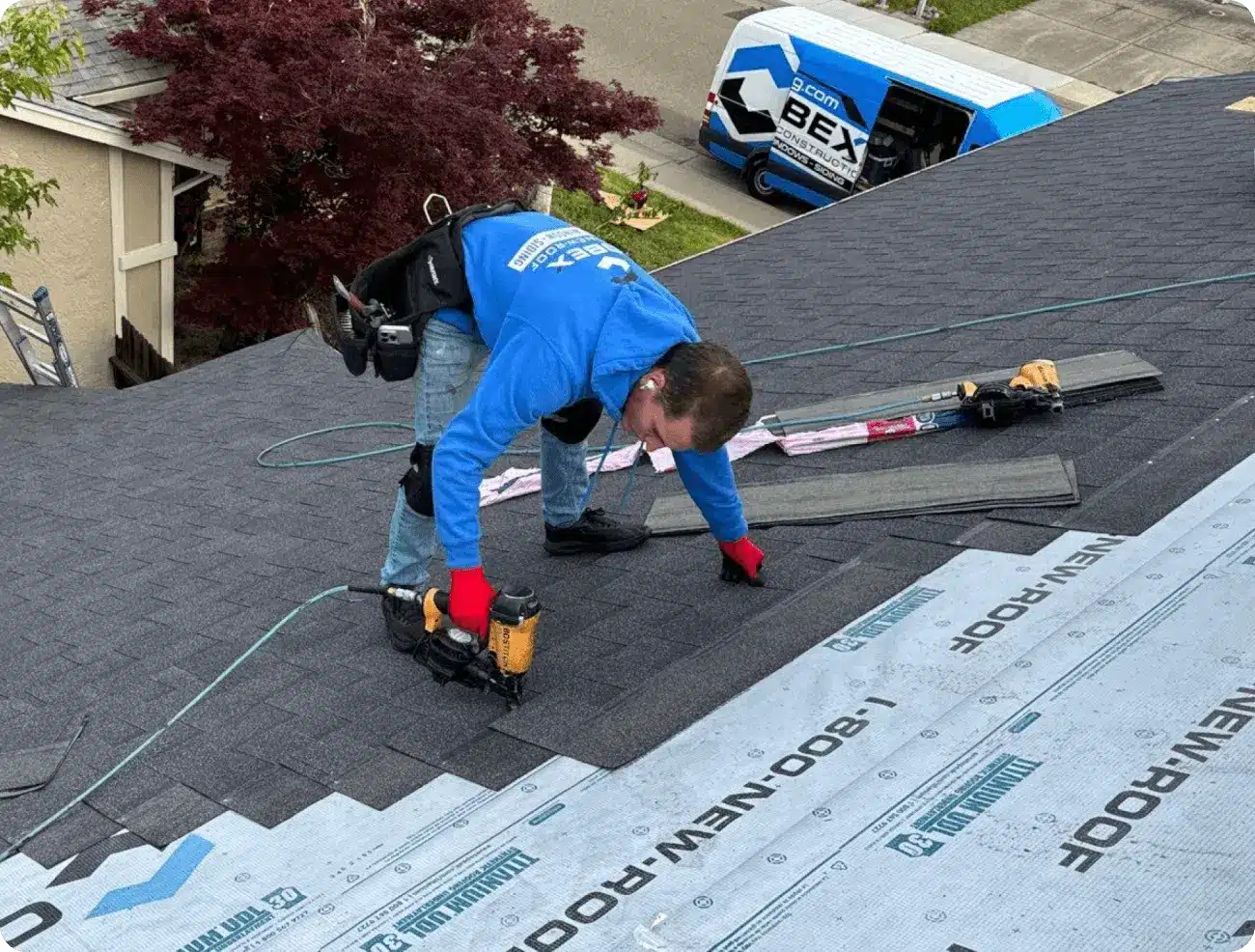
Roofing materials fail in different places, so the preparation work changes with what’s over your head.
| Roofing material | What fails first in prolonged rain |
|---|---|
| Asphalt shingles | Lifted, cracked, or curled shingles and granule-worn areas |
| Concrete or clay tile | Slipped or cracked tiles, plus concealed underlayment failure |
| Metal | Seams, fasteners, flashing, failed sealant, corrosion |
| Flat / low-slope | Clogged drains and scuppers, open seams, membrane damage, ponding |
Tile deserves a note, because it’s the most misunderstood roof in the region. The tile sheds water, but the underlayment underneath is the layer actually protecting the house. A concrete tile roof can look perfect from the street and still leak after two days of heavy rains. Flat and low-slope roofs are the most vulnerable once the rainy season settles in, since standing water under extreme conditions finds every weak seam and ponding turns into interior leaks fast.
Repair, Replace, or Monitor: When a Roof Repair Holds and When You Need a New Roof
Roof repair usually fits when:
- Damage is localized to one area
- Only flashing or a small number of shingles or tiles are affected
- The deck and underlayment are still serviceable
- There’s no pattern of repeat leaks
Replacement deserves evaluation when:
- Deterioration shows up across the whole roof
- Leaks appear in multiple areas
- Underlayment or decking is broadly damaged
- Repeated repairs have stopped holding on the existing system
Ignore the two rules of thumb you’ll see elsewhere: a fixed age cutoff and a percentage-of-replacement-cost formula. Neither one looks at your actual roof. We’d rather repair what can be repaired and tell you honestly when a new roof is the only thing that will hold, because catching a problem in September is what keeps it from turning into costly emergency repairs in January. If budget is the obstacle, financing and our maintenance program give you a step-down option.
Your Seven-Day Checklist Before the First Major Storm, and What to Do If Water Gets In
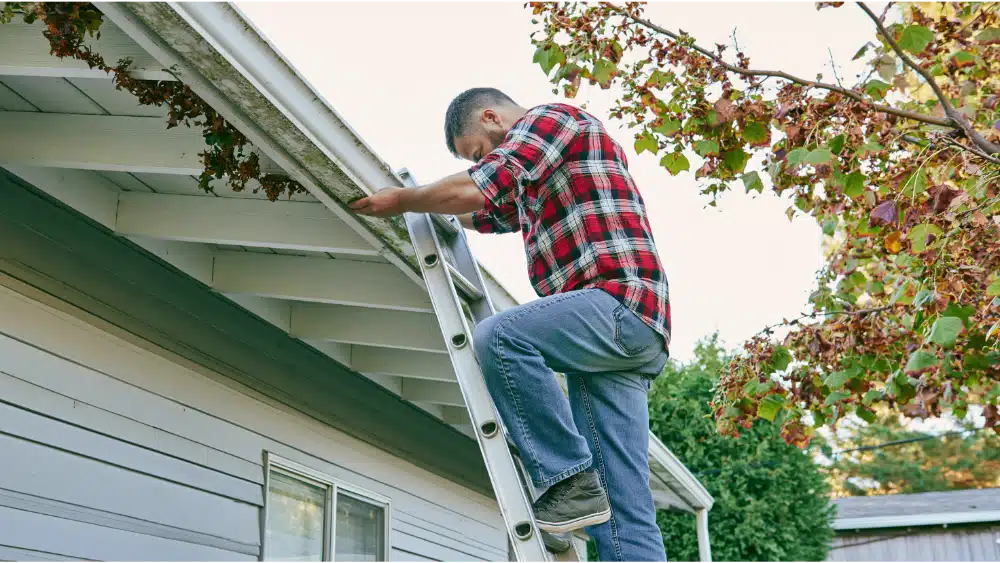
Seven days out
- Check the NWS Sacramento forecast, since atmospheric river details sharpen inside the one-to-two-week window.
- Clear fresh leaves and debris from valleys and gutters.
- Confirm downspout outlets and roof drains are open.
- Secure loose outdoor items ahead of high winds.
- Photograph the roof and any known problem areas.
- Move belongings away from past leak locations.
- Keep your contractor and insurance company contact information somewhere you can find it.
Do all of it before a major storm arrives. Once the roof is wet or the wind picks up, stay off it.
If the roof leaks mid-storm
- People first. Clear the area under any sagging ceiling.
- Contain the water with buckets and towels if it’s safe to do so.
- Move furniture and belongings out of the path.
- Shut off power to the affected area if that can be done safely.
- Photograph everything before you clean up.
- Call a roofer and notify your insurance company.
- Use temporary protection only if it creates no fall or electrical hazard.
- Begin drying affected materials within 24 to 48 hours, the EPA’s window for reducing mold risk. Drying without fixing the source isn’t a fix.
- Treat any emergency patch as temporary.
The California Department of Insurance advises making reasonable temporary repairs to prevent water from causing further damage, saving receipts, and holding off on extensive permanent work until you’ve spoken with your insurer or adjuster. We help homeowners through this and coordinate with insurance carriers throughout the process.
Permits, Licensing, and Insurance for Sacramento and Roseville Roof Work
Permits. Confirm your jurisdiction first, because Roseville, the City of Sacramento, and unincorporated Sacramento County are not interchangeable. The City of Roseville treats reroofing, including tear-off and overlay, as permitted work and requires a current-code-cycle CF1R energy compliance form. The City of Sacramento also lists reroofing as requiring a permit. Sacramento County guidance requires a reroof inspection plus a final inspection and allows no more than two total roofing layers for an overlay. The 2025 California Building Standards Code took effect January 1, 2026.
Licensing. California requires a licensed contractor when the work needs a permit, uses employee labor, or has a combined labor-and-material value of $1,000 or more. CSLB also caps home improvement down payments at 10% of the contract price or $1,000, whichever is less. Our CSLB License #1031864 is active and carries B, C39 Roofing, and C47 classifications.
Insurance. Policies commonly cover windstorm damage and sudden accidental water damage, but generally exclude flood, seepage, ongoing leaks, wear and tear, and neglect. That distinction matters: storm-driven roof damage is often a covered peril, while damage traced to deferred maintenance usually isn’t. Your policy language controls, so call your carrier for a specific answer before you file an insurance claim. Standard homeowners policies don’t cover flooding, and NFIP coverage typically carries a 30-day waiting period, so a policy bought after the storms arrive won’t help this season.
Get Your Roof Ready for an El Niño Winter With a Local Team That Knows Northern California Storms

We’re family-owned and operated, with our Roseville office at 503 Giuseppe Ct Ste 4 and headquarters at 4305 Auburn Blvd in Sacramento. Our crews are in-house, supported by project managers, superintendents, and Client Success Managers, so you’ll know who’s on your roof, what they found, and what it will take to protect your property through the upcoming season. No surprises. We’ve been BBB accredited since December 2017, hold CSLB License #1031864, and BuildZoom ranks us in the top 1% of California licensed contractors. Our site reflects 30+ years of combined experience and 5,000+ satisfied homeowners.
Request a free, no-obligation roof inspection and quote online or at 916-745-6699. The intake takes a minute: service type, roofing material, urgency, payment preference, and address. A quick conversation, not an application.
Frequently Asked Questions
How should I prepare for a Super El Niño in 2026?
Prepare your roof and drainage now, during dry weather, on the schedule above. As of September 10, 2026, NOAA gave a greater-than-90% chance of a very strong El Niño this fall and winter. A strong event raises the odds of an active storm season in Sacramento without making it certain, so preseason work is the sensible response and the surest way to avoid costly emergency repairs mid-winter.
How do I prepare my house for El Niño?
Start with the roof, then clear gutters, downspouts, and their discharge points. Confirm the ground slopes away from your foundation, trim branches overhanging the roof, and take dated photos of the roof, attic, and interior for your records before the heavy rains begin.
Does an El Niño winter guarantee more rain in Sacramento?
No. NWS Sacramento notes that Northern California has little historical correlation between precipitation and most ENSO weather patterns, while Southern California, including San Diego County, carries the clearer wet signal. Prepare regardless, because Sacramento gets roughly 94% of its normal rainfall between October and April either way.
Do I need a permit to replace my roof in Sacramento or Roseville?
Yes. Both the City of Roseville and the City of Sacramento treat reroofing as permitted work, and Roseville requires a current-cycle CF1R energy form. Sacramento County adds a reroof inspection, a final inspection, and a two-layer overlay limit. A licensed contractor should pull the permit for you.