
Key Takeaway
During El Niño, the most vulnerable parts of your roof are valleys, flashing, roof-to-wall transitions, and penetrations around vents, chimneys, skylights, and solar mounts, because these are where water concentrates or the roofing system is interrupted. Gutters, flat-roof seams, and wind-exposed edges and ridges round out the list. Existing weaknesses like loose shingles, cracked sealant, and blocked drainage are what heavy El Niño rainfall turns into leaks.
The most vulnerable parts of your roof are the places where water concentrates or the roofing system is interrupted: valleys, flashing, roof-to-wall transitions, and penetrations around vents, chimneys, skylights and solar mounts. Add gutters and drains, the seams on flat roofs, and the wind-exposed edges, ridges, shingles and tiles along the perimeter. Existing cracks, loose roofing materials, blocked drainage systems, and tired underlayment are what turn heavy rain into a leak.
If you’ve been watching forecast coverage and wondering whether your roof is ready before El Niño rolls in, that’s a reasonable question to ask now rather than in January. Below is a part-by-part map of where roofs give way first during El Niño storms, what you can safely check yourself, and how to think about roof inspection, repair, and replacement without overreacting.
What El Niño Season Really Means for Your Roof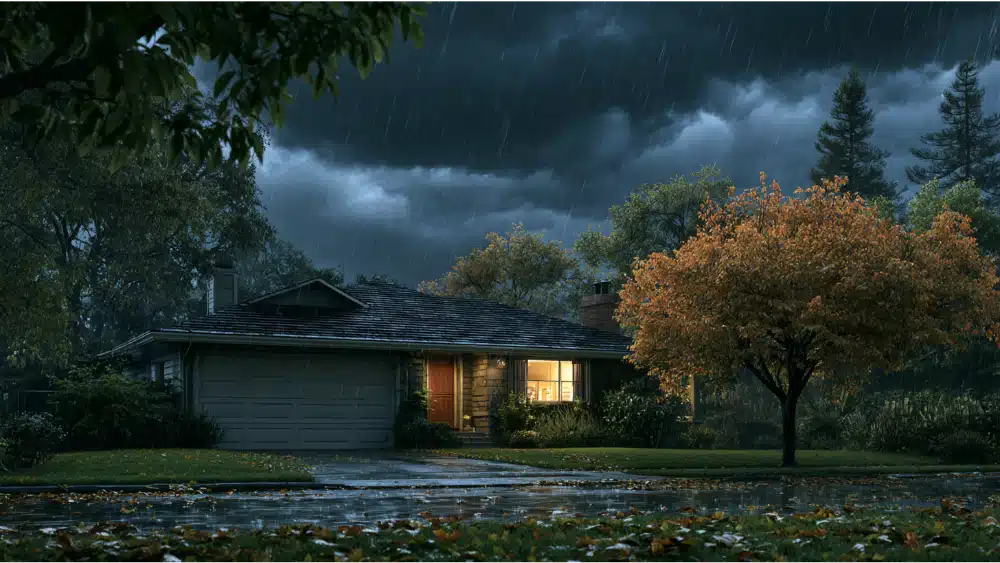
El Niño is one phase of the El Niño Southern Oscillation, a climate pattern rather than a storm. It describes warmer-than-average surface water in the central and eastern Pacific Ocean, and it returns irregularly, roughly every two to seven years. Forecast status as of September 2026: NOAA’s Climate Prediction Center issued an El Niño Advisory on September 10, 2026, with a greater than 90% chance of a very strong event during fall and winter 2026 to 2027. NOAA is careful to add that a stronger El Niño raises the odds of characteristic impacts without guaranteeing them in any one place.
El Niño, La Niña, and What the Pacific Ocean Actually Controls
South American fishermen named the warm current El Niño de Navidad because it tended to appear around Christmas. When that warm Pacific Ocean water shifts the Pacific jet stream, storm tracks move with it. La Niña is the cooler, opposite phase of the same oscillation, sometimes called El Viejo or anti El Niño. Neither phase tells you how much heavy rain will land on your particular roof.
San Diego Versus the Sacramento Valley
The El Niño precipitation signal is strongest across the southern tier of the country, and in California it shows up most clearly in the south. San Diego and the rest of Southern California have historically seen the wettest El Niño responses, while the National Weather Service office in Sacramento reports little correlation between most ENSO patterns and Northern California precipitation. So San Diego homeowners and Sacramento-area homeowners can read the same headline and face different odds. Either way, El Niño season won’t damage your roof. Rain, high winds, debris, and repeated wetting expose weaknesses that were already there.
Why Roofs Leak Where They Do
Roofs rarely fail in the middle of an open, uninterrupted plane. They fail where water gets funneled, where the system is cut through, and where wind finds an edge to lift. Severe weather rarely creates hidden vulnerabilities. It finds the ones already there. Atmospheric rivers supply roughly 30% to 50% of West Coast annual precipitation, and in some years up to 65% of Northern California’s, which is why drainage capacity matters more than any single rainfall total. Wind-driven rain compounds it, because water can move sideways or even uphill beneath a loose edge instead of simply falling.
- Where water concentrates: valleys, gutters, downspouts, drains, scuppers, low points.
- Where the roof is interrupted: flashing, roof-to-wall transitions, chimneys, skylights, vents, solar mounts, HVAC curbs.
- Where wind gets leverage: eaves, rakes, corners, ridges, hip caps, lifted edges on shingles and tiles, edge metal.
The Department of Energy’s Building America guidance singles out valleys and roof penetrations as among the most vulnerable areas for water intrusion. Everything below maps back to those three categories.
The Most Vulnerable Parts of Your Roof at a Glance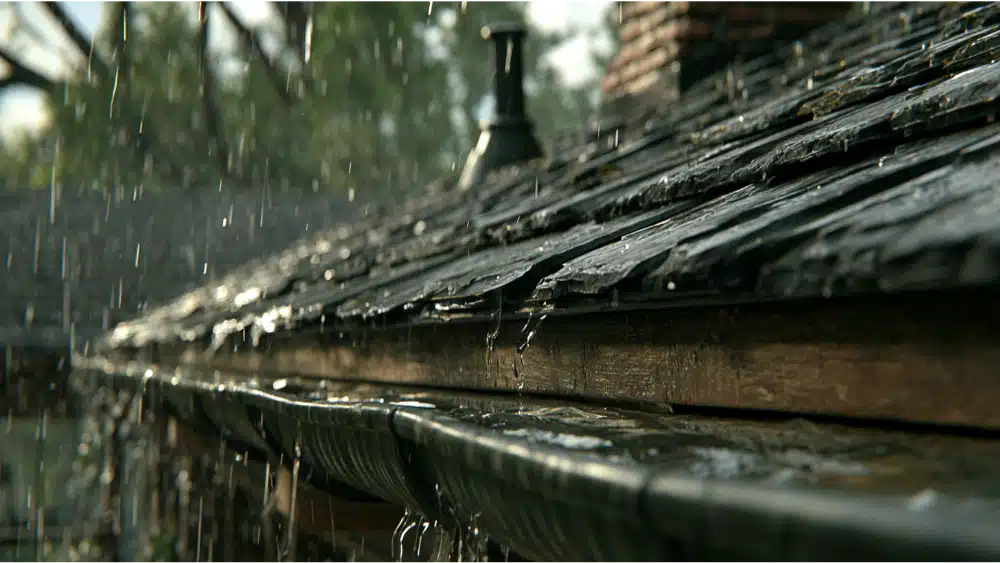
| Roof part | Why it’s vulnerable | Warning signs | Likely next step |
|---|---|---|---|
| Valleys | Concentrated runoff from two planes | Debris, rust, gaps, displaced material | Inspect, clear, repair |
| Flashing and roof-to-wall transitions | Seals the junctions, not the field | Lifted or corroded metal, cracked sealant | Professional roof inspection |
| Penetrations (vents, chimneys, skylights, solar, HVAC) | Interrupt the water-control layer | Degraded pipe boots, gaps, interior staining | Reseal or re-flash correctly |
| Gutters, downspouts, drains, scuppers | Carry the roof’s runoff away | Overflow marks, sagging runs, blockage | Clean, repair, redirect |
| Edges, rakes, ridges, hip caps | Highest wind pressure | Loose or missing shingles, tiles, caps | Repair before wet weather |
| Flat roofs and ponding areas | Slow drainage, standing water | Open seams, blisters, lingering water | Drainage and membrane evaluation |
| Underlayment and roof deck | Hidden backup protection | Damp attic, dark decking, recurring stain | Thorough inspection |
Valleys, Gutters, and Drainage: Where Water Concentrates
Roof valleys
A valley takes runoff from two roof planes and squeezes it into one narrow channel, so it moves more water than any other part of the roof surface. Debris, damaged valley metal, poorly integrated underlayment, exposed fasteners, or a previous patch job can obstruct that flow or open a path underneath the covering. Overhanging branches make it worse by dropping needles and leaves into the channel, and debris impact from a falling limb can split the metal outright. Ceiling stains may then show up well away from the actual entry point, because water travels along framing and sheathing before it becomes visible.
Gutters, downspouts, and scuppers
A few inches of heavy rain on a residential roof produces thousands of gallons of runoff, so drainage is part of the roof’s protective function rather than an accessory hanging off the edge. FEMA recommends routine cleaning of gutters, downspouts, and splash pads. EPA roof guidance adds interior drains, scuppers, and outlets, along with checking for loose connections, corrosion, and damaged sealants. Clear them before storm season arrives to ensure water flows freely away from the house. From the ground you can see plenty: overflow streaking on fascia, sagging gutter runs, shingle granules piling up at the downspout outlet.
Flashing and Roof Penetrations: Where the System Is Interrupted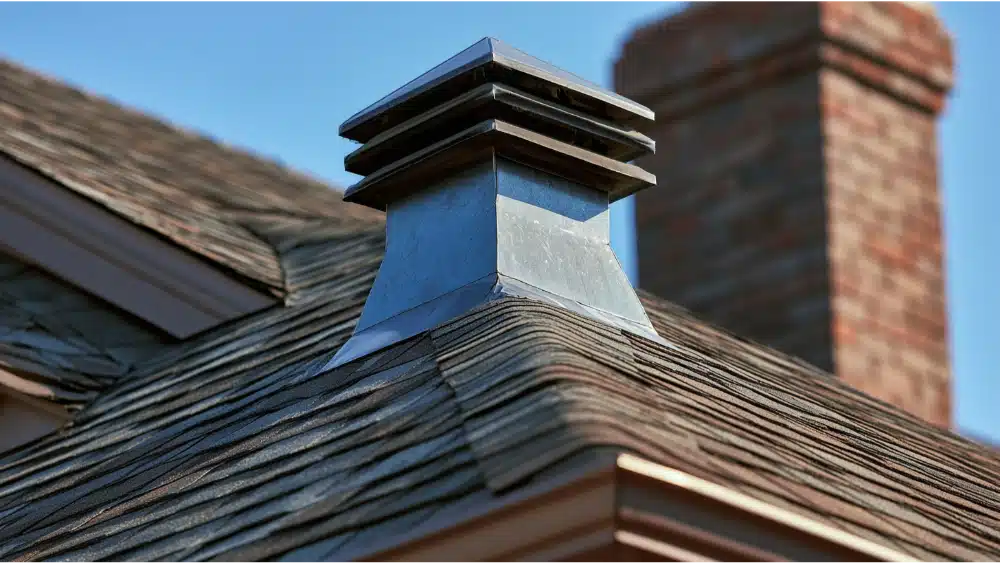
Flashing and roof-to-wall transitions
Flashing protects the junctions: roof-to-wall intersections, chimneys, dormers, changes in slope, valleys, skylights, and penetrations. FEMA treats it as a critical weatherproofing component. Step flashing weaves into each course along a wall. Counterflashing caps it. Kick-out flashing at the bottom of that run sends water into the gutter instead of behind siding and fascia, and a chimney cricket keeps water from stalling on the uphill side. Inspect flashing wherever the roof meets a wall. A bead of caulk smeared over a failed detail buys a few months. It isn’t a roof repair. Done once, done right means correcting the detail itself.
Vents, skylights, solar mounts, and rooftop HVAC
Every penetration cuts through the water-control layer and depends on continuous flashing-to-underlayment integration. We install roof-integrated solar and rooftop HVAC, and we seal those penetrations as part of the roof. Properly detailed penetrations aren’t a liability. Unsealed or aging ones are. Watch for cracked sealant, split or brittle pipe boots, minor cracks at chimney mortar or curb joints, and staining on interior walls below a chimney.
Edges, Ridges, and Loose Roofing Materials: Where Strong Winds Cause Roof Damage
Wind needs an edge to grab. That’s why roof edges and corners see greater pressure than the field, and why roof damage usually starts at the windward edge and works inward. FEMA’s wind-vulnerability guidance flags unsealed shingle tabs, incorrectly installed starter courses, eaves, rakes, and edge flashing as the recurring weak points. Wind resistant performance on asphalt shingles depends partly on sealed tabs and correct fastener placement, so an unsealed tab is an invitation.
Once shingles, tiles, edge metal, or membrane lift even slightly, wind-driven rain has a direct path to the underlayment and deck. That’s the difference between vertical rainfall, which sheds, and the horizontal rain that arrives with strong winds during El Niño storms. EPA maintenance guidance recommends inspecting hips, ridges, valleys, roof edges, and fasteners for exactly this reason. Slipped or cracked tiles and loose ridge or hip caps belong on that same list.
Flat Roofs and Low-Slope Sections: Seams, Ponding, and Slow Drainage 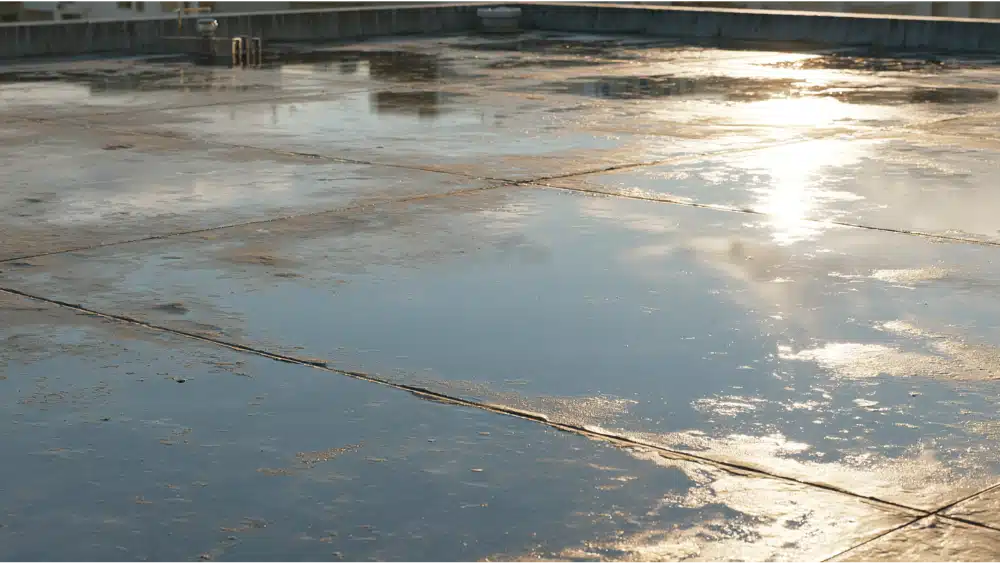
Flat roofs should never be level. DOE recommends a minimum drainage slope of a quarter inch per foot, about 2%, toward drains, scuppers, or edges. On membrane systems, the vulnerable spots are open or lifting seams, backed-out fasteners, blisters, splits, shrinkage, edge metal, drains, and the low points where water sits after the sky clears. Ponding is usually a symptom of something else: blocked drains, inadequate slope, deck deflection, displaced insulation, or rooftop equipment blocking the flow path. Low-slope membranes are standard on commercial buildings, and property owners there face the same seam and drainage questions homeowners do on a porch, carport, or addition section. We work with single-ply and silicone systems on both.
Underlayment and Roof Deck: The Layers You Cannot See From the Street
Roofing systems are layered by design: covering, underlayment, and decking. That layering is what carries a home through extreme weather. When water gets past a cracked tile or lifted shingle, the underlayment decides whether it stops there or reaches the deck. Soaked or deteriorated decking weakens the substrate that holds roofing and fasteners, and model-code guidance doesn’t allow a recover over a water-soaked or seriously deteriorated roof base. Left alone, small roof problems turn into structural damage at the framing. A roof can look fine from the curb and still hide damp insulation, dark decking, or a stain that keeps returning after a leak was supposedly fixed.
How Vulnerability Differs by Roofing Materials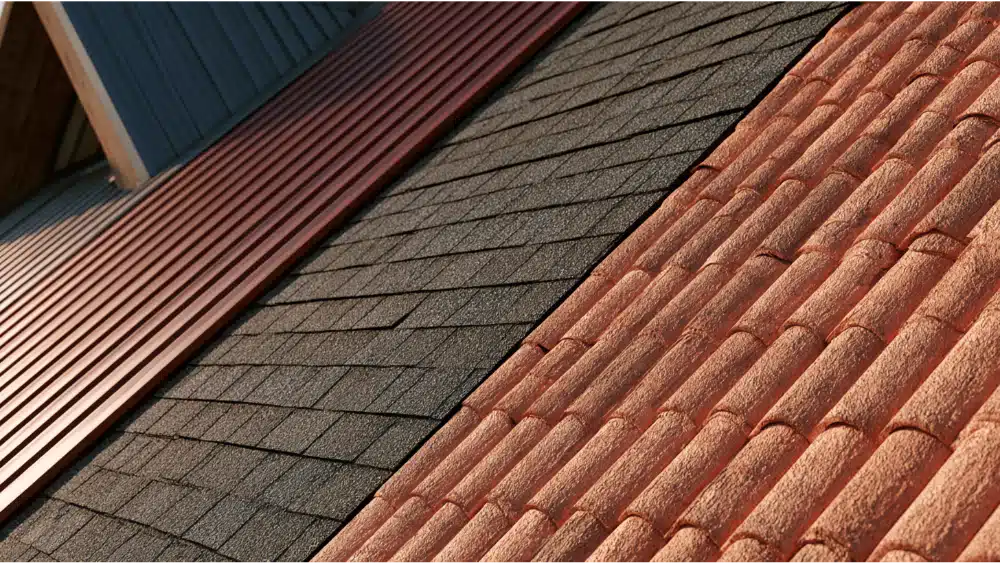
The material name isn’t the answer. Installation quality, age, maintenance, slope, flashing, drainage, and prior damage tell you more than the product on top.
- Asphalt shingle roofs: unsealed tabs, fastener placement, granule loss, perimeter edges.
- Tile roofs, including concrete tiles: slipped or cracked pieces, ridge and hip details, and the concealed underlayment doing most of the waterproofing work. Tile is everywhere from San Diego to the Sacramento Valley, and the tile itself is rarely what leaks.
- Metal: seams, fasteners, penetrations, corrosion, edge details.
- Low-slope and single-ply: seams, drains, scuppers, ponding areas, edge metal.
El Niño Roof Prep: Getting Your Roof Ready Before Storm Season
You can learn a lot without a ladder, and a few minutes of looking tells you more than you’d expect.
- Walk the property at ground level and look up at every roof plane.
- Use binoculars instead of climbing.
- Check ceilings, closets, and safely accessible attic areas for stains, damp insulation, or musty odors.
- Watch where downspouts discharge during ordinary rain.
- Photograph the roof’s condition so you have a baseline.
When to Schedule a Professional Roof Inspection
Leave the rest to a professional roofing contractor: walking wet, steep, tile, metal, or fragile roofs, lifting coverings to inspect underlayment, testing decking, evaluating how flashing is integrated, working around solar or rooftop HVAC, and any temporary tarping at height. Nobody should be on a roof during or right after a storm. Real El Niño roof prep happens before sustained wet weather, not after an active ceiling leak, so book a professional roof inspection early in storm season if you can. When you call anyone, verify their license at cslb.ca.gov. Ours is CSLB License #1031864.
How to Prepare Your Roof for El Niño: Inspect, Repair, or Replace? 
Condition decides this, not age, though an older roof usually has more to check.
- Inspect: no active leak, but the roof hasn’t been evaluated recently or shows visible wear.
- Repair: an isolated flashing, penetration, drainage, shingle, or tile defect with a sound system around it. A targeted roof repair before the next storm hits is often the whole answer.
- Replace: widespread deterioration, repeated leaks, or compromised decking, where a full roof replacement is the only thing that will hold.
- Upgrade: improve underlayment, flashing, drainage, ventilation, or integrated solar and HVAC details while a replacement is already planned.
Plenty of inspections end in maintenance or small repairs. If a replacement is the honest answer, we’ll show you why, and financing is available if you need payment flexibility. No surprises either way.
What to Do If Your Roof Leaks During a Major Storm
- Protect people first. Never climb onto a wet roof.
- Move belongings and contain interior water if you can do it safely.
- Photograph the storm damage and the interior before you clean up.
- Make reasonable temporary repairs to prevent further damage, which the California Department of Insurance advises, and keep your receipts.
- Dry wet or damp materials within 24 to 48 hours when possible. EPA guidance says that window often prevents mold growth.
- Report the loss promptly and hold off on extensive permanent repairs until the adjuster has evaluated it.
California homeowners policies generally don’t cover flood, but they may cover rain entering through an opening created by a covered event such as wind. Coverage depends on your policy and the cause of loss. We can document the damage and work with your insurance company on the claim.
What area will be most affected by El Niño?
The precipitation signal is strongest across the southern tier of the country, including San Diego and coastal Southern California. NWS Sacramento reports little correlation between most ENSO patterns and Northern California rainfall. Neither phase of the cycle is a local forecast.
What is the weakest part of a roof?
Not the open field. It’s the interruptions and collection points: valleys, flashing at roof-to-wall transitions, and penetrations. Flashing is the single most common first point of failure.
What roof shingles should you stay away from?
Judge condition and system rather than brand. Avoid unsealed, curled, brittle, or improperly fastened shingles, undersized or missing starter courses, and any shingle installed over a compromised deck or without correct underlayment and flashing. We install the Owens Corning Total Roofing Protection System for that reason: the components are designed to work together.
What is the 25% rule for roofing?
It’s a code-based rule of thumb: when more than 25% of a roof section is damaged or repaired within a 12-month period, the work is generally expected to bring the roof assembly up to current code instead of being patched. California follows the 2025 California Building Standards Code, effective January 1, 2026. Confirm reroof permit requirements with the City of Roseville building department.
Get Your Roof Ready With a Free Roof Inspection
You can’t evaluate what you can’t see from the ground, and you don’t want to be sold a roof you don’t need. A free, no-obligation inspection gives you an honest read, and it may well end with maintenance or a single repair. We’re family-owned and operated, focused only on exteriors, with in-house crews, project managers, and client success managers who keep you updated at every step. BBB accredited since 2017, CSLB License #1031864.
Our Roseville office is at 503 Giuseppe Ct Ste 4, and we work with homeowners throughout the Sacramento area. Call 916-745-6699 or request a quote online. It’s a quick conversation, not an application.