
Key Takeaway
An impact resistant roof uses shingles rated UL 2218 Class 4, the highest impact rating in the industry, to resist hail and flying debris better than standard materials. The full system, including underlayment, flashing, and accessories, determines real-world performance. A Class 4 asphalt roof can last 30 years or longer where standard shingles typically need replacing at 15 to 20. Insurance discounts are available in hail-prone areas, though savings vary by carrier and state.
Most homeowners land here for a reason: the roof is aging, a storm just moved through, or an estimate is sitting on the kitchen table. An impact resistant roof uses materials tested to resist hail and flying debris better than standard shingles. For asphalt, UL 2218 Class 4 is the highest rating. That rating is a classification, not a guarantee. Installation and the complete system decide how a roof performs.
What impact resistant actually means
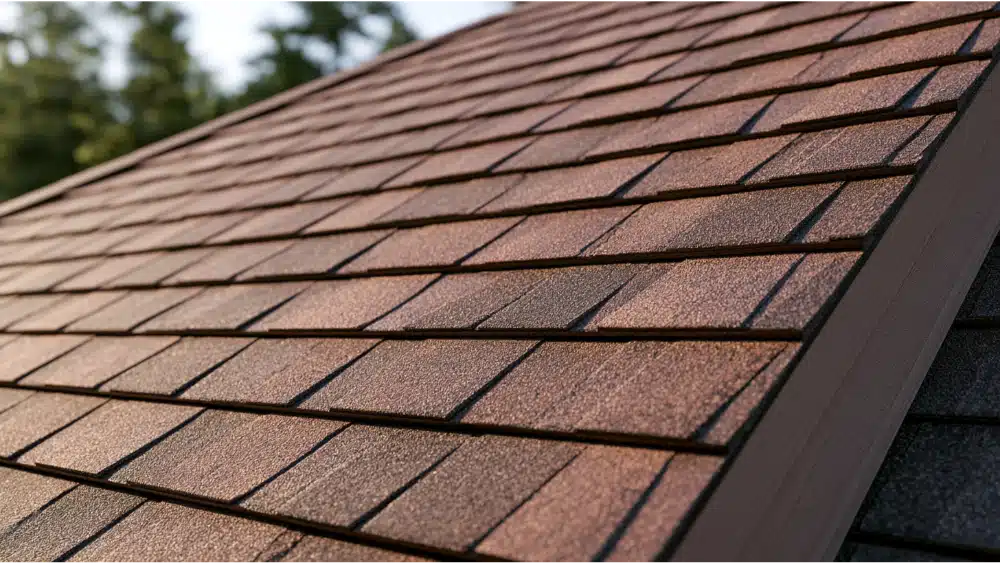
An impact resistant shingle is one tested component. An impact resistant roof is the whole assembly, where the rated covering, the accessories, and the installation hold up together.
Impact resistant shingles are engineered with polymer-modified asphalt or a reinforced backing, giving the material superior flexibility so it absorbs a hail impact instead of cracking. The point is protection: water stays out and the structure underneath stays dry through severe weather events.
How UL 2218 ratings work, Class 1 through Class 4
UL 2218 is the roofing industry’s benchmark for prepared roof coverings: steel balls dropped from set heights onto the shingle.
| Class | Steel ball | Drop height |
|---|---|---|
| Class 1 | 1.25 in | 12 ft |
| Class 2 | 1.5 in | 15 ft |
| Class 3 | 1.75 in | 17 ft |
| Class 4 | 2 in | 20 ft |
Passing means no cracking or breach visible from the reverse side. The test does not capture denting or granule loss, which is often what an adjuster sees after real hail. FEMA recognizes either UL 2218 Class 4 or ANSI/FM 4473 Class 4, a separate ice-ball test, as impact rated.
Can impact resistant shingles still be damaged by hail?
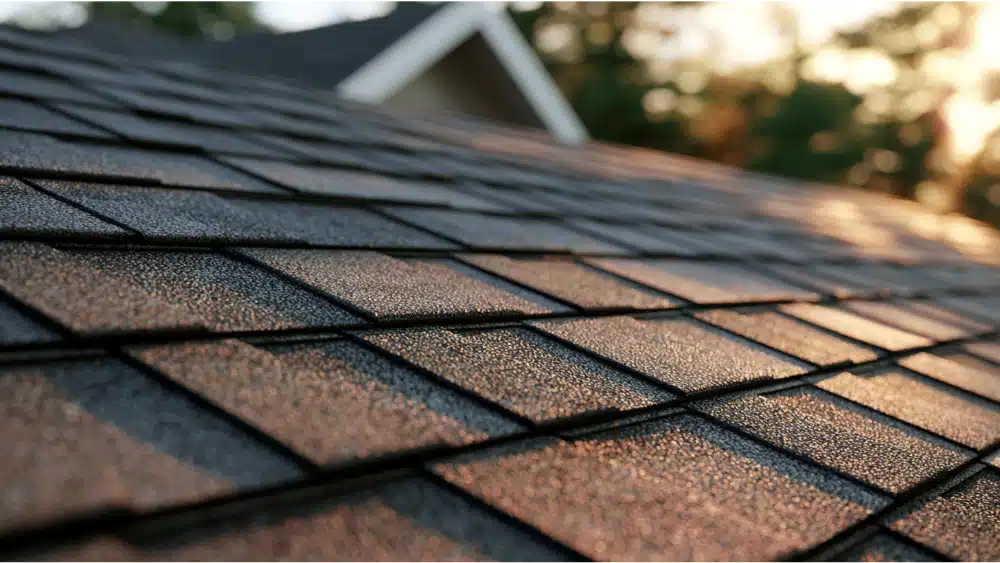
Yes. No roof is hail proof. Natural hail varies in hardness and shape, and high winds drive it sideways. Large hailstones at storm wind speeds hit harder than a lab steel ball, so claims that Class 4 shingles withstand two-inch hail overstate the test.
The Insurance Institute for Business & Home Safety (IBHS) also scores products on dents, tears, and granule loss. Its November 2025 update covered 24 products. Most earned “Good.” None earned “Excellent.” Shingles lose hail performance as they age, so check the current score for the exact product.
Which roofing material holds up best, and what it does to curb appeal
Impact resistant roofing materials do not all perform alike. Exposure, slope, and local code decide the right choice.
- Polymer-modified asphalt shingles: the common path, with durability that varies by product.
- Metal: hail dents it, though IBHS reports no evidence dents alone reduce function; curb appeal is the fair concern.
- Concrete and clay tile: large hail can crack tiles depending on thickness.
- Synthetic and composite: performance varies widely, so verify the classification.
A well-built Class 4 asphalt system can serve 30 years or longer where standard shingles often need replacing at 15 to 20. Fewer repairs, a later full roof replacement, and a clean roofline that still appeals to potential buyers are the practical benefits behind the long term savings.
Installation decides real impact resistance and enhanced protection
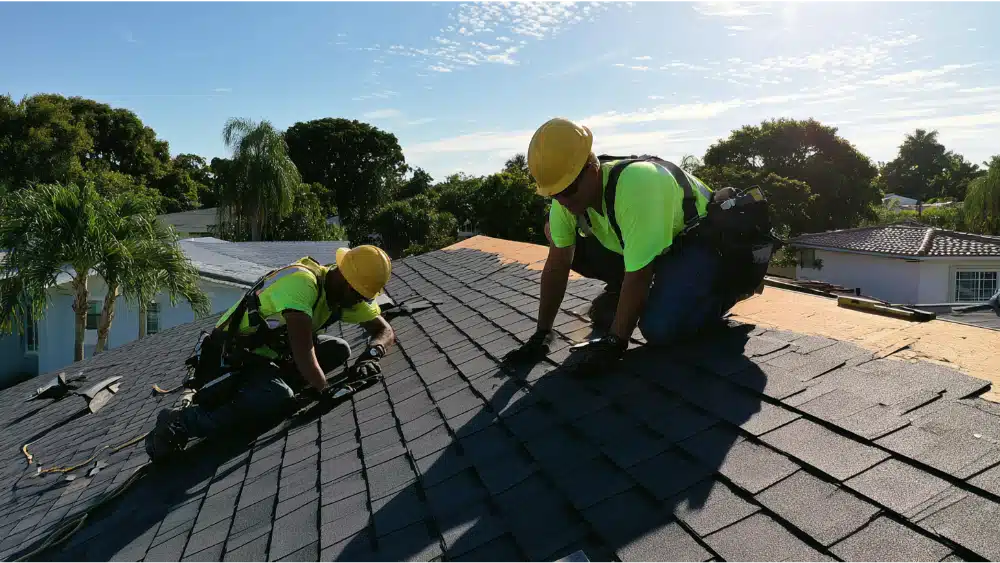
Deck condition and fastening, underlayment, starter strips, flashing, valleys, penetrations, and ventilation all contribute, because transitions are where water gets in. Hip-and-ridge caps count too: Owens Corning, for example, requires its ImpactRidge product to complete a Class 4 system on certain shingles. The accessory list on your contract matters as much as the shingle name.
Installation shortcuts can void manufacturers’ warranties and erase the enhanced protection you paid for. A Class 4 rating says nothing about wind or fire, and CAL FIRE recommends Class A coverings as part of home hardening. We use in-house crews, a project manager on every job, and quality workmanship that follows manufacturer instructions as written. Done once. Done right.
Insurance costs: where insurance companies offer discounts
Discounts are real, but not automatic. Availability depends on your state, your insurance company, the policy, the exact product, and the documentation required. An impact rated roof lowers the likelihood of storm claims, so in areas prone to hail, insurance companies offer discounts that add up over the life of the roof.
Questions to ask your insurance company
- Is a discount available, and on which part of the premium?
- Which standard qualifies: UL 2218 Class 4, FM 4473, or an IBHS score?
- Does it change my deductible, roof-loss settlement, or coverage for cosmetic dents?
The California Department of Insurance lists wind and hail among perils typically covered by homeowners policies, while wear and neglect are excluded. Lower insurance costs are only part of the return. Avoiding costly damage after storms, and the repair costs that follow, usually saves more than the discount.
Hail prone areas vs. Sacramento: where the upgrade pays off
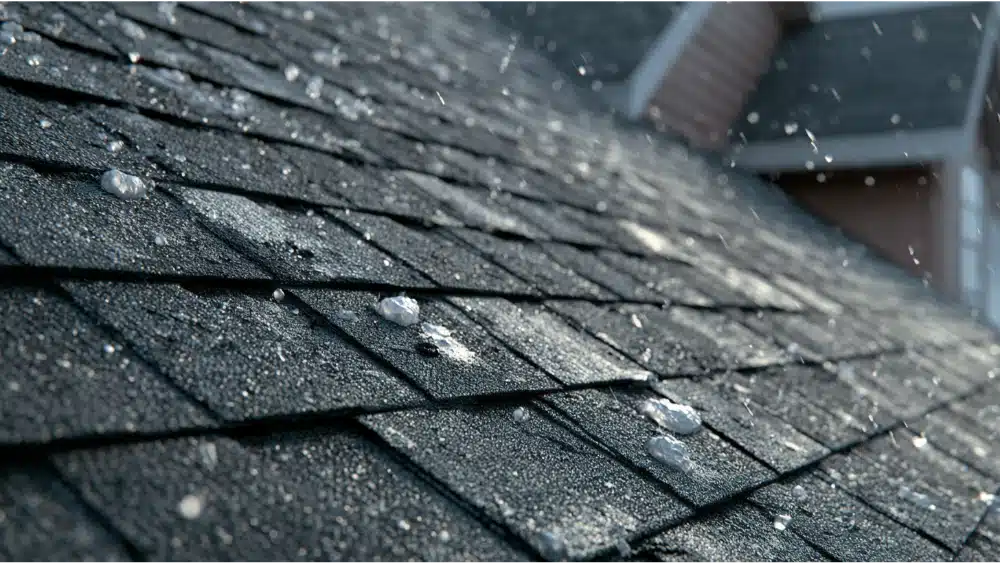
Location changes the math.
| Factor | Hail prone areas | Sacramento region |
|---|---|---|
| Main hazard | Repeated severe hail | Wind-driven debris, heat and UV |
| Hail risk | High and recurring | Very low (SMUD 2024-2028 plan) |
| Insurance discount | Commonly offered | Varies by carrier |
| Where value shows | Fewer replacements, premium savings | Longevity, fire performance, cooling savings |
SMUD’s 2024-2028 local hazard mitigation plan rates county hail risk as very low. Severe weather here looks different: falling branches and wind-driven debris during winter storms cause more damage than hail, and shingles age under relentless summer heat and UV. Class A fire performance matters, and City of Sacramento cool-roof rules apply to qualifying low-rise residential reroofs when more than half the surface is replaced. Confirm current code requirements with your city or county building department.
How to verify what you are buying, and who installs it
Save the packaging label, the manufacturer data sheet, UL or FM classification documents, the current IBHS score, the contract material schedule including accessories, and permit records. That file saves real hassle when an adjuster asks later. Then confirm the contractor: active license status through the CSLB lookup, a real local presence, and who physically performs the work.
We are family-owned and operated, licensed under CSLB #1031864, and we install with our own in-house crews. Before any repair or roof replacement decision, contact us at 916-745-6699 for a free, no-obligation inspection. No surprises.
Frequently Asked Questions
What is the initial cost, and what are the potential savings?
The initial cost depends on roof size, pitch, material, and deck condition, so the only accurate number comes from an inspection and a written quote. Financing is available. Added protection against storm damage, plus any discount your carrier offers, belongs in the long term value of the investment.
What is the difference between architectural and impact resistant shingles?
Architectural describes construction and appearance: layered, dimensional, better curb appeal. Impact resistant describes a tested performance class. A shingle can be both, but architectural alone does not mean Class 4.
How can I tell if I already have impact resistant shingles?
Check leftover bundles for the UL 2218 class marking, then review your contract and permit records. Manufacturers such as Owens Corning and CertainTeed can confirm a class from the exact product name.