
A well‑designed patio cover transforms your outdoor space into a true extension of your home, offering shade, comfort, and year‑round usability. But how much does it cost to cover a patio in 2025? The short answer: it depends on several key factors like size, material, patio style, and design complexity, and the range can be wide. Here’s a detailed breakdown of covered patio cost for homeowners in California, written with clarity, expertise, and straightforward guidance from your local exterior remodeling professionals.
Why Homeowners Cover Their Patios
Adding a patio cover offers more than just aesthetic appeal, it increases the function and value of your outdoor space. Some of the main reasons homeowners invest in a covered patio include:
- Shade and comfort: A patio cover keeps harsh sun rays off your outdoor living room and helps protect patio furniture from UV damage.
- Weather protection: Whether it’s light rain or high‑UV summer days, solid patio covers and other types provide you with more usable outdoor space.
- Curb appeal and resale value: Covered patios are top features in many home improvement surveys, adding market appeal. Indeed, a well-designed covered patio can increase home value significantly.
- Energy efficiency: A solid cover or insulated patio cover over an outdoor space adjacent to windows or doors helps reduce heat gain.
- Extended living space: A covered patio essentially becomes a functional outdoor room, perfect for adding features like an outdoor fireplace or outdoor heater to enhance comfort and ambiance. This also applies to covered decks, which similarly expand your usable outdoor area.
Average Covered Patio Cost in 2025
So, how much does it cost to cover a patio? According to recent cost research:
- The national average for a covered patio installation (including materials, professional installation, and labor costs) is in the ballpark of $10,000 to $22,500 for a 200 square foot space.
- Cost per square foot for most patio cover projects falls within a typical square foot range of $20 to $60 or more, depending on materials, patio style, and complexity.
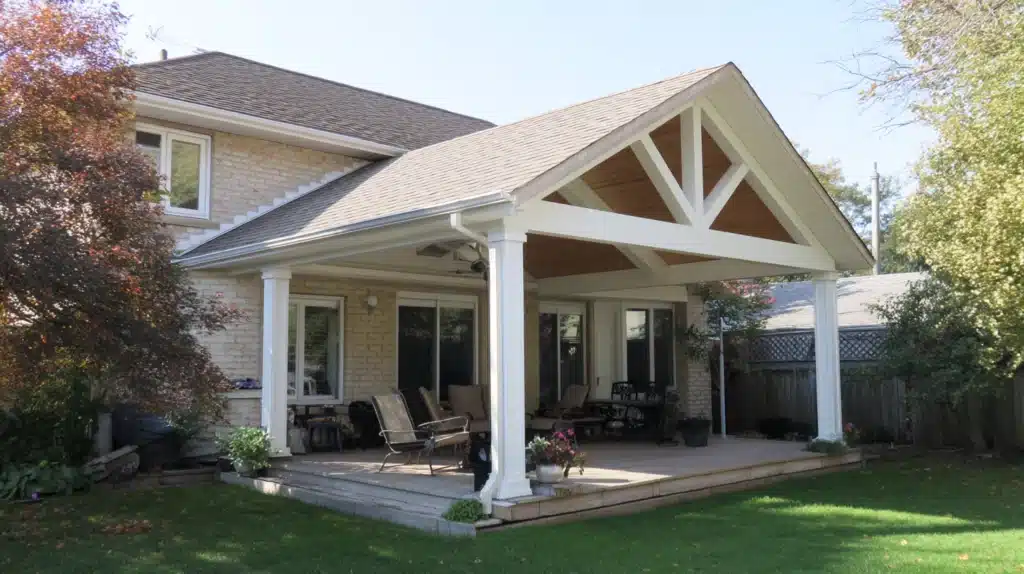
- Some high‑end installations, especially with premium materials or custom structures like a gable roof design, can run up to $100+ per square foot.
- For example: a 10′×20′ (200 square foot) patio cover might have total installation cost from around $10,000 up to $22,500 for standard materials and design. Because we serve Northern California, where permit, labor, and material costs tend to be above average, you should plan your budget accordingly, expect the higher end of these ranges if you’re adding premium features or complex design.
Patio Cover Material Types and Costs
Understanding what material you choose is a big part of determining patio cover cost. Below are the most common types of patio covers and how their costs compare.
Aluminum Patio Covers
Aluminum is a popular choice for patio covers due to its durability and relatively low maintenance. Typical cost: around $20 to $50 per square foot installed for a standard aluminum patio cover.
Advantages: rust‑resistant, low upkeep, modern look.
Considerations: design flexibility may be more limited compared to custom wood covers, and some finishes may dent under heavy use.
Wood Patio Covers
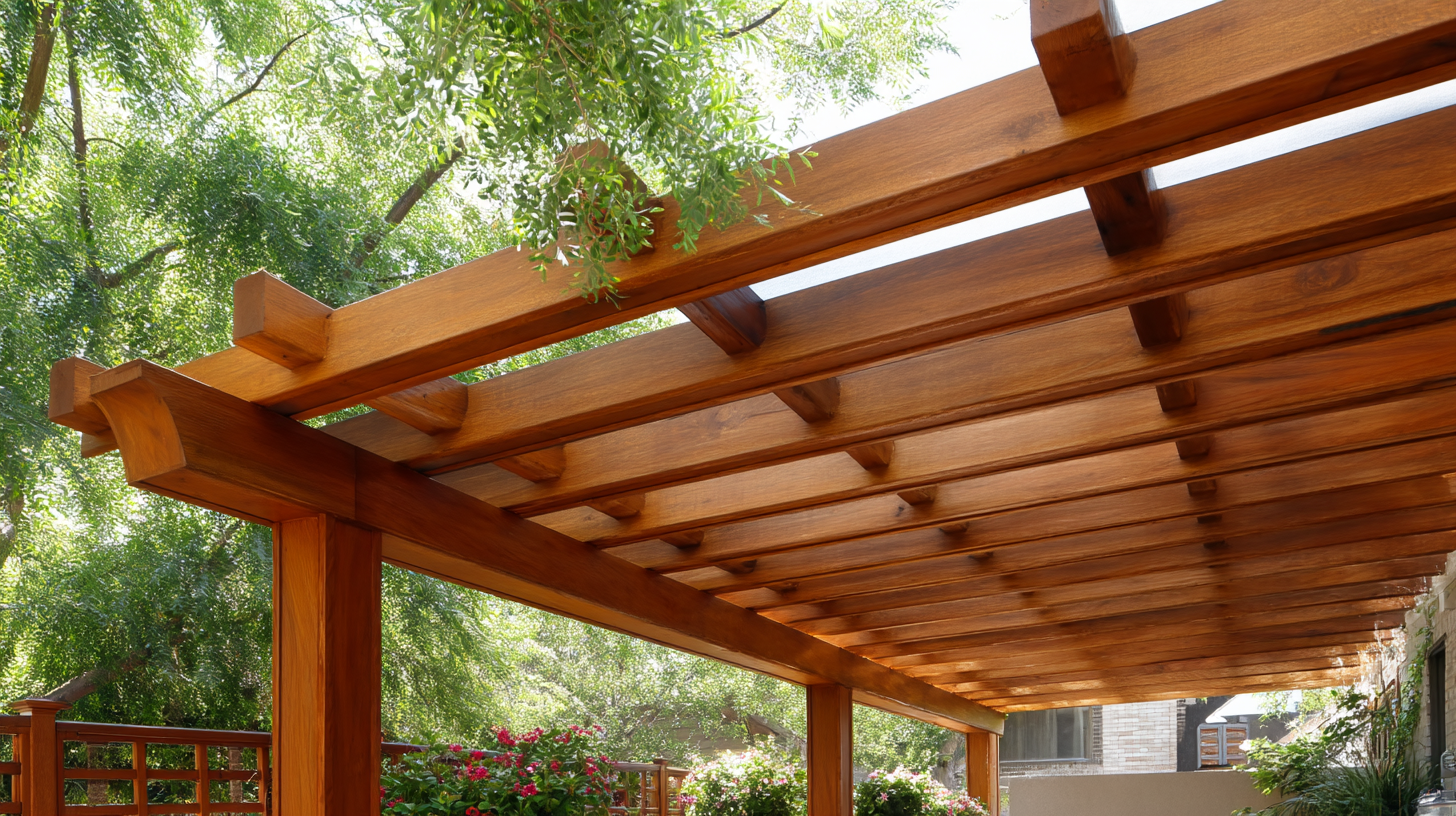
Wood covers offer classic aesthetics and high customization. Typical cost for a solid wood patio cover: around $60 to $120 per square foot installed, depending on quality of wood and complexity.
Advantages: rich appearance, design flexibility, customizable beams and trim.
Considerations: higher maintenance (staining, sealing), may cost more upfront and long‑term.
Vinyl Patio Covers
Vinyl patio covers offer low‑maintenance benefits and moderate pricing. Typical cost: about $25 to $80 per square foot installed, for solid vinyl or vinyl‑clad covers.
Advantages: resist rot, minimal upkeep, decent value.
Considerations: fewer styling options, may not achieve the premium look of wood or custom aluminum.
Other Material Options
- Insulated patio covers (panels that help control temperature) may cost $30‑$60 or more per square foot.
- Glass patio cover systems can cost around $20‑$50 per square foot, sometimes more depending on structure and finishes.
- Stucco patio covers, fiberglass patio covers, and other higher‑end materials may push the cost well above the ranges we cited for standard materials.
When you’re comparing materials, think not just about initial cost but maintenance, lifespan, and how the design fits your home and climate. - Lattice patio covers offer a decorative alternative, providing partial shade and aesthetic appeal, often at a moderate price point.
- Basic and flat covers are typically the most affordable patio cover styles, providing simple, effective shade without complex structural elements.
- Retractable awning systems can be an excellent addition to provide flexible shade and weather protection, with costs varying widely depending on automation and materials.
Cost Factors That Affect Your Budget
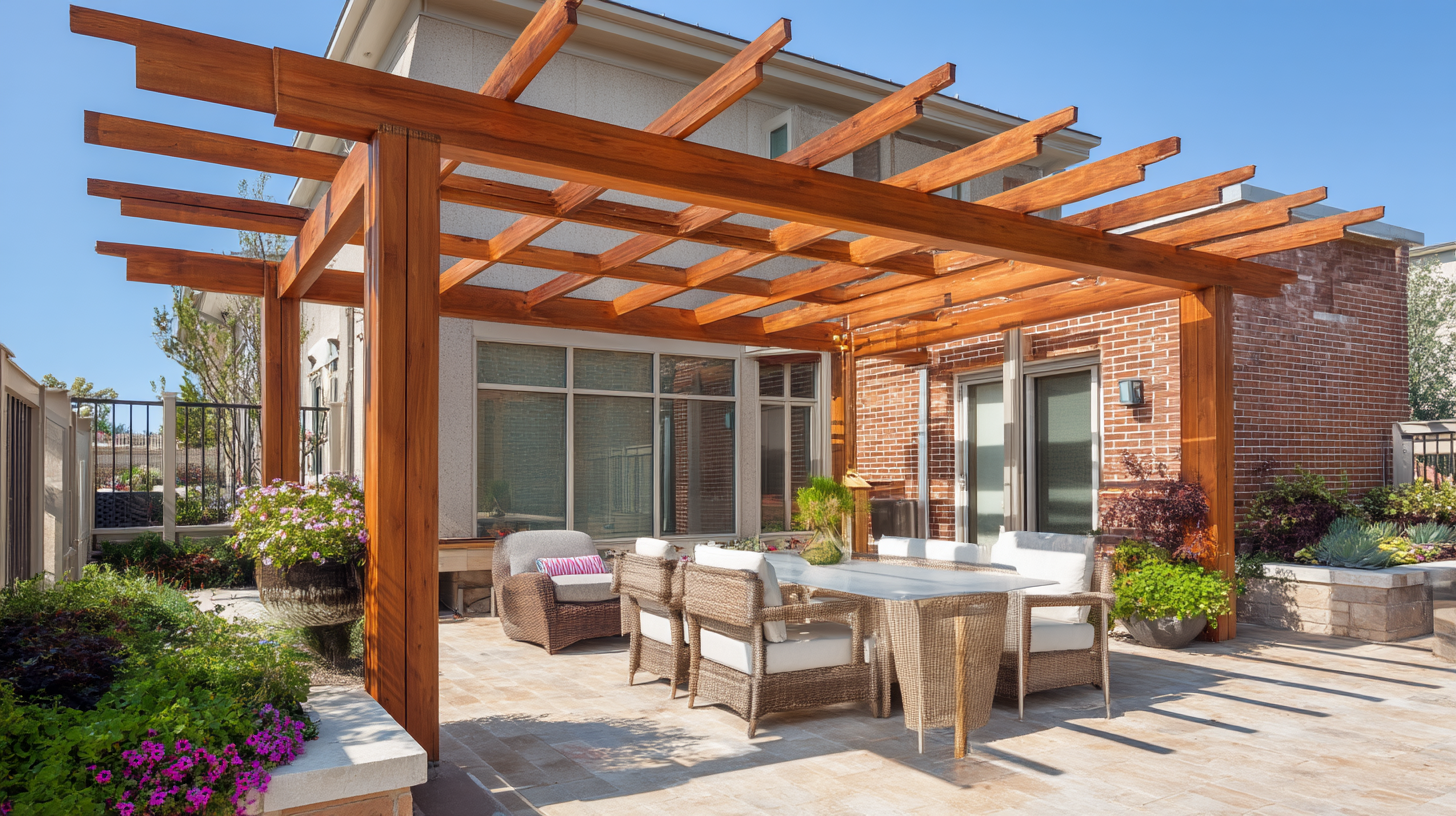
Several variables affect patio cover installation cost beyond just size and material. Understanding these will help you plan realistically.
Size and Layout
Larger patio size equals more materials and labor. Also, complex shapes (multi‑tiered, irregular shapes) or custom layouts increase labor hours and fabrication. Most cost per square foot data applies for straightforward rectangular slabs.
Labor Costs and Local Rates
Labor costs are a major part of the total cost. For example, installation labor may run $10‑$35 per square foot depending on complexity and region. In Northern California, labor and permit fees can trend higher than national averages.
Design Features and Upgrades
Additional features raise cost: integrated lighting, ceiling fans, insulated panels, motorized louvered roof systems, upgraded finishes, decorative columns, or adding an outdoor fireplace or outdoor heater. These upgrades can add substantial dollars per square foot above baseline. For example, louvered systems may start around $100 per square foot or more.
Existing Patio Base and Structural Prep
If you cover an existing patio (instead of building a new slab) you need to consider the condition of the base. If the existing patio base needs repair, reinforcement or concrete footings added, expect higher costs. Concrete footings might cost several hundred dollars each.
Permits, Building Codes and Attachment vs. Freestanding
A patio cover attached to your home typically costs less because fewer posts or independent supports are required. Freestanding can be more expensive. Permits, structural engineering, wind/snow load compliance all add cost.
Maintenance and Long‑Term Value
Lower maintenance materials (aluminum, vinyl) may cost more up‑front but can reduce hidden costs (maintenance labor, repainting) over time. A higher initial investment can make sense for homeowners seeking long‑term value.
Additional Costs to Consider
Be sure to factor in additional costs such as permit fees, landscaping repair, site preparation, and any upgrades or custom features. These can significantly affect the final cost of your patio cover project.
Can You Add a Roof Over an Existing Patio?
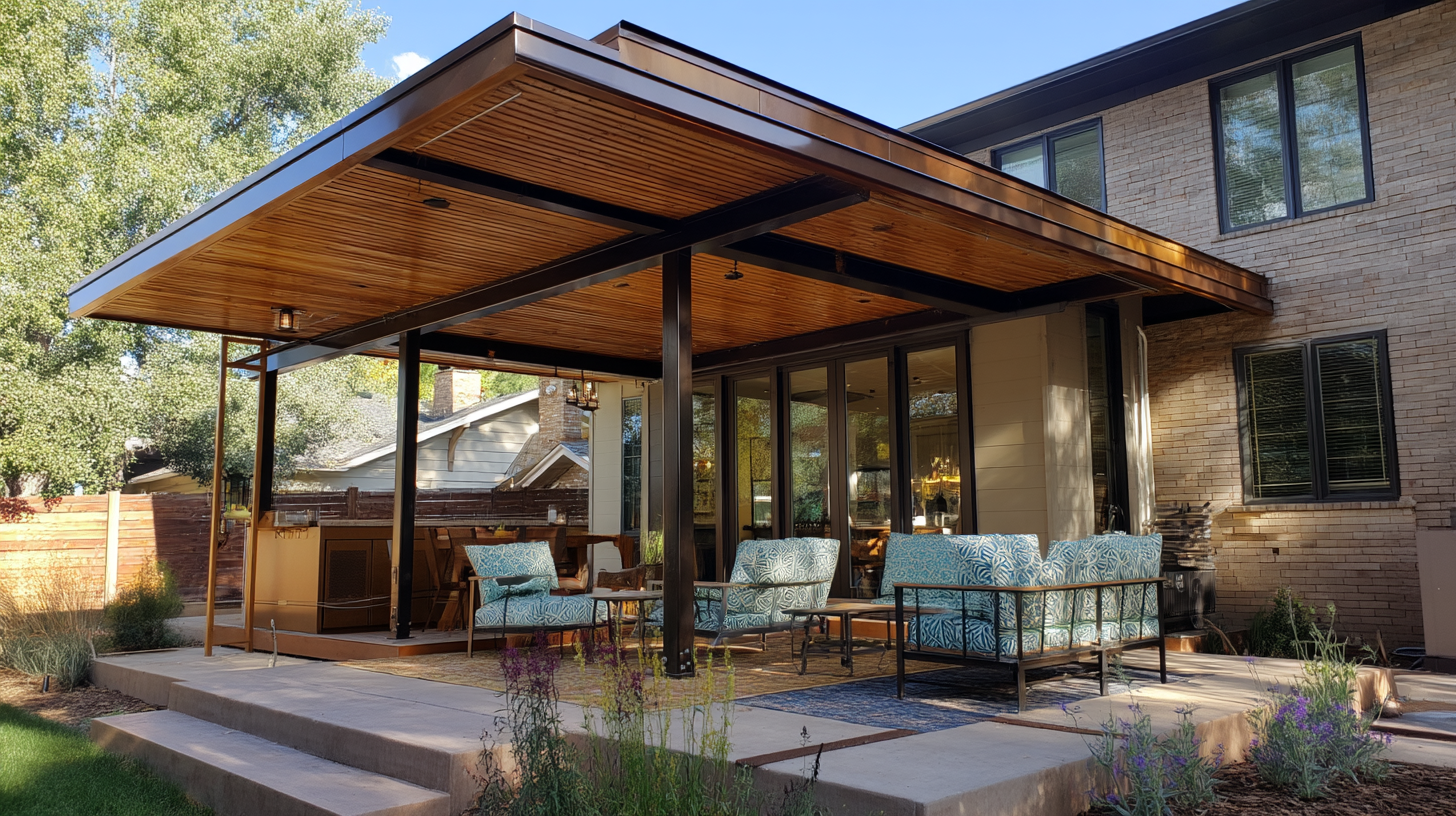
Yes, many homeowners choose to convert an uncovered patio into a covered patio by adding a roof structure. When doing so, key considerations include: existing patio slab condition, attachment to home structure, required footings or support beams, and design compatibility with home architecture. Cost for “adding a roof over a patio” may fall in the same range per square foot as discussed above, but expect added structural or permitting costs compared with building a new simple cover.
DIY Installation and Kits
Many contractors and covered patio builders offer DIY kits for basic patio covers, which can reduce labor costs and allow homeowners to customize their outdoor space affordably. DIY installation is popular for simple designs such as lattice patio covers or basic and flat covers, but complex or permanent patio covers usually require professional installation.
Long‑Term Value & ROI of a Covered Patio
Investing in a high‑quality patio cover adds value in several ways:
- Increased usable space: Your outdoor living room grows, meaning more lifestyle benefit.
- Enhanced resale value: Homes with well‑built covered patios often sell faster and for more, thanks to strong outdoor living appeal.
- Lower ongoing maintenance: With durable materials, you avoid frequent repainting or replacement of outdoor furniture.
- Energy savings: A covered patio adjacent to your home can reduce heat gain into interior spaces, lowering cooling needs.
When budgeting, consider long-term costs and value, not just lowest upfront installation.
Choosing the Right Patio Cover for Your Budget
Here are steps to choose a patio cover that aligns with your goals and budget:
- Define your goal: Are you building for shade, rain protection, entertaining, or resale value?
- Set a budget: Use the cost ranges above as a guide, then add room for upgrades or surprises.
- Compare materials: If you want low maintenance, aluminum or vinyl makes sense; if you want a premium look, consider wood, fiberglass patio covers, or custom systems.
- Plan for features: Ceiling fans, lighting, insulated panels, outdoor heaters, outdoor fireplaces, or custom beams all add to cost—make a feature list and decide which are must‑haves.
- Choose a licensed, insured contractor or covered patio builders: Professional installation protects you from hidden costs, compliance issues, and long‑term problems.
- Get free estimates: Understand materials, labor costs, timeline, what is included and excluded.
- Factor in hidden costs: Permit fees, inspection costs, design/engineering fees, landscaping repair after installation, all should be budgeted.
What to Expect During Installation
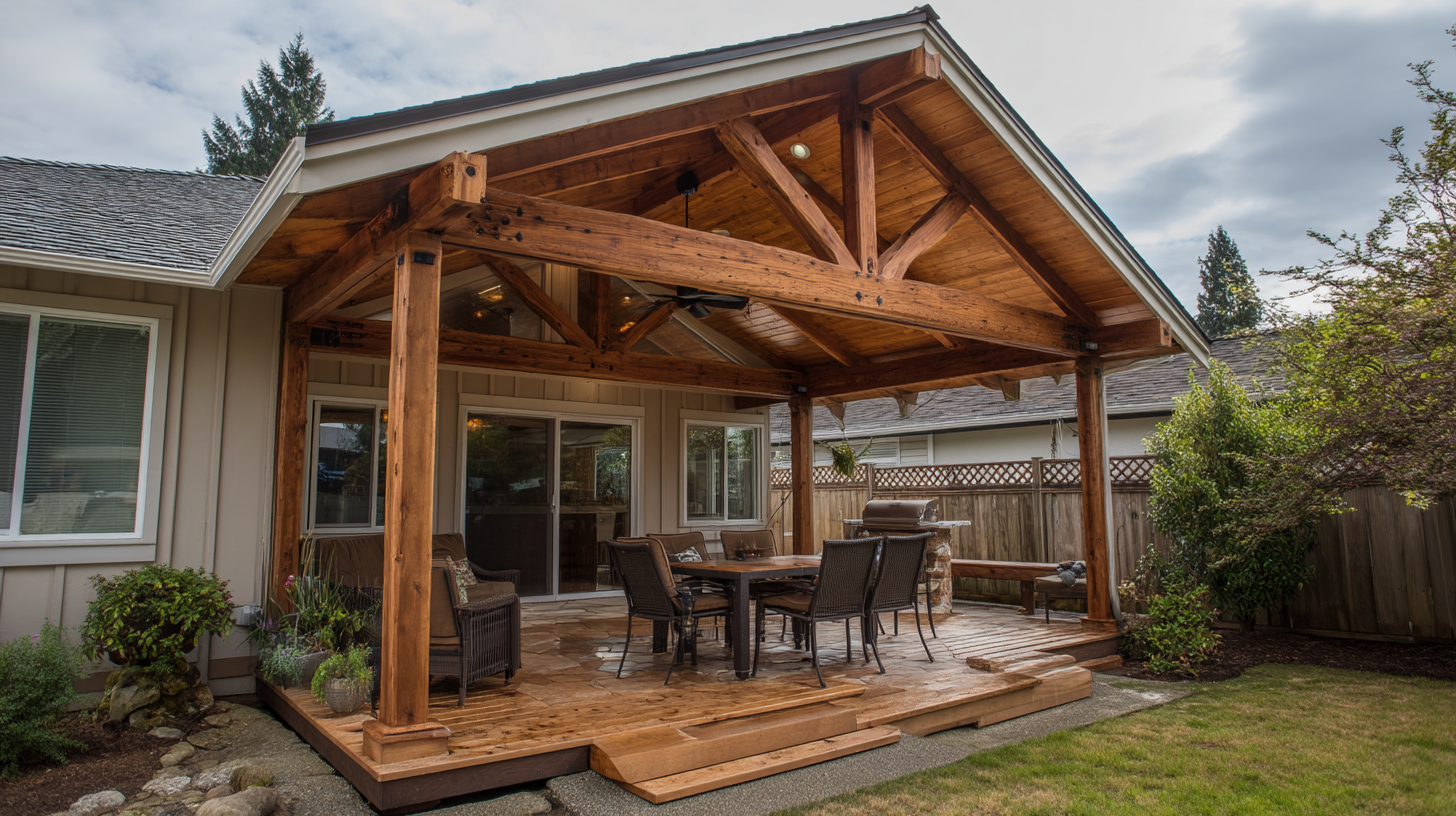
Here’s a typical timeline for a patio cover project:
Initial consultation – site visit, measure patio size, assess base condition, discuss materials and options.
Design and quote – contractor provides detailed estimate listing materials, labor costs per square foot or total, scope, timeline.
Permitting – if required, the contractor handles permit filings, inspection scheduling, code compliance.
Site preparation – existing patio base verified, footings (if needed) installed, posts set, structure framed, beams installed.
Cover installation – depending on material and complexity this may take days for standard covers or a week+ for custom systems like a gable roof.
Final inspection and cleanup – code inspection passed, job site cleaned, homeowner walkthrough.
During installation you may prefer to minimize disruption to the rest of the home; a good contractor communicates clearly and sticks to schedule and budget.
FAQs – Covering a Patio in 2025
What’s the cheapest way to cover a patio?
Typically, choosing a basic aluminum or vinyl patio cover with minimal upgrades will yield the lowest total cost. Some DIY patio cover kits may reduce labor costs, but they may not meet local code or offer same durability and warranty as professional installation.
Do I need a permit to build a patio cover in California?
Yes, most patio cover projects in California require building permits when they are attached to homes or exceed certain size thresholds. Code and permit requirements vary by city and county.
Can a patio cover be attached to my roof or siding?
Yes. A covered patio attached to the home often costs less than a freestanding structure because fewer posts are needed and structural tie‑ins are used. Proper flashing, roof connections, and engineering are critical to avoid leaks or structural issues.
Will a covered patio increase home value?
When well‑designed and properly built, absolutely. A covered patio increase home value by enhancing usable outdoor space, curb appeal, and overall home functionality.
How long does a patio cover last?
It depends on material and maintenance: aluminum covers can last 20‑30 years or more with minimal upkeep; vinyl covers may last 15‑30 years depending on climate; wood patio covers may last 10‑20 years but require regular maintenance with sealing or staining.
Final Thoughts – Planning Your Patio Cover Project
So, how much does it cost to cover a patio? The ranges are broad because the variables are many: size, materials, patio style, features, labor, site conditions. For many homeowners in Northern California, a realistic budget for a mid‑range patio cover is between $20 and $60 per square foot installed. If you’re including premium materials, custom features, or complex design, the per square foot cost could climb well higher, potentially $100+ per square foot.
When planning, focus on: defining your goals, choosing materials that fit your maintenance comfort and budget, working with licensed professionals, and factoring in hidden costs like permits, site prep, and design upgrades. A well‑built covered patio is more than a roof over a slab, it’s an investment in lifestyle, home value, and enjoyment for years to come.
If you’re ready to explore options for your outdoor space, talk with experienced covered patio builders who can walk you through design, costs, and timelines. You’ll get clarity, transparent pricing, and a plan aligned with your budget and goals.