
Key Takeaway
A roof is ready for solar when it is watertight, structurally sound, and has enough remaining service life to match the solar panels’ 25 to 35 year lifespan. A professional pre-installation inspection sorts your roof into one of three outcomes: ready now, ready after targeted repairs, or replace first. Replacing a failing roof before installation avoids the extra cost of removing and reinstalling panels later.
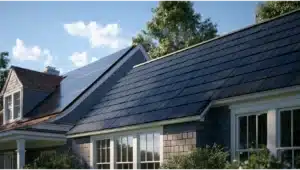
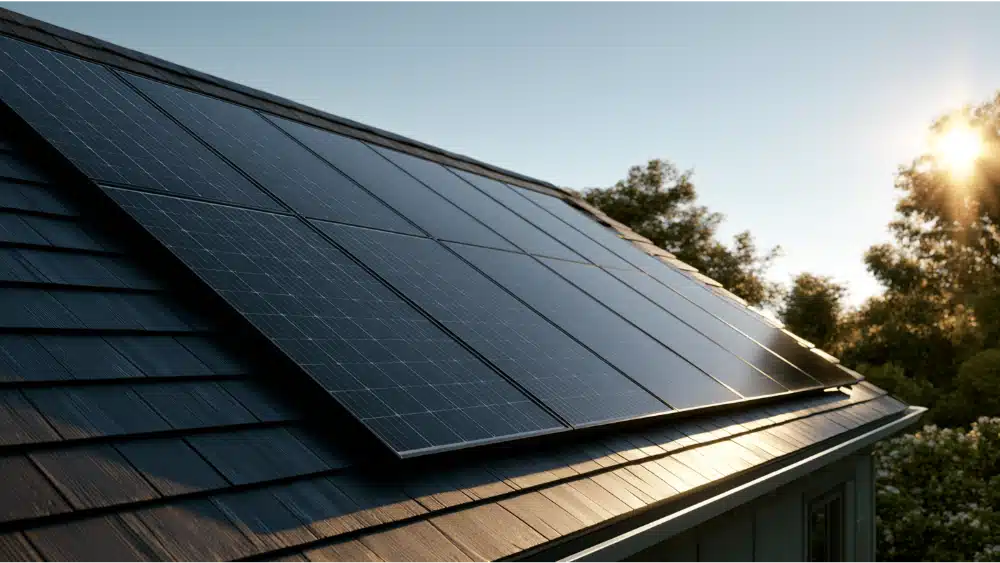
If you’re weighing solar energy for your home, you’re probably already worried about one thing: paying twice. Your roof is solar ready when it’s watertight, structurally sound, compatible with the mounting system, has enough usable sunlit area, and has enough remaining service life to outlast the early decades of the solar array. Solar panels installed today are expected to operate for 25 to 35 years, according to the U.S. Department of Energy, so the roof under them has to keep up. A solar panel installation starts with an inspection that sorts you into one of three outcomes: ready now, ready after targeted repairs, or replace first.
Roof Requirements for Solar: What Does “Solar Ready” Actually Mean?
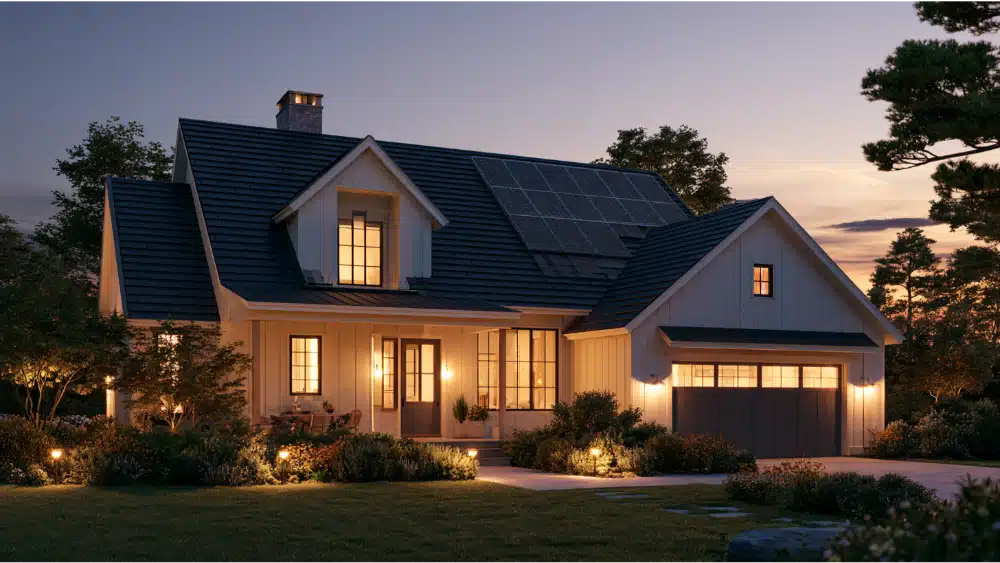
For an existing home, a solar ready roof comes down to six things:
- A sound roof covering with no widespread deterioration
- No unresolved leaks or active moisture intrusion
- Adequate remaining service life under the solar panels
- Structural capacity for the solar array and its attachments
- A mounting and flashing detail compatible with your roofing materials
- Enough usable area with good sun exposure
You may also see the phrase “solar ready zone” in model building codes. The 2024 IRC renewable energy appendix reserves a minimum of 250 square feet on new construction in jurisdictions that adopt it. That provision isn’t a retrofit test, and it won’t tell you whether your roof’s condition is suitable for solar today.
Roof Age vs. Remaining Roof Life: Which Matters More?
You’ll read everywhere that your roof should be under 10 years old before solar panels go on. That’s a rule of thumb, not a national standard, and it confuses age with your roof’s condition. A six-year-old roof with hail damage or soft decking can fail. A fourteen-year-old roof installed well and ventilated properly can carry a solar array without hesitation.
NREL’s 2018 site assessment training material used roughly 15 years of expected remaining life as a planning benchmark, with a new roof under a 25-year warranty as the ideal. Treat that as a reference point, not a pass/fail law. The real question is whether a professional’s estimate of your remaining roof life lines up with the solar system’s timeline.
What Should a Pre-Solar Roof Inspection Cover?
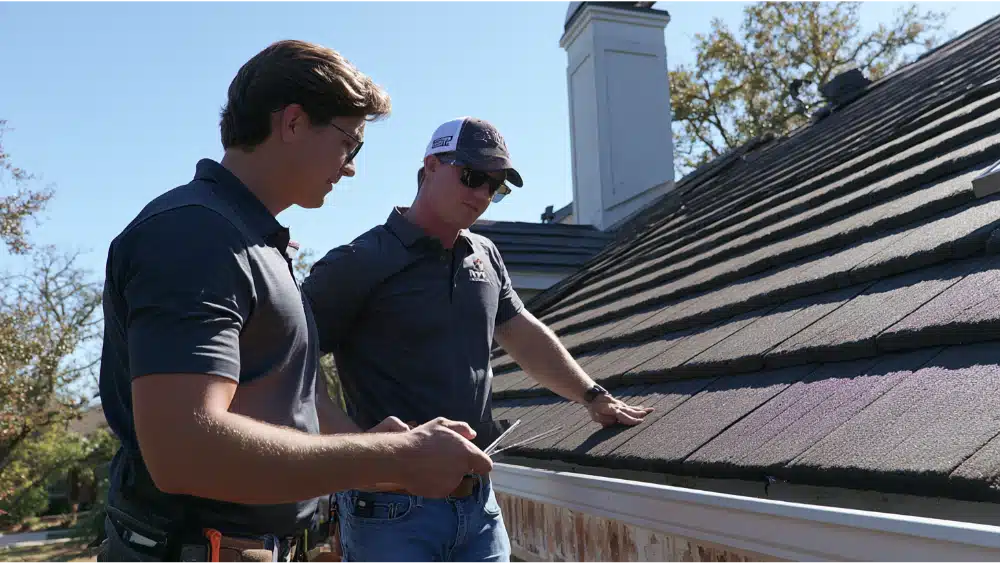
A thorough roof inspection goes well past a glance at the shingles. It should document:
- Covering condition, including cracked, curling, or missing asphalt shingles and granule loss
- Flashing, sealants, and existing penetrations
- Decking and any visible framing concerns
- Active leaks or attic moisture staining
- Drainage, gutters, and downspouts
- Attic ventilation
- Prior repairs, roof maintenance history, and storm damage
Cracked or missing asphalt shingles, deteriorated flashing, excessive granules in gutters, and interior discoloration are the warning signs NRCA points homeowners toward. Our inspections cover coverings, flashing, drainage, structural integrity, ventilation, chimneys, and skylights. Ask for photo documentation, written findings, and an estimated remaining-life range before solar installers schedule anything.
Ready, Repair, or Replace? A Decision Framework
Once the findings are in hand, the decision is usually clear.
| Finding | What It Means | Next Step |
|---|---|---|
| Sound covering, no leaks, solid decking, good remaining life | Solar ready now | Move ahead with solar array design |
| Localized flashing, covering, or penetration damage | Ready after targeted repairs | Repair before the solar panels go on |
| Active leaks, sagging, soft decking, limited remaining life | Replace first | New roof, then solar panels |
Panels installed over a roof needing replacement have to come off later, then go back on. That’s labor, coordination, and risk you avoid by handling the roof first, which is almost always the more cost effective order. Replacing first can mean a higher upfront cost, but it protects the solar investment sitting on top of it. Done once. Done right.
Can Your Roof Structure and Roof Decking Support Solar Panels?
Array weight is only one input. NREL’s site-evaluation material offers roughly 2 to 5 pounds per square foot as an early screening estimate for the extra weight a solar array adds. That’s a screening figure, not a design value. Real design accounts for framing condition, attachment spacing, and local wind, snow, and seismic loads, all important considerations before anyone drills a hole. A roofing contractor evaluates roof decking and covering. A structural professional evaluates framing.
Which Roofing Materials Work Best for Installing Panels?
Nearly all roof types can host solar panels. What changes is the attachment and waterproofing method, not whether it’s possible.
Asphalt Shingle Roofs
Asphalt shingles cover roughly 80% of U.S. residential roofs, and solar mounting hardware is well established for them. Flashed attachments integrate with the shingle courses and underlayment. Typical service range is 20 to 30 years, so remaining life, not compatibility, usually decides whether the roof is suitable for solar.
Tile, Slate, and Wood Shake
Clay tile can last over 50 years with maintenance, and slate can exceed a century. Both are brittle, so installing panels on them calls for tile-specific hooks, replacement flashing pans, and crews who can walk the surface without cracking pieces. Wood shake needs a close condition review first.
Metal Roofs
Standing-seam metal roofs accept clamped attachments that often avoid penetrating the roof surface at all, which is one reason solar installers like them. Metal also reflects heat, which keeps the panels cooler and supports energy production. Exposed-fastener metal roofs are a different detail and get evaluated on their own.
Flat Roofs and Low-Slope Membranes
TPO and tar-and-gravel systems, common on commercial buildings and on low-slope sections of homes, typically run 20 to 30 years. On flat roofs, ballasted systems or tilted racking let the panels be angled to maximize sun exposure instead of following the roof plane. Membrane detailing at every attachment determines whether the installation holds up.
Roof Direction, Pitch, and Sun Exposure: Key Factors in Output
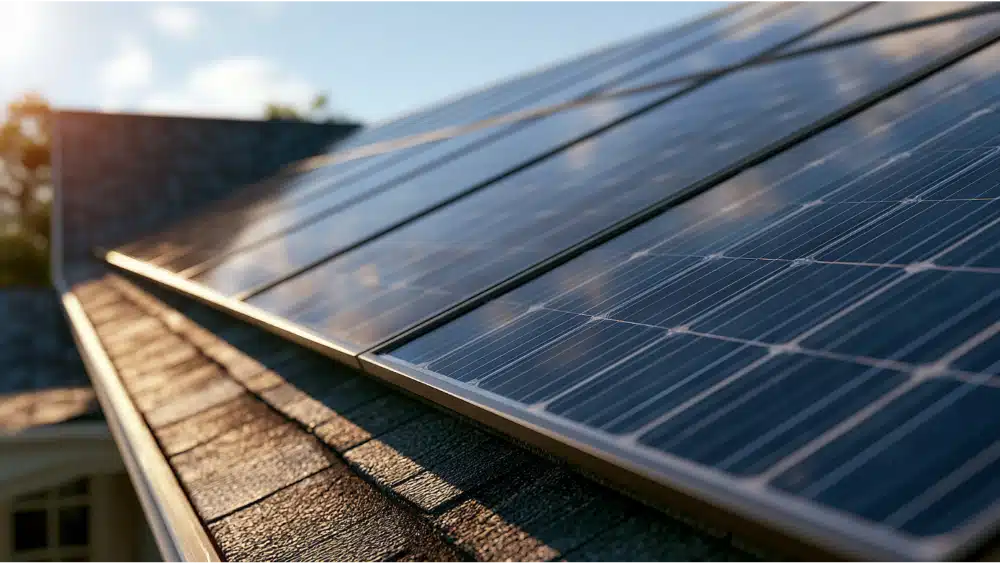
DOE says solar panels generally perform best on an unshaded, south-facing roof with a slope between 15 and 40 degrees, with the ideal angle relating loosely to your latitude. South facing roofs have an advantage in the northern hemisphere, but it isn’t a requirement. East and west facing roofs are often still suitable for solar.
Shade is frequently the biggest limit on hours of direct sunlight, and it moves. Morning shade differs from afternoon shade, and a winter sun angle brings trees, chimneys, and neighboring buildings into play that summer doesn’t, since all of them cast shadows. Even partial shading on a single panel can make the array produce less power, so trimming branches is a reasonable first step. NREL’s PVWatts calculator gives a preliminary energy estimate, but it can’t see your decking.
How Much Roof Space Do Solar Panels Need?
Roof size and usable array area are different numbers. A typical residential solar installation needs somewhere around 250 to 400 square feet of usable space, and roof shape, vents, chimneys, skylights, rooftop HVAC, valleys, and shade zones all subtract from it. So do fire safety access requirements: the 2021 IRC includes 36-inch pathways and ridge setbacks of 18 or 36 inches depending on array coverage, though local amendments vary. Usable area shapes how much energy the system generates and how much of your electric bill the panels can realistically offset.
Preparing the Roof for Solar: Mounting and Flashing
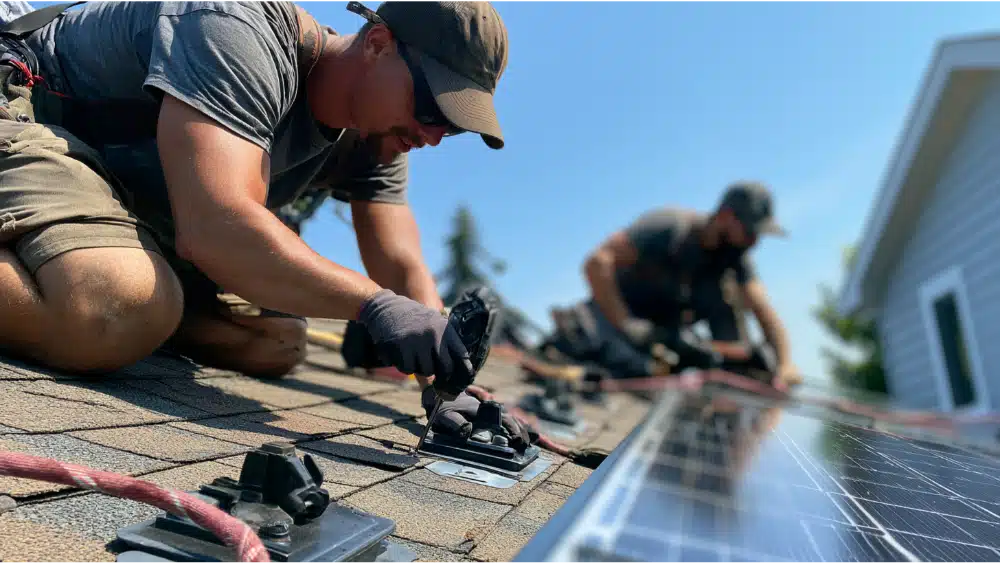
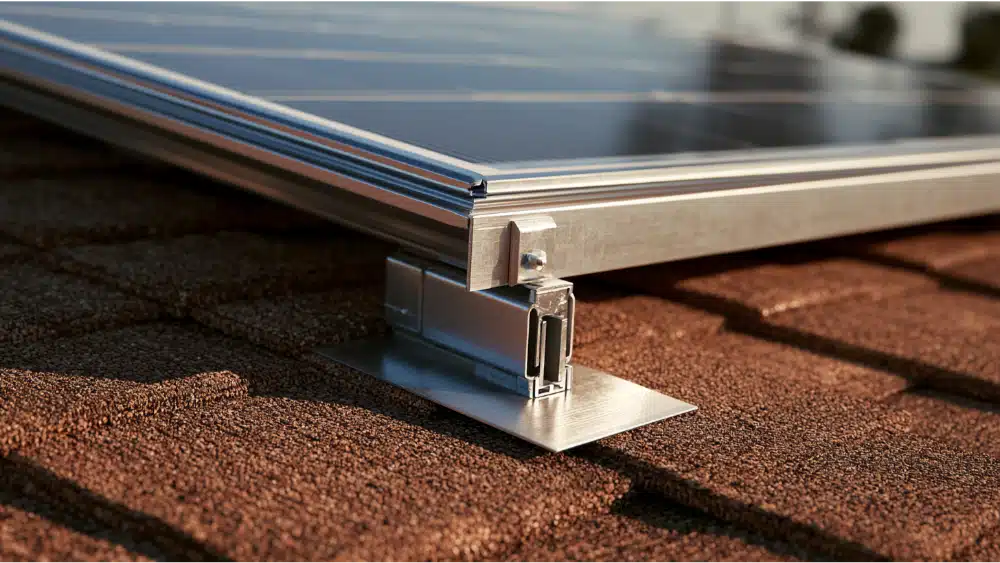
Solar attachments can leak. Poorly detailed ones do. A correct detail anchors the mount into structure, integrates flashing with the underlayment and roof covering, and treats sealant as one layer of a complete assembly rather than the only line of defense. Mounting systems should be evaluated as a listed assembly (UL 2703 covers mounting devices, clamps, grounding, and fire classification) for the configuration actually being installed. Our roofing and solar panel installation work is coordinated so every point where the panels attach is prepared, flashed, and integrated with the roof system, not drilled and caulked after the fact.
Codes, Permits, and HOA Rules
A solar installation generally needs a permit from your local building department and an inspection afterward, and your utility has to approve interconnection before the system delivers power. Adopted code editions, roof requirements, and fees differ by jurisdiction, so confirm locally. Property owners in an HOA should check whether its rules limit panel placement or street visibility.
What to Get in Writing Before Solar Installation
- The estimated remaining life of your roof
- Any repairs needed to make the roof solar ready
- The full solar array and panel layout
- The mounting and flashing method for your roofing materials
- Whether the installation affects existing roof product documentation
- Who is responsible if an attachment leaks
- Who pulls permits and schedules inspections
- What happens if future roof work requires panel removal
That’s how we work, and it’s reasonable to expect it from anyone you hire. No surprises.
Roof Maintenance and Roof Replacement After Solar Panels Are Installed
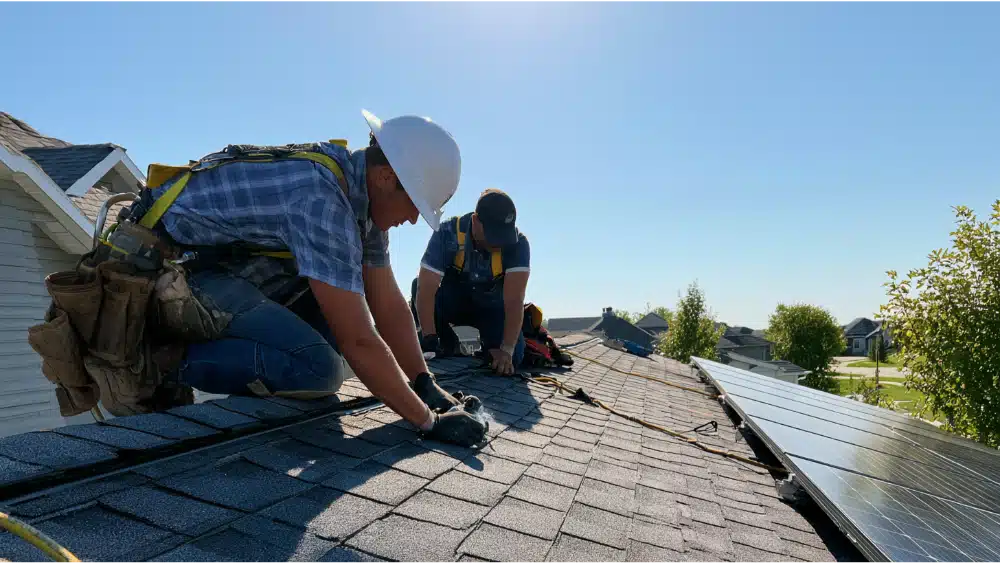
Roof maintenance still happens with panels overhead, and gutters, flashing, and valleys need the same attention as before. For a full replacement, the solar panels are detached and stored safely, the roof is replaced, then the panels are reinstalled and the system is recommissioned. It’s routine work, but it adds labor, scheduling, downtime, and project costs that a roof-first decision usually avoids.
Frequently Asked Question
Is my roof suitable for solar?
It’s solar ready if a professional inspection confirms the covering is sound, there are no active leaks, the structure can carry the solar array, the mounting detail suits your roofing materials, and remaining service life matches the solar timeline.
What is the 20% rule for solar?
It’s a commonly cited guideline about sizing a system to your energy needs so production meaningfully offsets your usage rather than overbuilding. Sizing and export rules vary by utility, so confirm the specifics before the design is final.
Can solar panels be installed on a TPO roof?
Yes. TPO membranes are waterproof and typically last 20 to 30 years. On flat roofs, attachments are usually ballasted or detailed with welded membrane flashings so the roof stays intact. Match the membrane’s remaining life to the solar panels’ timeline.
Does it cost more to replace a roof with solar panels installed?
Yes. The solar panels have to be removed, stored, reinstalled, and recommissioned, which adds labor and coordination. For what that looks like on your home, request a free quote.
Start With a Roof Inspection, Not a Guess
Solar is a decision you make once, and the clean energy it produces depends on the roof carrying it. We’re family-owned and operated, we use in-house crews, we work exclusively on exteriors, and we keep you updated at every step (CSLB License #1031864). Schedule a free, no-obligation roof inspection and quote, and you’ll know whether your roof is solar ready before you commit to anything. Call 916-745-6699 or email info@cobexcg.com.